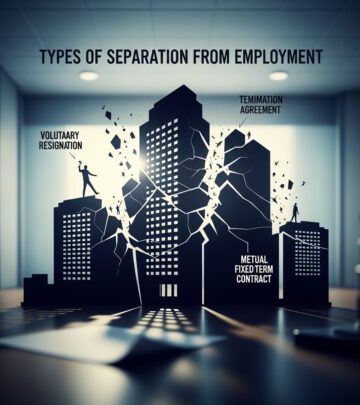
Termination from Employment: Rights and Responsibilities
Complete guide to employment termination: understand your rights, severance, and final pay obligations.

Employment termination is one of the most challenging transitions an individual can experience in their professional life. Whether you are terminated by an employer, laid off due to restructuring, or deciding to resign, understanding your rights and obligations during this process is essential for protecting your financial security and career prospects. This comprehensive guide covers the critical aspects of employment termination, including final wage entitlements, severance packages, unemployment benefits, and the legal protections available to employees.
Understanding Employment Termination
Employment termination occurs when the employment relationship between an employer and employee ends. This can happen for various reasons, including performance issues, misconduct, business restructuring, or voluntary resignation. The type of termination significantly affects the benefits and protections an employee receives.
There are two primary categories of termination: for-cause termination and not-for-cause termination. A for-cause termination typically involves misconduct such as theft, fraud, gross negligence, or serious breaches of company policy, and may result in the forfeiture of certain benefits. A not-for-cause termination generally occurs for business reasons unrelated to employee misconduct, such as position elimination or organizational restructuring, and typically entitles the employee to severance compensation and continued participation in certain benefit arrangements.
Final Wages and Compensation
What Constitutes Final Wages
Final wages represent all compensation owed to an employee upon termination. This encompasses more than just the employee’s regular salary or hourly wages. When an employer terminates an employee without notice, they must pay all earned wages immediately on the day of termination, including all hours worked up to the termination date, as well as any unused vacation or paid time off (PTO) if offered by the employer.
The final paycheck must include:
– All regular wages for hours worked- Accrued and unused paid time off or vacation time- Earned commissions or bonuses- Incentive compensation- Any other compensation specifically owed under employment agreements
Timing of Final Wage Payment
If you are terminated or laid off, your employer must pay all final wages, including any accrued PTO/vacation time, on your last day of work. If you resign and give at least 72 hours’ notice, you must be paid on your last working day. Without notice, your employer has 72 hours to issue your final paycheck.
The final paycheck must be provided at the time of termination—no exceptions. Failure to do so ordinarily will result in waiting time penalties against the employer.
Commissions and Bonuses
Commissions and bonuses can be more complex to calculate at termination. The treatment of these payments depends on the specific terms outlined in employment agreements and company policies. For instance, if the commission plan requires that a sale needs to “stick” (not returned) for at least 10 days before the commission payment accrues and is owed to the employee, a terminated employee is entitled to the commission payment post-termination so long as the employee has done everything necessary to earn the commission prior to termination.
Severance Pay and Separation Agreements
Understanding Severance Packages
Severance pay is compensation provided to an employee upon termination, particularly in cases of not-for-cause dismissals. While severance is not always legally required, many employers offer it as a matter of practice or in accordance with company policy. Severance packages typically include:
– A lump sum payment based on tenure and salary- Continuation of health insurance benefits- Extended benefits continuation- Career transition services- Outplacement assistance
Negotiating Severance Terms
Severance negotiations should be approached strategically. The economic realities of termination suggest that employers benefit from resolving matters quickly rather than prolonging disputes. In many cases, the cost of litigation and extended disputes far exceeds the cost of reasonable severance. An employer that delays termination while attempting to build a for-cause case may incur additional expenses through decreased employee morale and higher legal costs if the matter becomes litigated.
When negotiating severance, consider:
– Your tenure with the company- Your position level and compensation- Market conditions for your role- The reason for termination- Your negotiating position- Legal counsel availability
Benefits and Retirement Accounts
401(k) and Retirement Plans
Unlike other types of benefits, whether an employee is terminated for-cause or not-for-cause should not have any impact on the employee’s rights to their vested 401(k) plan balance. However, the most critical action item when an employee is terminated is to promptly notify the 401(k) plan’s third-party administrator of the termination so that the administrator can start the standard process to properly and timely notify the individual about distribution rights and rollover options, which include certain legally required notifications.
If any part of the account balance or benefit is unvested (or becomes unvested as a result of a for-cause termination), it should be forfeited in accordance with the terms of the plan. Employees should carefully review their plan documents to understand vesting schedules and distribution options before making withdrawal decisions.
Health Insurance and Benefits Continuation
Upon termination, employees may be eligible for continuation coverage under the Consolidated Omnibus Budget Reconciliation Act (COBRA), which allows employees to continue their health insurance coverage for a specified period, typically 18 to 36 months, depending on the type of coverage and reason for termination. Employees must generally pay the full premium for this coverage, including both the employer and employee portions.
Unemployment Benefits
Eligibility for Unemployment Insurance
Unemployment benefits provide temporary income support to individuals who have been separated from employment through no fault of their own. Eligibility varies by state but generally requires that you were terminated without cause or laid off due to lack of work. In most cases, employees who quit voluntarily without good cause are ineligible for benefits.
Filing for Unemployment
To receive unemployment benefits, you must:
– File a claim with your state’s unemployment insurance agency- Provide information about your employment and separation- Certify that you are actively seeking employment- Report any earnings from new employment- Continue to meet state-specific requirements to maintain benefits
The amount of benefits you receive depends on your state’s formula, which typically considers your earnings over a base period. Benefits are generally paid for 26 weeks in most states, though extensions may be available during economic downturns.
Legal Protections and Remedies
Waiting Time Penalties
Under California law, employers who fail to pay final wages owed at termination on time may owe ”waiting time” penalties. California Labor Code section 203 provides penalties equal to one day of the employee’s wages for each day payment is delayed, up to a maximum of 30 calendar days. Waiting time penalties are designed to encourage timely payment of final wages. Waiting time penalties are considered earned wages and an employee has a legal entitlement to the statutory penalties as soon the penalty accrues.
Wrongful Termination Claims
Wrongful termination occurs when an employer fires an employee in violation of federal, state, or local laws, or in breach of public policy. Common bases for wrongful termination include:
– Discrimination based on protected characteristics- Retaliation for reporting illegal conduct- Violation of statutory rights- Breach of employment contracts- Termination in violation of implied covenants of good faith
A termination ”for-cause” is rare and is often referred to by courts as the ”capital punishment of employment law.” Courts scrutinize whether employers genuinely had cause to terminate without severance, and building a defensible for-cause case requires careful documentation and adherence to progressive discipline policies.
Steps to Take After Termination
Immediate Actions
Upon termination, employees should:
– Request a written explanation of the termination- Verify receipt of all final wages within the required timeframe- Request documentation of accrued but unused PTO- Obtain copies of all final pay stubs and tax forms (W-2 or 1099)- Confirm the effective date of benefits termination- Understand COBRA continuation coverage options
Documentation and Records
Document the date and time of your resignation and follow up if your wages are not paid within the required period. Keep copies of all termination-related communications, including:
– Termination letters- Separation agreements- Final pay stubs- Benefit continuation documents- Communications regarding severance negotiations
Resolving Wage Disputes
Filing Claims with the Labor Commissioner
If your employer fails to pay final wages as required, you have the right to file a claim with your state’s labor commissioner or department of labor. Outcomes can include payment of owed wages, waiting time penalties, and interest. The process typically involves:
– Filing a wage complaint with the appropriate agency- Providing documentation of wages owed- Attending a hearing or settlement conference- Obtaining a determination and enforcement action if successful
Consulting with an Employment Attorney
While filing a claim with the Labor Commissioner is an option, consulting with an experienced employment attorney can provide additional advantages, especially if the amount of wages owed is substantial or complex (e.g., commissions, bonuses, or PTO), you suspect retaliation or wrongful termination was involved, or your employer has a history of disputes with employees or is likely to contest your claim aggressively. An attorney can assess your case, negotiate on your behalf, and advise you on the best legal strategy to recover your wages.
Employer Obligations and Best Practices
Documentation Requirements
If the employee is being terminated ”for-cause,” then documentation of the circumstances giving rise to the termination should be very careful, and consideration should be given to how to include them effectively in any recitals to the separation agreement. Additionally, if the employee remains subject to any restrictive covenants, employers should ensure that there is valid consideration for the covenants, as recent case law suggests that equity awards that are forfeited at termination may not be valid consideration for these types of post-termination restrictions.
Employee Debts and Repayment Obligations
Employers should determine whether the employee owes any money to the company at the time of termination. If the repayment obligation is due to a loan, employers must determine whether the loan becomes due at termination and if the terms of the loan permit the company to offset the loan amount from other compensation. Employers should also review documents to determine whether the employee may be subject to a claw-back or repayment obligation if any service requirement related to a previously paid bonus was not satisfied.
Frequently Asked Questions
Q: What is the difference between being fired and being laid off?
A: Being fired typically refers to termination due to employee misconduct or poor performance, while being laid off generally refers to not-for-cause termination due to business reasons such as position elimination or restructuring. Laid-off employees are typically eligible for unemployment benefits and may receive severance, while fired employees may not.
Q: Am I entitled to severance pay?
A: Severance pay is not required by federal law and depends on company policy, employment contracts, and state laws. However, employers typically offer severance for not-for-cause terminations, especially for layoffs or restructuring. The amount varies based on tenure, position level, and company practices.
Q: How long do I have to receive my final paycheck?
A: In most jurisdictions, if you are terminated or laid off, your employer must pay your final wages on your last day of work. If you resign without notice, your employer typically has 72 hours to provide your final paycheck. Requirements vary by state, so check your local labor laws.
Q: What happens to my unused vacation time?
A: In most states, employers must pay out accrued and unused vacation or PTO upon termination. However, state laws vary, and some states allow employers to forfeit unused vacation under certain circumstances. Check your state’s labor laws and your employment agreement.
Q: Can I keep my health insurance after being terminated?
A: Yes, you may be eligible for COBRA continuation coverage, which allows you to continue your employer’s health insurance for 18 to 36 months. You must pay the full premium, including both the employer and employee portions. You must elect COBRA coverage within 60 days of termination.
Q: Am I eligible for unemployment benefits?
A: Eligibility for unemployment benefits depends on your state and the reason for separation. Generally, you are eligible if you were terminated through no fault of your own or laid off due to lack of work. You are typically ineligible if you quit voluntarily without good cause. File a claim with your state’s unemployment insurance agency.
Q: What should I do if my employer doesn’t pay my final wages?
A: If your employer fails to pay your final wages within the required timeframe, you can file a complaint with your state’s labor commissioner or department of labor. You may also consult with an employment attorney to pursue additional remedies, including waiting time penalties and interest.
Q: Can I negotiate my severance package?
A: Yes, severance packages are often negotiable, particularly for not-for-cause terminations. Consider your tenure, position level, market conditions, and the circumstances of your termination. An employment attorney can help you navigate negotiations and understand your rights.
References
- Wages Owed at Termination: What Are Employees Entitled To? — Ruggles Law Firm. 2024. https://ruggleslawfirm.com/wages-owed-at-termination-what-are-employees-entitled-to/
- The Economics of Termination: Keep It Quick and Simple — Financial Post. 2024. https://financialpost.com/fp-work/economics-termination-keep-quick-simple
- HR Resource Guide for Employee Dismissals: Benefits Basics When Employee Dismissed — National Law Review. 2024. https://natlawreview.com/article/benefits-basics-when-employee-dismissed-resource-guide-hr-benefits-professionals
- California Labor Code Section 203: Wages and Hours — State of California Legislative Counsel. https://leginfo.legislature.ca.gov/
- Employee Eligibility and Unemployment Insurance Benefits — U.S. Department of Labor. 2024. https://www.dol.gov/agencies/eta/unemployment-insurance
Similar Articles








Read full bio of Sneha Tete