Termination of Employment: Definition, Types, and Legal Rights
Understand employment termination, severance rights, and protections for both employers and employees.

What Is Termination of Employment?
Termination of employment refers to the end of an employee’s contract with an employer. This can occur through voluntary resignation, involuntary dismissal, or mutual agreement. Employment termination is a significant event in the workplace that carries legal, financial, and emotional implications for both parties involved. Understanding the various aspects of employment termination is essential for both employers and employees to navigate this process effectively and ensure compliance with applicable laws and regulations.
Employment termination can take many forms, ranging from simple layoffs to complex scenarios involving disputes, legal claims, or severance negotiations. The manner in which employment is terminated can significantly impact an employee’s financial security, benefits continuation, and future employment prospects.
Understanding At-Will Employment
At-will employment is the predominant employment relationship in the United States, where either the employer or employee can terminate the employment relationship at any time, for any reason, as long as the reason is not illegal. This concept provides flexibility to both parties but can create uncertainty for employees regarding job security.
Key Characteristics of At-Will Employment:
- Either party can end the employment relationship without cause
- No advance notice is required, unless contractually specified
- The employer is not obligated to provide severance pay
- The employee can resign without penalty
- Termination can occur for virtually any reason that is legal
While at-will employment is the standard, it does have significant exceptions. Employers cannot terminate employees for illegal reasons, such as discrimination based on protected characteristics, retaliation for reporting illegal activities, or exercising legal rights. Additionally, certain contracts, collective bargaining agreements, and implied contracts can modify the at-will employment relationship.
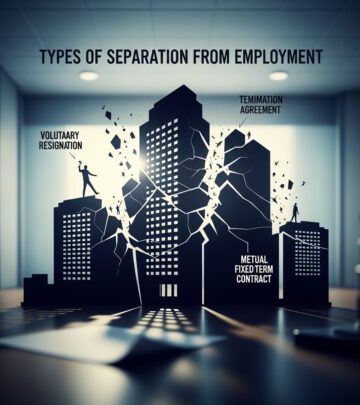
Types of Employment Termination
Involuntary Termination
Involuntary termination occurs when an employer ends an employee’s employment against their will. This can result from various circumstances, including:
- For Cause Termination: Dismissal due to employee misconduct, poor performance, violations of company policies, or failure to meet job requirements
- Layoffs: Termination due to business restructuring, economic downturns, or elimination of positions unrelated to employee performance
- Redundancy: Termination when a position is no longer needed due to organizational changes or operational efficiencies
- Performance Issues: Dismissal resulting from consistent failure to meet performance standards or job expectations
Voluntary Termination
Voluntary termination occurs when an employee chooses to end their employment relationship with an employer. Common reasons include:
- Pursuing opportunities with other employers
- Career advancement or change in career direction
- Relocation or personal circumstances
- Dissatisfaction with work environment or compensation
- Retirement
Mutual Termination
In some cases, both parties may agree to end the employment relationship. This can occur when an employee and employer mutually decide that the employment arrangement is no longer beneficial or when severance agreements are negotiated as part of a larger restructuring effort.
Wrongful Termination and Legal Protections
Wrongful termination occurs when an employer violates employment laws, contracts, or public policy in terminating an employee. This is a significant legal area that protects employees from unfair dismissal practices.
Common Grounds for Wrongful Termination Claims:
- Discrimination: Termination based on protected characteristics such as race, color, religion, sex, national origin, age (40 and older), disability, or genetic information
- Retaliation: Termination in response to reporting illegal activities, safety violations, or exercising legal rights
- Breach of Contract: Violation of explicit or implied employment contracts regarding termination procedures or cause
- Violation of Public Policy: Termination for reasons that violate established public policy, such as jury duty participation or military service
- Constructive Dismissal: Termination through creating intolerable working conditions that force an employee to resign
Employees who believe they have been wrongfully terminated have several avenues for recourse, including filing complaints with government agencies such as the Equal Employment Opportunity Commission (EEOC), pursuing litigation, or seeking alternative dispute resolution through mediation or arbitration.
Severance Packages and Compensation
A severance package is compensation provided by an employer to an employee upon termination of employment. While not legally required in most at-will employment situations, severance packages are commonly offered in cases of layoffs, restructuring, or mutual agreements to ease the transition for departing employees.
Typical Components of Severance Packages:
- Severance Pay: Lump sum or ongoing payments based on tenure and salary
- Continuation of Benefits: Extension of health insurance through COBRA or company plans
- Outplacement Services: Career counseling and job search assistance
- Unused Paid Time Off: Payment for accrued vacation, sick leave, or personal days
- Stock Options and Bonuses: Acceleration or vesting of equity compensation
- References and Severance Agreements: Negotiated terms regarding employment references and non-disparagement
The value and terms of severance packages vary significantly based on industry, position level, length of service, and negotiating power. Executives and highly skilled professionals often receive more substantial packages than entry-level employees.
Legal Obligations and Documentation
Employers have specific legal obligations when terminating employees that must be carefully followed to avoid liability and ensure compliance with employment laws.
Key Legal Requirements:
- Final Paycheck: Payment of all earned wages by the deadline specified in state law
- Benefits Information: Notification of COBRA rights and other benefit continuation options
- Reason for Termination: In some jurisdictions, providing written documentation of the reason for termination upon request
- Unemployment Eligibility: Correct classification for unemployment insurance purposes
- Record Keeping: Maintaining documentation of performance issues and disciplinary actions that led to termination
- Equal Treatment: Ensuring termination decisions comply with anti-discrimination laws
Proper documentation throughout an employee’s tenure is crucial for employers to defend against wrongful termination claims. This includes performance evaluations, disciplinary records, and written warnings that substantiate the reasons for termination.
Employee Rights During and After Termination
Employees have significant rights during the termination process that are protected by federal and state employment laws.
Important Employee Rights Include:
- Notice Requirements: In some cases, employees are entitled to advance notice of termination or mass layoffs
- Final Compensation: Prompt payment of all earned wages and accrued benefits
- Unemployment Benefits: Eligibility to file for unemployment insurance in most termination scenarios
- Health Insurance Continuation: COBRA rights allowing continuation of group health insurance for up to 18 months
- Retirement Benefits: Vesting and distribution rights under ERISA and pension regulations
- Legal Remedies: The right to pursue legal action for wrongful termination or retaliation
The Termination Process
Understanding the typical steps involved in employment termination can help both employers and employees navigate this sensitive process more effectively.
Standard Termination Procedures:
- Performance Management: Documentation of performance issues through evaluations and disciplinary meetings
- Progressive Discipline: Implementation of warnings and improvement plans before termination (where appropriate)
- Termination Meeting: Formal meeting with the employee to communicate termination and key details
- Severance Discussion: Negotiation of severance terms and signing of release agreements
- Final Administrative Steps: Processing final paychecks, benefits information, and return of company property
- Offboarding: Removal of system access, return of equipment, and reference procedures
State and Federal Regulations
Employment termination is governed by a complex web of federal and state laws that employers must navigate carefully. Key regulations include:
| Regulation | Key Provisions | Applicability |
|---|---|---|
| Title VII of the Civil Rights Act | Prohibits discrimination in employment based on race, color, religion, sex, or national origin | Federal employers with 15+ employees |
| Age Discrimination in Employment Act (ADEA) | Protects workers age 40 and older from age-based discrimination | Federal employers with 20+ employees |
| Americans with Disabilities Act (ADA) | Requires reasonable accommodations and prohibits disability discrimination | Employers with 15+ employees |
| Family and Medical Leave Act (FMLA) | Provides unpaid leave for qualifying reasons; prohibits termination for taking FMLA leave | Employers with 50+ employees |
| Worker Adjustment and Retraining Notification (WARN) Act | Requires 60-day notice of mass layoffs or plant closings | Employers with 100+ employees |
State laws often provide additional protections beyond federal requirements. Many states have their own wrongful termination statutes, plant closing notification requirements, and wage and hour laws that affect termination practices.
Frequently Asked Questions
Q: Can an employer terminate an employee without cause in an at-will employment state?
A: Yes, in at-will employment states, an employer can terminate an employee without cause and without notice, provided the reason is not illegal. However, even in at-will states, termination cannot be based on discrimination, retaliation, or violation of public policy.
Q: What is COBRA and how does it apply to terminated employees?
A: COBRA (Consolidated Omnibus Budget Reconciliation Act) allows employees who lose their jobs to continue their employer-sponsored health insurance for up to 18 months, though they must pay the full premium plus administrative fees. This is particularly important for employees with ongoing health needs or those without immediate access to new coverage.
Q: Is severance pay required by law?
A: In most at-will employment situations in the United States, severance pay is not legally required. However, it is commonly offered by employers during layoffs or restructuring as a gesture of goodwill and to facilitate smoother transitions. Some employment contracts or collective bargaining agreements may specify severance requirements.
Q: What should I do if I believe I was wrongfully terminated?
A: If you believe you were wrongfully terminated, you should: (1) document all relevant communications and events, (2) file a complaint with the appropriate government agency such as the EEOC or state labor department, (3) consult with an employment attorney to understand your options, and (4) be aware of filing deadlines for legal claims.
Q: Can an employer terminate an employee for any reason?
A: No. While at-will employment allows termination for most reasons, employers cannot terminate employees for illegal reasons such as discrimination based on protected characteristics, retaliation for reporting illegal activities, exercising legal rights (such as jury duty), or in violation of public policy.
Q: What is the difference between being laid off and being fired?
A: Being laid off typically results from business decisions unrelated to performance, such as restructuring or economic downturns, and generally qualifies for unemployment benefits. Being fired usually results from performance issues or misconduct and may affect unemployment eligibility depending on the circumstances and state law.
References
- Title VII of the Civil Rights Act of 1964 — U.S. Equal Employment Opportunity Commission. https://www.eeoc.gov/statutes/title-vii-civil-rights-act-1964
- The Americans with Disabilities Act — U.S. Department of Justice Civil Rights Division. https://www.justice.gov/crt/americans-disabilities-act
- Family and Medical Leave Act — U.S. Department of Labor. https://www.dol.gov/agencies/whd/fmla
- Worker Adjustment and Retraining Notification (WARN) Act — U.S. Department of Labor. https://www.dol.gov/agencies/eta/warn
- Age Discrimination in Employment Act (ADEA) — U.S. Equal Employment Opportunity Commission. https://www.eeoc.gov/statutes/age-discrimination-employment-act-1967
- Consolidated Omnibus Budget Reconciliation Act (COBRA) — U.S. Department of Labor Employee Benefits Security Administration. https://www.dol.gov/agencies/ebsa/laws-and-regulations/laws/cobra
Similar Articles








Read full bio of Sneha Tete