Term vs Whole Life Insurance Guide
Discover the key differences between term and whole life insurance to choose the right policy for your financial future and family protection needs.
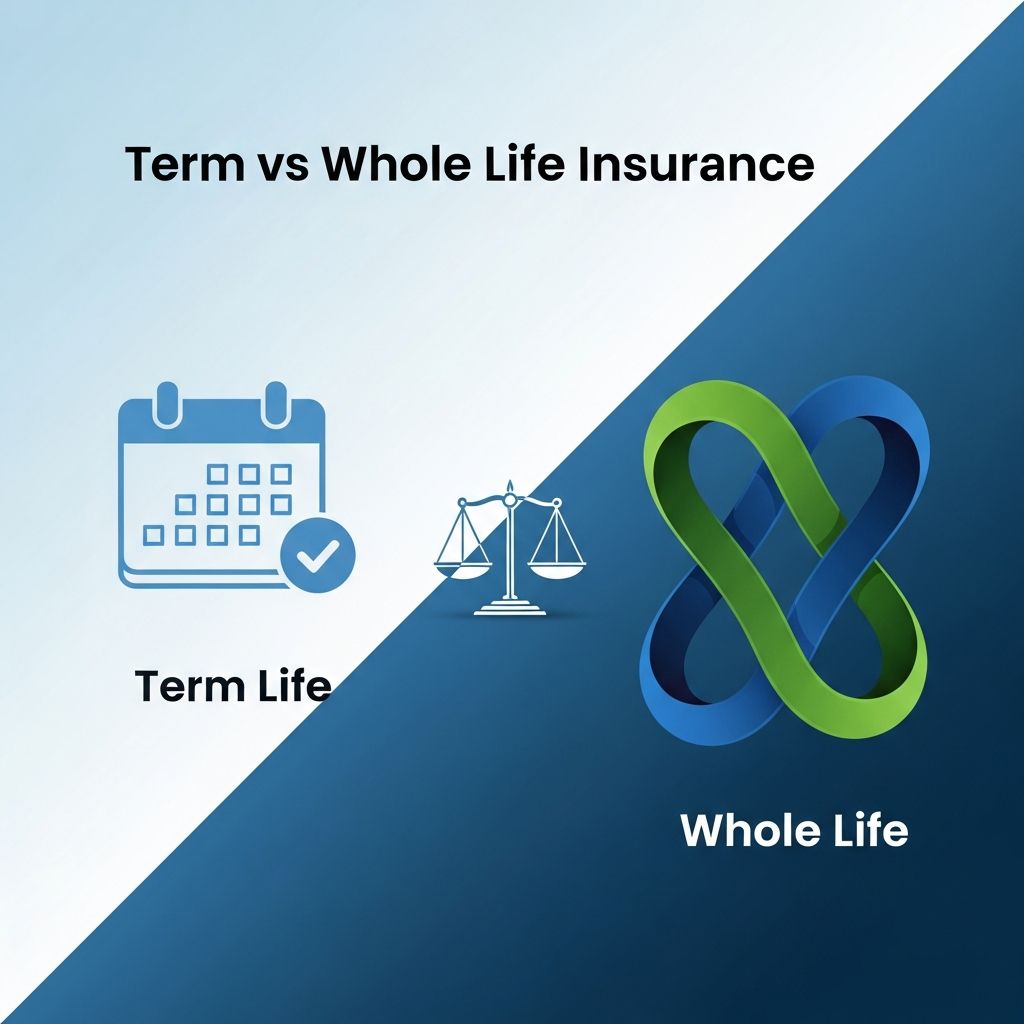
Selecting the appropriate life insurance policy requires understanding the fundamental distinctions between term and whole life insurance. Term life provides temporary protection at a lower cost, ideal for specific financial obligations, whereas whole life offers permanent coverage with a savings component that grows over time. This guide explores these options in depth to help you align your choice with personal goals.
Understanding Term Life Insurance Basics
Term life insurance delivers straightforward coverage for a predefined period, typically spanning 10 to 30 years. During this timeframe, if the policyholder passes away, beneficiaries receive a death benefit to cover expenses like mortgages, education costs, or income replacement. Premiums remain fixed throughout the term, making it predictable and budget-friendly.
Common term lengths include 10, 15, 20, or 30 years, allowing customization based on life stages such as child-rearing or homeownership. No cash value accumulates, focusing purely on the death benefit without investment features. This simplicity appeals to those seeking high coverage amounts without lifelong commitments.
Exploring Whole Life Insurance Fundamentals
Whole life insurance, a form of permanent coverage, remains active for the policyholder’s lifetime provided premiums are paid. It combines a death benefit with a cash value account that grows at a guaranteed rate, funded by a portion of each premium. This dual purpose serves both protection and wealth accumulation.
Premiums are higher but fixed, unaffected by age or health changes post-purchase. The cash value can be borrowed against for needs like retirement or emergencies, though unpaid loans reduce the death benefit. This makes it suitable for long-term planning, including estate preservation.
Key Differences: A Side-by-Side Comparison
To clarify choices, consider these core contrasts derived from industry standards.
| Feature | Term Life Insurance | Whole Life Insurance |
|---|---|---|
| Coverage Duration | 10-30 years, expires if outlived | Lifelong, as long as premiums paid |
| Premiums | Lower, fixed during term | Higher, fixed for life |
| Cash Value | None | Grows tax-deferred at fixed rate |
| Best For | Temporary needs like debt payoff | Permanent protection and savings |
| Flexibility | Convertible to permanent options | Borrowing against cash value |
Financial Costs and Affordability Factors
Cost stands out as the primary differentiator. Term policies often cost 5-15 times less than whole life for equivalent death benefits, due to the absence of cash value and temporary nature. For a healthy 30-year-old seeking $500,000 coverage, a 20-year term might run $20-30 monthly, versus $200-400 for whole life.
Whole life premiums reflect the lifelong guarantee and investment growth, remaining level despite increasing mortality risk. Renewal of term policies post-term can spike costs based on current age and health, potentially exceeding whole life rates. Budget constraints often favor term for younger families.
- Term Savings: Frees funds for other investments like 401(k)s.
- Whole Stability: Predictable payments without future rate hikes.
Pros and Cons of Term Life Coverage
Advantages
- Affordable premiums enable larger coverage amounts.
- Simple structure without investment complexities.
- Flexible terms match life phases like college funding.
Disadvantages
- Expires without payout if you outlive it.
- No living benefits or cash accumulation.
- Potential premium jumps upon renewal.
Pros and Cons of Whole Life Policies
Advantages
- Guaranteed lifetime protection.
- Cash value accessible via loans or withdrawal.
- Fixed premiums and tax-free death benefit.
Disadvantages
- Significantly higher upfront costs.
- Less liquidity early on due to slow cash buildup.
- Overkill for short-term needs.
When Term Life Makes Perfect Sense
Opt for term if your needs are finite, such as protecting dependents until they are independent or paying off a mortgage. Young professionals or families building wealth through other avenues benefit from its low cost, allowing diversification into stocks or retirement accounts. Many policies offer conversion riders to switch to whole life without new underwriting.
For instance, parents insuring until children graduate college find 20-year terms ideal, balancing protection with affordability.
Ideal Scenarios for Whole Life Insurance
Whole life suits those desiring perpetual coverage, especially for estate planning where tax-free proceeds bypass probate. Business owners or high-net-worth individuals use it to equalize inheritances or fund trusts. The forced savings aspect appeals to undisciplined savers, providing a guaranteed return.
It’s also valuable for those uninsurable later due to health issues, locking in rates early.
Hybrid Approaches and Advanced Strategies
Some blend both: “buy term and invest the difference,” purchasing term for pure protection while directing savings to high-yield investments. Others ladder multiple term policies for staggered coverage. Whole life dividends from mutual insurers can offset costs over decades.
Consider riders like accelerated death benefits for critical illness, enhancing either type.
Factors Influencing Your Decision
- Age and Health: Younger, healthier individuals save most with term.
- Financial Goals: Savings needs favor whole; pure protection suits term.
- Budget: Assess long-term affordability.
- Family Situation: Dependent duration guides term length.
Steps to Select and Purchase Coverage
- Evaluate needs via income replacement calculators.
- Compare quotes from multiple carriers.
- Review medical requirements and riders.
- Consult a licensed agent for personalized advice.
Frequently Asked Questions
Is term life insurance worth it?
Yes, for most people needing temporary, high-coverage protection at minimal cost. It provides peace of mind without overcommitting funds.
Can you convert term to whole life?
Many policies include conversion options within the term, avoiding new health exams.
Does whole life build wealth effectively?
It offers conservative growth, better as a supplement to diversified portfolios rather than primary investment.
What if I outlive my term policy?
Coverage ends, but savings from low premiums could fund self-insurance or new policies.
Are premiums tax-deductible?
Generally no for personal policies, though business use may qualify.
Final Thoughts on Choosing Wisely
Align your policy with life stage, risk tolerance, and objectives. Term excels in affordability for defined periods; whole provides enduring security and benefits. Regularly review coverage as circumstances evolve to ensure ongoing adequacy.
References
- Term vs. Whole Life Insurance: What’s the Difference? — Guardian Life. 2023-05-15. https://www.guardianlife.com/life-insurance/term-vs-whole
- Term vs. Whole Life Insurance: Key Differences — Progressive. 2024-02-10. https://www.progressive.com/answers/term-vs-whole-life-insurance/
- Term vs. Whole Life Insurance: Making the Choice — Mutual of Omaha. 2023-11-20. https://www.mutualofomaha.com/advice/life-insurance/types-of-life-insurance/term-vs-whole-life-insurance-making-the-choice
- Term Life vs. Whole Life Insurance: Key Differences — NerdWallet. 2025-01-08. https://www.nerdwallet.com/insurance/life/learn/term-vs-whole-life-insurance
- The differences between term and whole life insurance — TruStage. 2024-03-12. https://www.trustage.com/learn/life-insurance/term-vs-whole-life-insurance
Similar Articles








Read full bio of Sneha Tete