Term Loan: Definition, Types, and How They Work
Complete guide to term loans: understand how they work, types available, and their advantages for borrowers.
What Is a Term Loan?
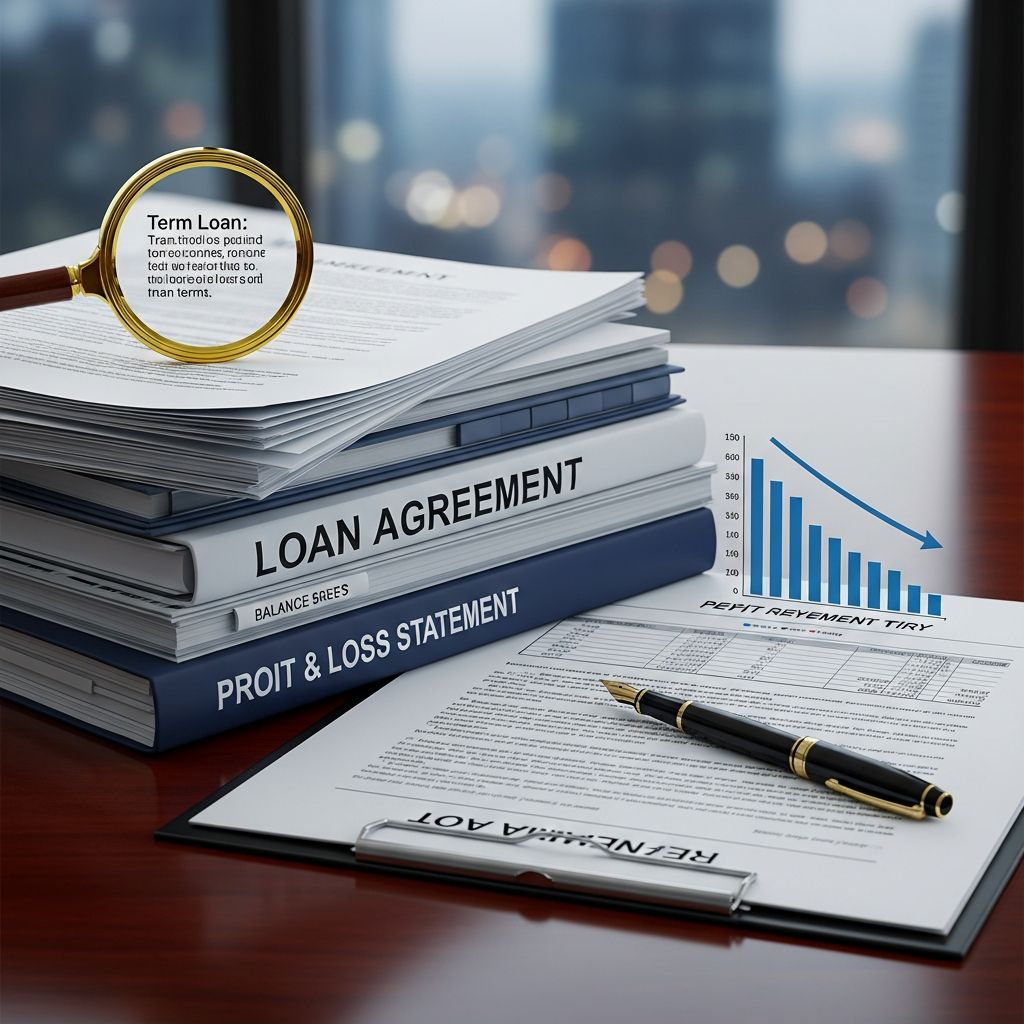
A term loan is a form of debt financing that provides a fixed amount of capital to a borrower, who agrees to repay the principal amount plus interest over a predetermined period. Unlike revolving credit facilities such as credit cards or lines of credit, term loans come with a set repayment schedule and a defined maturity date. This structured approach makes term loans predictable for both lenders and borrowers, as the payment obligations are clearly established from the outset.
Term loans are widely used by businesses of all sizes, as well as individuals, to fund various needs ranging from capital expenditures and equipment purchases to working capital requirements and debt consolidation. The loan amount can vary significantly depending on the borrower’s creditworthiness, the intended use of funds, and the lender’s risk assessment. Most term loans are repaid through equal monthly installments, though some may have different payment structures.
Key Characteristics of Term Loans
Term loans possess several distinguishing features that set them apart from other financing options:
- Fixed loan amount: The borrower receives a lump sum disbursement at the beginning of the loan term, not requiring future drawdowns.
- Predetermined repayment period: Loans typically range from one to ten years, though longer terms are available for specific purposes like real estate financing.
- Fixed or variable interest rate: Term loans may feature either fixed rates that remain constant throughout the loan period or variable rates that fluctuate with market conditions.
- Regular payment schedule: Borrowers make periodic payments—usually monthly—consisting of both principal and interest components.
- Collateral requirement: Many term loans are secured by collateral, which the lender can claim if the borrower defaults.
- Personal guarantee: For business loans, lenders often require personal guarantees from business owners, making them personally liable if the business cannot repay.
Types of Term Loans
The market offers various term loan products designed to meet different borrowing needs and circumstances:
Short-Term Loans
Short-term loans typically have maturity periods ranging from six months to two years. These loans are designed to address immediate cash flow needs or temporary financial challenges. Small businesses and startups often use short-term loans to cover inventory purchases, manage seasonal fluctuations, or bridge gaps between accounts payable and receivable. The advantage of short-term loans is that they involve lower total interest payments compared to longer-term borrowing, as the principal is repaid relatively quickly.
Medium-Term Loans
Medium-term loans typically span three to five years. These loans strike a balance between short and long-term financing, making them suitable for businesses planning expansion or purchasing equipment with moderate depreciation schedules. The repayment period allows businesses to generate returns from their investments before fully repaying the debt.
Long-Term Loans
Long-term loans extend from five to twenty-five years or even longer. These are commonly used for major capital investments such as commercial real estate purchases, manufacturing facilities, or long-lived assets. The extended repayment period allows borrowers to spread payments over many years, reducing the annual debt burden but increasing total interest paid over the loan’s lifetime.
Secured Term Loans
Secured term loans are backed by collateral—tangible assets such as real estate, vehicles, equipment, or inventory. In the event of default, the lender has the right to seize and sell the pledged collateral to recover outstanding balances. Because the lender’s risk is reduced, secured loans typically carry lower interest rates than unsecured alternatives.
Unsecured Term Loans
Unsecured term loans require no collateral, depending instead on the borrower’s creditworthiness and personal guarantee. These loans carry higher interest rates to compensate lenders for the increased risk. They are commonly used by established businesses with strong credit histories and reliable cash flow.
Business Term Loans
Business term loans are specifically designed for commercial enterprises. These may include equipment financing for machinery purchases, working capital loans for operating expenses, or expansion loans for opening new locations. Lenders evaluate business-specific criteria including revenue, profitability, business plan quality, and industry outlook.
Personal Term Loans
Personal term loans serve individual borrowers for purposes such as debt consolidation, home improvements, weddings, or other personal expenses. These loans are typically unsecured and based primarily on the individual’s credit score and income verification.
How Term Loans Work
Understanding the mechanics of term loans helps borrowers make informed decisions:
The Application Process
Borrowers begin by submitting an application to a lender, providing financial documentation that may include tax returns, bank statements, business plans, and personal credit reports. Lenders use this information to assess creditworthiness and repayment capability.
Underwriting and Approval
During underwriting, the lender evaluates the application, verifies information, and determines whether to approve, deny, or approve with conditions. The lender calculates the interest rate based on the borrower’s risk profile, with lower-risk borrowers receiving more favorable rates.
Loan Disbursement
Once approved, the lender disburses the loan amount to the borrower. For many term loans, the entire principal is transferred in a single lump sum, though some arrangements may include staged disbursements tied to specific milestones.
Repayment Schedule
The borrower receives an amortization schedule showing the payment amount, due date, and breakdown of principal and interest for each payment. Early in the loan term, payments consist primarily of interest, while later payments contain more principal.
Advantages of Term Loans
Term loans offer several benefits to borrowers:
- Predictability: Fixed payment amounts and clear maturity dates enable precise financial planning and budgeting.
- Lump sum funding: Receiving the entire loan amount upfront allows borrowers to immediately address their capital needs.
- Lower interest rates: Compared to revolving credit or credit cards, term loans typically offer more competitive interest rates, particularly for secured loans.
- Favorable tax treatment: Interest paid on business term loans is often tax-deductible, reducing the effective cost of borrowing.
- Relationship building: Successful term loan repayment can strengthen borrower-lender relationships and improve access to future credit.
- Faster underwriting: Term loans are less risky for lenders due to their shorter maturity dates, potentially resulting in quicker approval processes.
- Easier qualification: Borrowers with less-than-perfect credit may find term loans more accessible than other financing options.
Disadvantages of Term Loans
Prospective borrowers should also consider potential drawbacks:
- Limited loan amounts: Term loans typically provide smaller amounts compared to lines of credit, which may be insufficient for major capital projects.
- Collateral requirements: Secured term loans require pledging assets, risking asset loss in case of default.
- Inflexible terms: Unlike revolving credit, borrowers cannot adjust the loan amount or repayment schedule without refinancing.
- Fixed payment obligations: Regardless of business performance, borrowers must make scheduled payments or face default consequences.
- Personal guarantees: Business owners often must personally guarantee loans, creating personal liability exposure.
- Interest costs: While lower than some alternatives, the total interest paid over the loan term can still be substantial.
Term Loans vs. Other Financing Options
| Feature | Term Loan | Line of Credit | Credit Card |
|---|---|---|---|
| Funding Structure | Lump sum disbursement | Draw as needed | Revolving credit |
| Interest Rate | Fixed or variable | Variable, lower APR | Higher APR typically |
| Repayment Term | Fixed schedule | Flexible, ongoing | Flexible minimum payments |
| Loan Amount | Set at origination | Fluctuates with draws | Fixed credit limit |
| Best For | Specific capital needs | Ongoing working capital | Short-term expenses |
Interest Rates and Terms
Interest rates on term loans depend on multiple factors. Lenders consider the borrower’s credit score, payment history, debt-to-income ratio, loan amount, collateral value, and the current economic environment. Prime-rate-based loans are common for creditworthy borrowers, while riskier borrowers may receive rates based on the prime rate plus a risk premium.
Loan terms reflect the lender’s assessment of how long the financed assets will generate value or produce cash flow. Equipment financing typically matches the asset’s useful life, while working capital loans are generally shorter-term.
Who Should Consider a Term Loan?
Term loans are appropriate for:
- Small businesses and startups needing capital for equipment or initial operations
- Established businesses planning expansion or major purchases
- Entrepreneurs seeking to consolidate existing debt
- Individuals needing funds for significant personal expenses
- Borrowers preferring predictable repayment schedules over variable payment obligations
How to Qualify for a Term Loan
Lenders evaluate multiple criteria when assessing term loan applications. For businesses, they examine revenue history, profitability, cash flow stability, debt-to-income ratios, and business credit scores. Personal tax returns and business financial statements should be current and accurate. Most lenders require two years of tax return history.
Personal creditworthiness matters significantly. Individuals and business owners should maintain good credit scores, ideally above 680. Lenders also assess collateral value if the loan is secured. Having available collateral can improve approval chances and potentially lower interest rates.
Frequently Asked Questions
Q: What is the difference between a term loan and a line of credit?
A: A term loan provides a fixed amount disbursed as a lump sum with a set repayment schedule. A line of credit allows borrowers to draw funds as needed up to a credit limit, with flexible repayment tied to the amount drawn.
Q: Can I pay off a term loan early?
A: Many term loans allow early repayment, though some include prepayment penalties. Check your loan agreement or contact your lender to understand early repayment options and any associated costs.
Q: What happens if I miss a term loan payment?
A: Missing payments typically results in late fees, credit score damage, and potential default. Defaulting on a secured loan may result in asset seizure. Contact your lender immediately if you anticipate payment difficulties to discuss options.
Q: Are term loan interest payments tax-deductible?
A: For business term loans, interest payments are generally tax-deductible business expenses. Personal loan interest is typically not deductible unless the funds are used for qualifying purposes such as business or investment.
Q: How long does term loan approval typically take?
A: Approval timelines vary from one to two weeks for applications with complete documentation. Online lenders may approve applications in days. The timeline depends on the lender’s underwriting process and the completeness of your application.
Q: What is amortization in relation to term loans?
A: Amortization is the process of paying off a loan through regular installments. The amortization schedule shows how each payment is split between principal and interest over the loan term.
References
- Short Term Loan – Definition, Characteristics, and Types — Corporate Finance Institute. 2025. https://corporatefinanceinstitute.com/resources/accounting/short-term-loan/
Similar Articles








Read full bio of medha deb