Teen Checking Accounts: Complete Guide For Parents And Teens
Discover how teen checking accounts build financial skills with parental oversight, no fees, and essential banking tools for ages 13 and up.
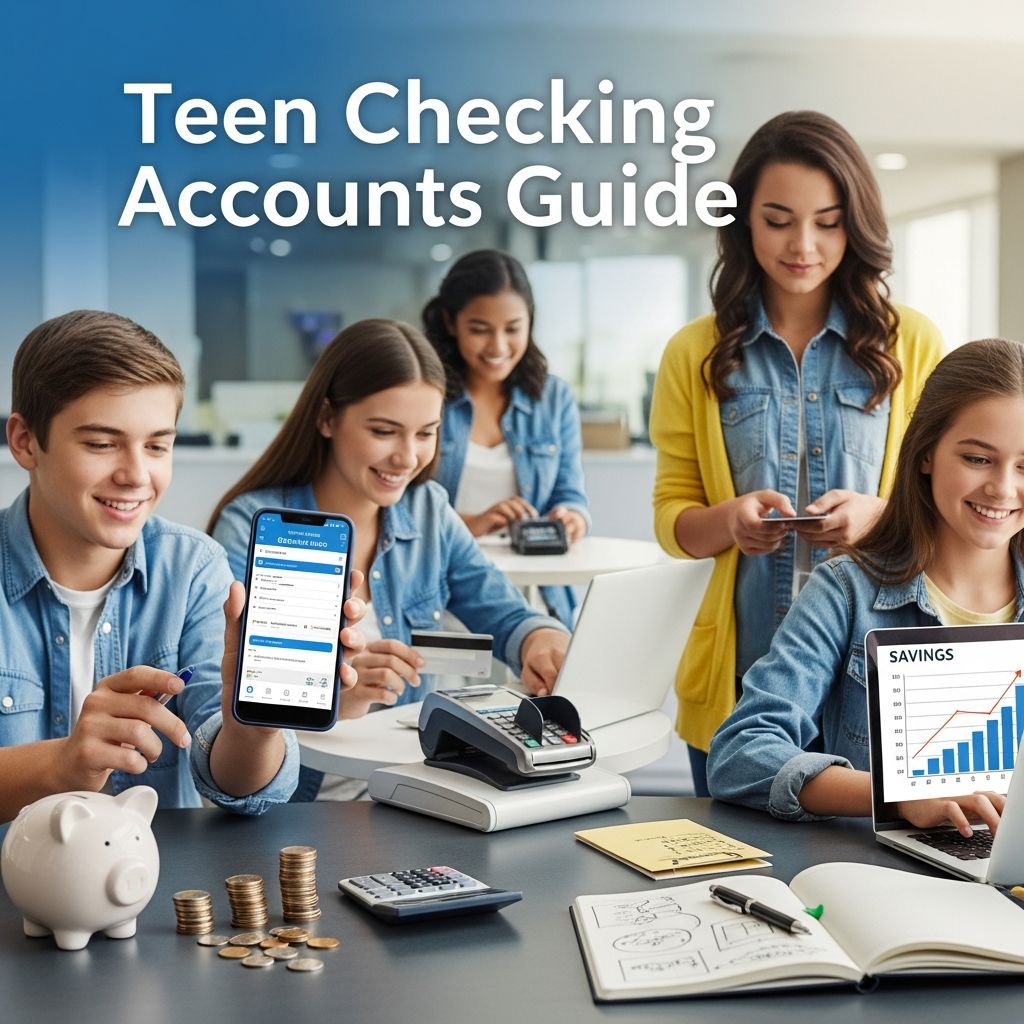
Teen checking accounts provide young individuals with a practical entry into personal finance, combining independence with parental safeguards. These accounts typically waive fees for those under 25 and include tools like debit cards and mobile apps to foster responsible habits.
Why Teens Need Their Own Bank Account
Opening a checking account helps teenagers learn money management early, from tracking spending to understanding digital payments. Parents maintain oversight, reducing risks while building confidence. Accounts for ages 13+ offer direct deposit and digital wallets, preparing youth for future financial responsibilities.
Financial independence starts with hands-on experience. Teens can receive allowances, paychecks, or gifts directly, learning budgeting without cash handling risks. Studies show early banking exposure improves long-term financial literacy.
Core Features of Youth Banking Accounts
Modern teen accounts prioritize safety and usability. Key elements include no monthly fees for students under 25, FDIC insurance, and fraud protection. Debit cards enable everyday purchases, while apps provide transaction alerts.
- Debit Card Access: Available from age 13+, usable at millions of locations and ATMs.
- Direct Deposit: Supports paychecks or allowances for ages 13 and older.
- Mobile Integration: Compatible with digital wallets for contactless payments.
- No Overdraft Fees: Many accounts decline transactions exceeding balance to avoid charges.
Account Types for Different Age Groups
Banks offer tailored options: parent-controlled for younger teens and independent ones for older youth. For instance, SafeBalance for Family Banking limits features for kids under 18, while Advantage Banking suits 16+ with more flexibility.
| Feature | Teen Account (13+) | Family Banking (Under 13) |
|---|---|---|
| Age Eligibility | 13+ | Parent-owned, child access |
| Debit Card | Yes | Limited/Parent |
| Direct Deposit | Yes | No |
| Parental Controls | Optional | Full |
| Monthly Fee | $0 under 25 | $0 |
| Overdraft | Decline | Decline |
Fee Structures and Waivers
Most providers eliminate maintenance fees for account owners under 25 enrolled in school, covering high school to university. Minimum opening deposits range from $25, with no balance requirements. ATM fees apply outside networks ($2.50 domestic).
SafeBalance options avoid overdrafts entirely, while Plus versions offer protection but charge $10 per item if opted in. Preferred Rewards members get additional waivers.
| Account Type | Monthly Fee | Waiver Conditions |
|---|---|---|
| SafeBalance | $4.95 | Under 25 or $500 balance |
| Advantage Plus | $12 | Under 25 or $1,500 balance |
| Family Banking | $0 | Always for eligible kids |
Opening a Teen Account: Step-by-Step
Eligibility requires a parent co-owner for under 18s; 16+ may open solo depending on the bank. Provide ID, SSN, and proof of student status. Schedule in-branch for under 13 or use app/online for older teens.
- Choose account type based on age and needs.
- Gather documents: parent’s ID, teen’s SSN/birth certificate.
- Open online or at a branch; link external funding.
- Set up alerts, debit PIN, and parental notifications.
- Fund with initial deposit via transfer or cash.
Non-US citizens need residency proof. Approval is instant for qualifying applicants.
Parental Tools for Oversight
Parents access separate logins to monitor spending, set limits, and deposit funds. Controls block certain transactions or ATMs. Teens get age-appropriate apps without full transfer rights, ensuring safety.
- Real-time alerts for purchases.
- Spending limits and category blocks.
- Joint visibility without full control handover.
Digital Tools and Apps Enhancing Teen Banking
Mobile apps feature Zelle for peer transfers, Erica virtual assistant for budgeting tips (13+), and custom alerts. Link checking with savings for ATM access. No paper checks in basic teen accounts to minimize risks.
Security includes $0 liability for fraud if reported promptly. Over 70,000 fee-free ATMs nationwide support daily needs.
Building Financial Habits Through Teen Accounts
These accounts teach budgeting via app trackers, saving via linked goals, and earning via direct deposits. Parents can automate allowances, promoting discipline. Long-term, fee-free status until 25 eases college transitions.
Combine with education resources for compound growth understanding. Early users report better credit scores later.
Common Pitfalls and How to Avoid Them
Avoid overspending by enabling alerts; don’t ignore low-balance warnings. Teens should learn ATM etiquette to dodge fees. Parents: Review statements monthly. Transition to adult accounts before 25 to maintain perks.
- Opt out of overdraft to prevent fees.
- Use in-network ATMs only.
- Secure debit card like cash.
Comparing Top Teen Banking Providers
Beyond one bank, options like U.S. Bank offer $0 fees under 25, free debit, and alerts. Capital One provides kid accounts from age 8 with parental views. Select based on network size and app quality.
| Provider | Min Age | Fee Waiver | Unique Feature |
|---|---|---|---|
| Bank of America | 13 | Under 25 | Zelle, Erica AI |
| U.S. Bank | 18 (joint under) | Under 25 | 70k ATMs |
| Capital One | 8 | $0 always | External linking |
Frequently Asked Questions
What is the minimum age for a teen checking account?
Typically 13-16 for debit access; under that requires full parental ownership.
Are there fees for teen accounts?
No monthly fees until age 25 if student; some ATM fees apply.
Can teens get their own debit card?
Yes, from 13+ with parental setup.
What parental controls are available?
Spending limits, alerts, separate logins, and transaction blocks.
Is direct deposit possible for allowances?
Yes, for 13+ accounts.
Do these accounts earn interest?
Most checking accounts do not; pair with savings for APY.
Transitioning to Adult Banking
At 25 or post-graduation, convert to standard accounts. Maintain direct deposit and alerts. Build credit by adding authorized user status later. This seamless shift ensures continued growth.
Teen accounts lay the foundation for lifelong financial wellness, blending education, tools, and security.
References
- Bank Account Options for Kids, Teens, Students & Young Adults — Bank of America. 2024. https://info.bankofamerica.com/en/student-banking/banking-accounts
- 10 Best Student Checking Accounts — College Raptor. 2024. https://www.collegeraptor.com/paying-for-college/articles/financial-advice-planning/10-best-student-checking-accounts/
- Bank of America student account review [2024] — Wise. 2024. https://wise.com/us/blog/bank-of-america-student-account
- Bank of America Advantage Banking — Bank of America. 2024. https://www.bankofamerica.com/deposits/checking/advantage-banking/
- Bank Account Options for Students and Young Adults FAQs — Bank of America. 2024. https://www.bankofamerica.com/deposits/student-accounts-faqs/
Similar Articles








Read full bio of medha deb