Technical Analysis: Definition and Market Trading Guide
Master technical analysis fundamentals to forecast price movements using historical market data.

What Is Technical Analysis?
Technical analysis is a method of evaluating financial securities and market movements by analyzing historical price and volume data. Rather than examining a company’s financial statements or economic fundamentals, technical analysts use charts, patterns, and mathematical indicators to predict future price directions. This approach assumes that historical trading patterns tend to repeat themselves, driven by the collective behavior of market participants. Technical analysts believe that by studying past price movements, they can identify trends and patterns that signal profitable trading opportunities.
The core philosophy behind technical analysis rests on three fundamental assumptions: (1) market prices reflect all available information, (2) prices move in identifiable trends and patterns, and (3) history tends to repeat itself in market behavior. Technical analysts use this methodology as part of active management strategies, standing in contrast to passive investment approaches and modern portfolio theory.
Understanding Technical Analysis vs. Fundamental Analysis
Technical analysis differs significantly from fundamental analysis, which represents the traditional approach to security evaluation. Fundamental analysts study a company’s financial statements, earnings reports, dividend payments, asset valuations, and financial ratios. They also examine qualitative factors such as management quality, competitive positioning, new product development, and research initiatives. Additionally, fundamental analysts consider macroeconomic conditions, industry trends, and geopolitical factors when making investment decisions.
In contrast, technical analysts focus exclusively on price and volume patterns, disregarding external economic drivers, company-specific news, or broader market conditions. While fundamental analysts ask “What is this company worth?” technical analysts ask “Where is the price going next?” This fundamental difference in approach means that two analysts examining the same stock might reach entirely different conclusions. Fundamental analysis may be considered a “why” approach, while technical analysis is a “what” approach to market forecasting.
Core Principles of Technical Analysis
The foundation of technical analysis rests on several key principles that guide how practitioners interpret market data:
Price Reflects All Information
Technical analysts believe that a market’s current price incorporates all relevant information available to market participants. This means that by analyzing price history, traders capture the collective wisdom of all market participants. News, earnings reports, economic data, and geopolitical events are already reflected in the current price, so there is no need to analyze them separately.
Price Moves in Trends
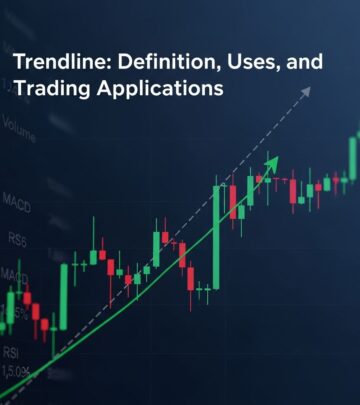
Markets do not move randomly; instead, they trend in identifiable directions. Prices move upward in uptrends, downward in downtrends, and sideways in consolidation phases. Technical analysts focus on identifying these trends early and trading in the direction of the trend, as “the trend is your friend.” They use trend lines, moving averages, and other tools to confirm and follow existing trends.
History Repeats Itself
Price patterns have appeared throughout market history and tend to repeat. Specific chart formations, such as head and shoulders patterns or double tops, frequently precede price reversals or continuations. This repetition occurs because human psychology and investor behavior remain relatively consistent across different time periods and market conditions.
Key Chart Patterns and Technical Formations
Technical analysts spend considerable time studying historical price charts to identify recurring patterns. These patterns help traders anticipate potential price movements and make trading decisions. Common chart patterns include:
Reversal Patterns
Reversal patterns signal potential changes in price direction. The head and shoulders pattern, one of the most recognized formations, consists of three peaks where the middle peak (the head) is higher than the two surrounding peaks (the shoulders). This pattern often appears at market tops and suggests a shift from uptrend to downtrend. Similarly, the double top pattern involves two consecutive peaks at approximately the same level, signaling potential downward reversal. The inverse formations—inverse head and shoulders and double bottom—appear at market bottoms and suggest potential upward reversals.
Continuation Patterns
Continuation patterns suggest that the existing trend will persist after a brief consolidation period. Triangle patterns, pennants, flags, and cup and handle formations all fall into this category. For example, a bullish flag pattern might show a small downward consolidation within a larger uptrend, suggesting that the uptrend will resume. These patterns help traders stay in profitable trends rather than exiting prematurely.
Support and Resistance Levels
Support and resistance levels represent price points where buying or selling pressure tends to emerge. Support is a price level where buying interest emerges, preventing prices from falling further. Resistance is a price level where selling pressure emerges, preventing prices from rising higher. Technical analysts identify these levels by examining historical price action and observe how prices react when reaching these levels repeatedly. When support is broken, it often becomes resistance, and vice versa, creating trading opportunities at these pivotal price points.
Essential Technical Indicators
Technical analysts employ numerous mathematical indicators to supplement chart analysis and confirm trading signals. These indicators fall into several categories based on their function and calculation methods:
Trend-Following Indicators
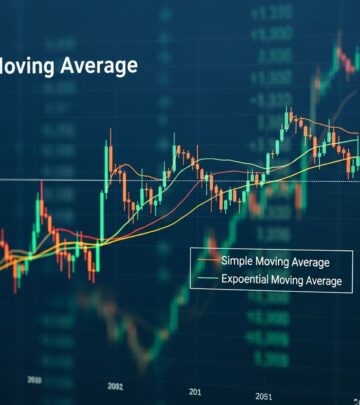
Moving Averages represent one of the most popular trend-following tools. They smooth price data by calculating the average price over a specific period, making trends more visible. Simple moving averages give equal weight to all prices, while exponential moving averages emphasize recent prices. Traders often use two moving averages, with signals generated when faster-moving averages cross above or below slower-moving averages.
MACD (Moving Average Convergence Divergence) tracks the relationship between two exponential moving averages. When MACD crosses above its signal line, it generates a bullish signal; when it crosses below, it generates a bearish signal. MACD also shows divergence, helping traders identify potential reversals before they occur.
Momentum Oscillators
The Relative Strength Index (RSI) measures the magnitude of recent price changes to evaluate overbought or oversold conditions. RSI values above 70 suggest overbought conditions where a price pullback may occur, while values below 30 suggest oversold conditions where a bounce may develop. RSI helps traders identify turning points and confirm trend strength.
Stochastic Oscillator measures the price’s position within its recent trading range. Like RSI, it identifies overbought and oversold conditions and helps traders spot potential reversals. The indicator compares a stock’s closing price to its price range over a specific period.
TRIX is an oscillator that displays the slope of a triple-smoothed exponential moving average, filtering out minor price movements and highlighting significant trends. It helps traders focus on meaningful price trends rather than noise.
Volume-Based Indicators
Volume analysis provides insight into the conviction behind price movements. High volume accompanying price increases suggests strong buying interest, while high volume on declines indicates strong selling pressure. Volume-based indicators include:
On-Balance Volume (OBV) tracks cumulative volume by adding volume on up days and subtracting volume on down days. Rising OBV suggests accumulation and potential upside, while falling OBV suggests distribution and potential downside.
Money Flow Index measures the amount of stock traded on days when prices increased. This indicator helps identify whether professional traders are accumulating or distributing securities.
Accumulation/Distribution Index compares the close price to the trading range, weighing volume based on the close position. It helps identify whether money is flowing into or out of a security.
Trend and Volatility Indicators
Vortex Indicator identifies the existence, continuation, initiation, or termination of trends by measuring the relationship between closing prices and true range. This indicator helps traders stay aligned with ongoing trends and recognize when trends are ending.
Sentiment Analysis in Technical Trading
Beyond price and volume, technical analysts monitor investor sentiment through various indicators and surveys. Sentiment analysis helps traders determine whether market participants are becoming excessively bullish or bearish. Extreme sentiment readings often precede market reversals, as contrarian trading theory suggests that when most investors are extremely optimistic, the market is vulnerable to decline, and when most investors are extremely pessimistic, the market is vulnerable to rally.
Key sentiment indicators include put/call ratios, which compare the volume of puts to calls, and bull/bear ratios, which track the proportion of bullish versus bearish investment advisors. Short interest levels also provide sentiment information, showing how many traders are betting against particular securities.
The Scientific Basis for Technical Analysis
While technical analysis has faced criticism from academic finance, researchers have developed mathematical models supporting some technical analysis principles. Caginalp and Balenovich’s asset-flow differential equations demonstrated that major technical analysis patterns could be generated using basic assumptions about investor behavior and finite resources. Their research showed that different investor groups with varying valuations could mathematically produce patterns like triangle formations and reversal patterns.
Modern research has also explored technical analysis using price velocity and acceleration frameworks, attempting to establish general classification systems for patterns. This scientific approach bridges the gap between traditional chart analysis and quantitative analysis, providing theoretical support for established trading techniques.
Advantages and Limitations
Advantages of Technical Analysis
Technical analysis offers several benefits to traders. It provides clear entry and exit signals, making it particularly useful for active traders with shorter time horizons. The methodology is flexible and can be applied to any tradable asset, from stocks to currencies to commodities. Additionally, technical analysis requires only historical price and volume data, which is widely available and cost-effective.
Limitations and Criticisms
Critics argue that technical analysis contradicts the efficient-market hypothesis, which states that asset prices are essentially unpredictable. Research on technical analysis’s effectiveness has produced mixed results, with some studies supporting its utility while others find no evidence of consistent profits. Pattern recognition can be subjective, leading to different interpretations of the same chart. Additionally, technical analysis ignores fundamental business value, potentially leading to trading decisions based purely on price momentum.
Frequently Asked Questions (FAQs)
Q: Is technical analysis reliable for predicting stock prices?
A: Technical analysis provides a systematic approach to analyzing price movements, but results vary based on market conditions, trader skill, and the specific techniques employed. Historical patterns don’t guarantee future results, and technical analysis should be combined with proper risk management and position sizing for best results.
Q: Can beginners use technical analysis effectively?
A: Yes, beginners can learn technical analysis, but they should start with basic concepts like support/resistance and simple moving averages before advancing to complex indicators. Paper trading and backtesting strategies on historical data help build skills without risking real capital.
Q: How long does it take to master technical analysis?
A: Understanding basic technical analysis concepts takes weeks to months, but developing consistent profitability typically requires years of practice, study, and market experience. Continuous learning and adaptation to changing market conditions remain essential throughout a trader’s career.
Q: Should I use only technical analysis or combine it with fundamental analysis?
A: Many professional traders and investors use both approaches. Fundamental analysis identifies what to buy, while technical analysis helps determine when to buy and sell. Combining both methodologies can provide a more comprehensive investment framework.
Q: What timeframes work best for technical analysis?
A: Technical analysis works across all timeframes, from minutes to years. Shorter timeframes suit day traders, while longer timeframes suit swing traders and position traders. The best timeframe depends on your trading style and available time to monitor positions.
References
- Technical Analysis — Wikipedia Contributors. Accessed 2025-11-29. https://en.wikipedia.org/wiki/Technical_analysis
- Market Technical Analysis — Investopedia. https://www.investopedia.com/terms/t/technicalanalysis.asp
- The Efficient-Market Hypothesis and Its Critics — Journal of Economic Literature, Princeton University. https://scholar.princeton.edu
- Asset Flow and Mathematical Patterns in Trading — Caginalp, G., & Balenovich, D. (1994). Research in the study of technical analysis patterns and investor behavior.
- Moving Averages and Trend Analysis — Technical Indicators Guide, CMT Association. https://www.charteredmta.org
Similar Articles








Read full bio of medha deb