Tax-Free Savings Accounts and Investment Instruments
Maximize wealth growth with tax-advantaged savings accounts and investment vehicles.

Building wealth and securing your financial future requires strategic planning and knowledge of the various tax-advantaged savings vehicles available to you. One of the most powerful tools in a saver’s arsenal is the tax-free savings account, along with other investment instruments specifically designed to minimize your tax burden while maximizing growth potential. Understanding how these accounts work and which instruments are best suited for your financial goals can significantly impact your long-term wealth accumulation.
Understanding Tax-Free Savings Accounts (TFSAs)
A Tax-Free Savings Account (TFSA) is a registered investment account that allows Canadian residents to set aside money and invest it without paying taxes on the investment income or capital gains earned within the account. Unlike registered retirement savings plans, funds in a TFSA can be withdrawn at any time without any tax implications, making it an exceptionally flexible savings tool.
The TFSA was first introduced in 2009 and has since become one of the most popular ways for Canadians to save money. The key advantage of a TFSA is that any earnings generated within the account—whether through interest, dividends, or capital appreciation—are completely tax-free. This means your money can grow unimpeded by tax obligations, allowing compound interest to work more effectively in your favor.
Key Features of TFSAs
- Tax-Free Growth: All investment income earned within a TFSA is exempt from federal and provincial taxes
- Annual Contribution Limits: Contribution limits vary by year and are indexed to inflation in $500 increments. As of 2024, the annual limit is $7,000
- Flexibility: You can withdraw funds at any time without penalty or tax consequences
- Contribution Room: Unused contribution room carries forward indefinitely, allowing you to catch up if you miss years
- No Income Restrictions: Any Canadian resident aged 18 and over with a valid Social Insurance Number can open a TFSA
- No Mandatory Withdrawals: Unlike retirement accounts, there are no required minimum withdrawals at any age
Types of Investment Instruments for Tax-Free Accounts
Within a TFSA or similar tax-advantaged account, you can invest in a variety of instruments designed to generate returns while sheltering your earnings from taxation. The choice of instrument depends on your risk tolerance, investment timeline, and financial objectives.
High-Interest Savings Accounts (HISAs)
A high-interest savings account is one of the most conservative options available within a TFSA. These accounts typically offer interest rates significantly higher than regular savings accounts, allowing your money to grow steadily with minimal risk. Banks and financial institutions offer HISAs that are CDIC-insured, protecting your deposits up to $100,000. While HISAs provide lower returns compared to equity investments, they offer security and stability, making them ideal for emergency funds or short-term savings goals.
Guaranteed Investment Certificates (GICs)
Guaranteed Investment Certificates are fixed-income securities issued by banks and trust companies that guarantee a specific interest rate for a predetermined period. When you purchase a GIC, you agree to leave your money invested for a set term—typically ranging from 30 days to five years or longer—in exchange for a guaranteed return. GICs are an excellent option for risk-averse investors seeking predictable income, and when held within a TFSA, the interest earned is completely tax-free.
Bonds and Fixed-Income Securities
Bonds represent loans you make to governments or corporations in exchange for regular interest payments and return of principal at maturity. Government bonds are considered very safe investments backed by the full faith of the government, while corporate bonds offer higher yields but carry slightly more risk. Bond ladder strategies—where you purchase bonds maturing at different intervals—can provide steady income streams while protecting tax-free growth within a TFSA.
Mutual Funds
Mutual funds pool money from multiple investors to purchase a diversified portfolio of stocks, bonds, or other securities. When held within a TFSA, all dividends and capital gains distributions are tax-free. Mutual funds offer professional management, diversification, and access to markets that might be difficult to enter as an individual investor. They range from conservative balanced funds to aggressive growth-oriented options.
Exchange-Traded Funds (ETFs)
Exchange-Traded Funds are similar to mutual funds but trade on stock exchanges like individual stocks. ETFs offer lower fees than many mutual funds and provide instant diversification across asset classes. Within a TFSA, all dividend income and capital gains from ETFs are shielded from taxation. ETFs have become increasingly popular due to their transparency, tax efficiency, and flexibility.
Individual Stocks
You can purchase individual company stocks directly within a TFSA. This strategy allows investors to focus on companies they believe will appreciate significantly. All dividends received and capital gains realized from stock sales within the account are completely tax-free. However, individual stock investing requires more research and carries higher risk than diversified funds, making it suitable primarily for experienced investors.
Dividend-Paying Securities
Many investors use TFSAs to hold dividend-paying stocks or funds, capitalizing on the tax-free treatment of dividend income. Dividend reinvestment plans (DRIPs) can be particularly powerful within a TFSA, as reinvested dividends compound tax-free, accelerating wealth accumulation over time.
Comparing Tax-Advantaged Accounts
While TFSAs are exceptional savings vehicles, it’s important to understand how they compare to other tax-advantaged accounts available to Canadian investors.
| Feature | TFSA | RRSP | RESP |
|---|---|---|---|
| Tax Treatment | Tax-free growth and withdrawals | Tax-deductible contributions; tax on withdrawals | Tax-deferred growth; tax on earnings |
| Contribution Limits | $7,000 annually (2024) | 18% of previous year income | $2,500 annually per child |
| Withdrawal Flexibility | No restrictions or taxes | Taxable as income | Restricted to education expenses |
| Age Restrictions | 18+ to open | Must have earned income | Child must be under 17 |
| Required Withdrawals | None | Yes, starting at age 71 | Yes, by age 35 |
Maximizing Your Tax-Free Savings Strategy
To make the most of tax-free savings accounts and investment instruments, consider the following strategies:
Prioritize Your Contributions
If you have limited funds to invest, prioritize contributions to your TFSA before other accounts. The tax-free growth and withdrawal flexibility make it an ideal foundational savings vehicle. Once you’ve maximized your TFSA, consider contributing to an RRSP for additional tax benefits, especially if your income is high enough to justify the tax deduction.
Asset Location Strategy
Place your highest-yielding, most tax-inefficient investments in your TFSA. For example, bonds and dividend-paying stocks generate more taxable income and benefit greatly from tax-free treatment. Save lower-yielding investments for non-registered accounts where the tax impact is minimal.
Diversification Within Tax-Free Accounts
Don’t put all your eggs in one basket. Combine different investment instruments within your TFSA to balance risk and return. A typical allocation might include a mix of GICs for stability, bonds for steady income, dividend-paying stocks for growth, and growth-oriented ETFs for capital appreciation.
Regular Contributions
Commit to making regular contributions to your TFSA throughout the year. Dollar-cost averaging—investing a fixed amount at regular intervals—reduces the impact of market volatility and can improve long-term returns.
Review and Rebalance
Periodically review your TFSA portfolio to ensure it remains aligned with your financial goals and risk tolerance. Market movements may cause your asset allocation to drift; rebalancing brings it back in line with your strategy.
Frequently Asked Questions
Q: Can I hold a TFSA and an RRSP simultaneously?
A: Yes, absolutely. Many investors hold both accounts simultaneously. TFSAs offer tax-free withdrawals and flexibility, while RRSPs provide immediate tax deductions. The choice of which to prioritize depends on your income level and financial situation.
Q: What happens if I withdraw money from my TFSA?
A: Withdrawals from a TFSA are tax-free and don’t affect your income for tax purposes. Your contribution room is restored in the following calendar year, allowing you to redeposit the withdrawn amount plus make new contributions.
Q: Are there penalties for exceeding my TFSA contribution limit?
A: Yes. The Canada Revenue Agency charges a penalty of 1% per month for each month the excess remains in the account. It’s crucial to track your contributions carefully to avoid exceeding your available contribution room.
Q: Which investments provide the best returns within a TFSA?
A: The best investment depends on your risk tolerance and timeline. Conservative investors might prefer GICs and bonds, while aggressive investors may focus on growth stocks and ETFs. Historically, diversified equity portfolios have provided superior long-term returns, though with higher volatility.
Q: Can non-residents of Canada open a TFSA?
A: No. To open and maintain a TFSA, you must be a Canadian resident aged 18 or older with a valid Social Insurance Number. Non-residents may be required to close their TFSAs.
Q: Should I invest my entire TFSA in stocks or bonds?
A: The optimal allocation depends on your age, risk tolerance, and financial goals. Younger investors with longer time horizons can typically afford more aggressive allocations, while those nearing retirement should consider more conservative mixes of bonds and dividend-paying stocks.
The Power of Tax-Free Compounding
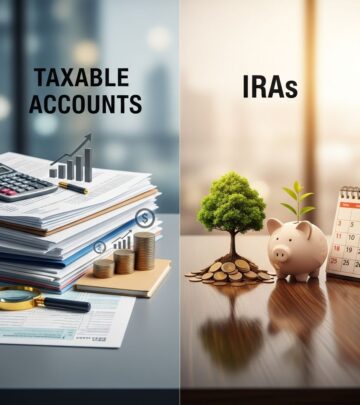
One of the most compelling reasons to utilize TFSAs and other tax-free investment instruments is the power of compounding without tax drag. When you’re not required to pay taxes on your investment earnings annually, those earnings continue to compound, generating returns on returns. Over decades, this tax-free compounding can result in substantially larger wealth accumulation compared to taxable accounts.
Consider a simple example: if you invest $7,000 annually in a TFSA earning 6% per year, after 30 years you would accumulate approximately $803,000. The same investment in a taxable account with a 30% tax rate on earnings would yield only about $575,000—a difference of over $228,000 attributable solely to tax-free growth.
Conclusion
Tax-free savings accounts and investment instruments represent some of the most powerful tools available for building long-term wealth. By understanding the features and benefits of TFSAs, learning about various investment instruments you can hold within them, and implementing a strategic approach to contributions and asset allocation, you can significantly accelerate your financial growth. Whether you’re just beginning your savings journey or are an experienced investor, incorporating tax-free accounts into your overall financial strategy is essential for minimizing taxes and maximizing wealth accumulation. The combination of tax-free growth, contribution flexibility, and access to diverse investment instruments makes TFSAs an invaluable component of comprehensive financial planning.
References
- Tax-Free Savings Account (TFSA) — Government of Canada, Canada Revenue Agency. 2024. https://www.canada.ca/en/revenue-agency/services/tax/individuals/topics/tax-free-savings-account.html
- Contribution Limits for 2024 — Government of Canada, Department of Finance. 2024. https://www.canada.ca/en/services/taxes/income-tax/personal-income-tax/tfsa/contribution-limits.html
- CDIC Coverage — Canada Deposit Insurance Corporation. 2024. https://www.cdic.ca/about-cdic/what-we-insure/
- Registered Education Savings Plans (RESP) — Government of Canada, Canada Revenue Agency. 2024. https://www.canada.ca/en/revenue-agency/services/tax/individuals/topics/resp.html
- The Canadian Investor’s Guide to Tax Planning — Chartered Professional Accountants of Canada. 2023. https://www.cpacanada.ca
Similar Articles








Read full bio of Sneha Tete