Tax-Deferred Retirement Accounts Explained
Unlock the power of tax-deferred savings for a secure retirement with strategies to maximize growth and minimize taxes.

Tax-deferred retirement accounts enable individuals to save for the future while postponing income taxes on contributions and investment earnings until funds are withdrawn, typically in retirement when tax rates may be lower.
Understanding the Core Mechanics of Tax Deferral
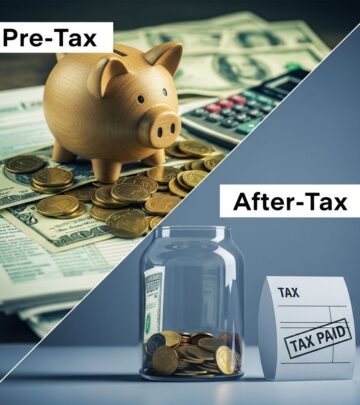
In these accounts, money you contribute often qualifies as a deduction from your current taxable income, reducing your tax bill today. Investments inside the account—such as stocks, bonds, or mutual funds—grow without annual tax liabilities on dividends, interest, or capital gains. Taxes apply only upon distribution, treated as ordinary income based on your bracket at that time. This structure contrasts sharply with taxable brokerage accounts, where gains trigger immediate tax events each year.
The appeal lies in compound growth: untaxed earnings reinvest fully, accelerating balance expansion over decades. For high earners today anticipating lower retirement income, this defers taxes from peak brackets to milder ones.
Primary Types of Tax-Deferred Retirement Vehicles
Several options exist, tailored to employment status and savings goals. Here’s a breakdown:
- Employer-Sponsored 401(k) Plans: Offered by many companies, these deduct contributions pre-tax from paychecks. Employers often match portions, amplifying savings. Self-employed individuals access Solo 401(k)s for parallel benefits.
- Traditional Individual Retirement Accounts (IRAs): Independent of employers, opened via banks or brokerages. Ideal for supplementing workplace plans with flexible investment choices.
- 403(b) Plans: Similar to 401(k)s but for nonprofits, schools, and certain public sectors, often with annuity options.
- Deferred Annuities: Insurance products providing tax-sheltered growth, paid out as streams later, fixed or variable based on performance.
Contribution Limits and Eligibility Rules
Federal guidelines cap annual inputs to prevent overuse. For 2026, under-50 workers can contribute up to $24,500 to 401(k)s or 403(b)s, with catch-up boosts of $8,000 for ages 50-60 and 64+, or $11,250 for 60-63 per SECURE 2.0 Act enhancements.
| Account Type | 2026 Base Limit | Catch-Up (50+) | Special Catch-Up (60-63) |
|---|---|---|---|
| 401(k)/403(b) | $24,500 | $8,000 | $11,250 |
| Traditional IRA | $7,000 | $1,000 | N/A |
Traditional IRAs cap at $7,000 base plus $1,000 catch-up. Eligibility phases out at higher incomes if covered by workplace plans. Total limits across accounts apply, e.g., IRA plus 401(k).
Accessing Funds: Penalties and Exceptions
Early access before 59½ incurs 10% penalties plus income taxes, deterring premature dips. Exceptions include hardships like medical bills exceeding 7.5% of income, first-home purchases up to $10,000, or higher education costs. Loans from 401(k)s offer penalty-free borrowing up to $50,000 or 50% of balance, repayable via payroll.
Required Minimum Distributions: Planning for Mandatory Withdrawals
Post-73, account holders must withdraw RMDs annually, calculated via IRS life-expectancy tables dividing balance by factor. Failure triggers 25% excise taxes (50% if uncorrected). RMDs boost taxable income, potentially affecting Social Security or Medicare premiums. Strategies like QCDs (Qualified Charitable Distributions) offset this for philanthropists over 70½.
Tax-Deferred vs. Tax-Exempt: A Strategic Comparison
Tax-exempt accounts like Roth IRAs fund with after-tax dollars: no upfront deduction, but qualified withdrawals—including earnings—are tax-free after 59½ and five-year holding. No RMDs for original owners, offering legacy flexibility.
| Feature | Tax-Deferred (Traditional) | Tax-Exempt (Roth) |
|---|---|---|
| Contributions | Pre-tax, deductible | After-tax, non-deductible |
| Growth | Tax-deferred | Tax-free |
| Withdrawals | Taxed as income | Tax-free (qualified) |
| RMDs | Required at 73 | None for owner |
| Best For | High current bracket | Low current, high future bracket |
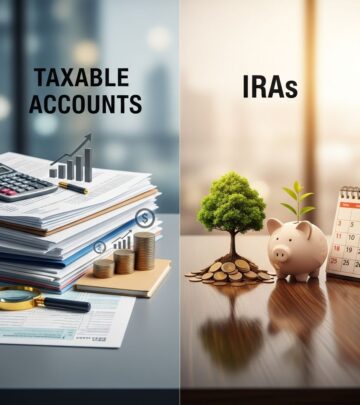
Taxable accounts provide liquidity sans limits or penalties but tax gains yearly. HSAs blend deferral with tax-free medical use.
Maximizing Benefits: Contribution and Investment Strategies
Prioritize employer matches—free money doubling inputs. Diversify holdings: low-cost index funds historically outperform via compounding. Automate increases annually. High earners convert portions to Roth via backdoor methods, paying taxes now for future freedom. Multi-account layering (401(k) max, then IRA) optimizes limits.
Common Pitfalls and How to Avoid Them
- Overlooking Income Limits: IRA deductibility vanishes above MAGI thresholds ($83,000-$103,000 single, 2026 est.).
- Job Changes: Roll over to IRAs to preserve deferral; cash-outs forfeit growth and penalties.
- Market Timing: Dollar-cost average to mitigate volatility.
- RMD Oversight: Use calculators; consider QLACs delaying up to $200,000.
Other Tax-Advantaged Options Beyond Core Retirement Plans
Savings bonds and certain stocks defer via holding periods. 457 plans for government/nonprofits mirror 401(k)s sans early penalties. SEP IRAs suit self-employed with higher limits (25% compensation).
Retirement Planning in a Changing Tax Landscape
With potential bracket hikes, deferral shines for current savers. Model scenarios: if retiring abroad or charitably, weigh Roth conversions. Consult advisors for personalized Roth ladders or mega-backdoor 401(k) after-tax contributions.
Frequently Asked Questions
What happens if I miss an RMD?
25% penalty on shortfall, waivable via IRS correction. Plan distributions timely.
Can I have both traditional and Roth accounts?
Yes, diversifying tax treatments hedges future rates.
Are employer matches pre-tax?
Yes, in traditional 401(k)s; always contribute enough for full match.
How do tax-deferred accounts affect Social Security?
Withdrawals count as income, potentially taxing benefits 85%.
What’s the solo 401(k) for freelancers?
Combines employee/employer contributions up to $69,000 base 2026.
Integrating tax-deferred accounts fortifies retirement, leveraging time and tax code for wealth building. Start small, scale consistently.
References
- Types of Retirement Plans — Internal Revenue Service. 2024-01-15. https://www.irs.gov/retirement-plans/plan-sponsor/types-of-retirement-plans
- Types of Retirement Plans — U.S. Department of Labor. 2023-11-20. https://www.dol.gov/general/topic/retirement/typesofplans
- What kinds of tax-favored retirement arrangements are there? — Tax Policy Center. 2025-02-10. https://taxpolicycenter.org/briefing-book/what-kinds-tax-favored-retirement-arrangements-are-there
- Tax-deferred: What it Means & Types of ‘Tax Later’ Accounts — Thrivent. 2025-12-01. https://www.thrivent.com/insights/taxes/tax-deferred-what-it-means-types-of-tax-later-accounts
- Retirement account types explained — Vanguard. 2025-08-05. https://investor.vanguard.com/investor-resources-education/retirement/savings-retirement-accounts
Similar Articles








Read full bio of medha deb