Tax Brackets Explained
Unlock the secrets of U.S. tax brackets: how progressive rates apply to income portions, with 2025 examples and strategies to optimize your liability.
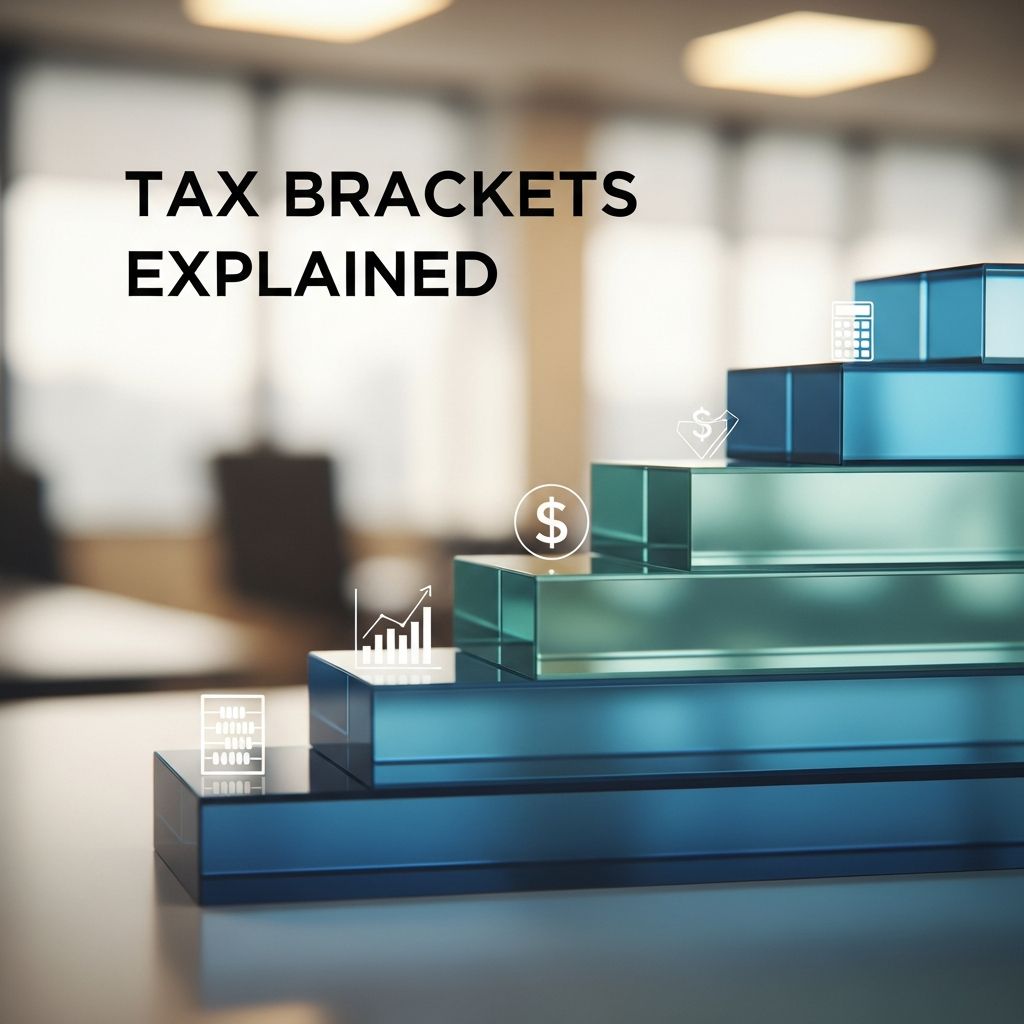
The U.S. federal income tax system operates on a progressive structure where tax rates increase with income levels, but only specific portions of your earnings are taxed at higher rates. This approach ensures fairness by taxing higher earners at elevated percentages on their top income slices while keeping lower portions at base rates.
Understanding the Progressive Tax Framework
In a progressive tax system, income is divided into segments known as brackets, each assigned a distinct rate from 10% to 37%. Unlike flat taxes, this method applies escalating rates only to the income falling within each segment, preventing the common misconception that entering a higher bracket taxes your entire income at that rate. For instance, the initial portion of income always faces the lowest rate, regardless of total earnings.
This design promotes equity, as lower-income individuals retain more of their earnings proportionally. The Internal Revenue Service (IRS) adjusts these brackets annually for inflation to account for rising living costs, maintaining their real value over time.
Current Federal Tax Brackets for 2025
For tax year 2025, seven brackets apply, varying by filing status: single, married filing jointly, married filing separately, and head of household. The table below outlines the income ranges and corresponding rates.
| Tax Rate | Single Filer | Married Filing Jointly | Married Filing Separately | Head of Household |
|---|---|---|---|---|
| 10% | $0 to $11,925 | $0 to $23,850 | $0 to $11,925 | $0 to $17,000 |
| 12% | $11,926 to $48,475 | $23,851 to $96,950 | $11,926 to $48,475 | $17,001 to $64,850 |
| 22% | $48,476 to $103,350 | $96,951 to $206,700 | $48,476 to $103,350 | $64,851 to $103,350 |
| 24% | $103,351 to $197,300 | $206,701 to $394,600 | $103,351 to $197,300 | $103,351 to $197,300 |
| 32% | $197,301 to $250,525 | $394,601 to $501,050 | $197,301 to $250,525 | $197,301 to $250,500 |
| 35% | $250,526 to $626,350 | $501,051 to $751,600 | $250,526 to $375,800 | $250,501 to $626,350 |
| 37% | Over $626,350 | Over $751,600 | Over $375,800 | Over $626,350 |
These thresholds determine your marginal tax rate—the rate on your highest dollar of income—and differ significantly based on household composition.
Step-by-Step Tax Calculation Process
To compute your federal income tax, first determine your taxable income by subtracting deductions and exemptions from gross income. Then, apply rates progressively across brackets.
Consider a single filer with $50,000 taxable income:
- First $11,925 at 10%: $1,192.50
- Next $36,550 ($48,475 – $11,925) at 12%: $4,386
- Remaining $1,525 ($50,000 – $48,475) at 22%: $335.50
Total tax: $6,914. Your effective tax rate is 13.83% ($6,914 / $50,000), far below the 22% marginal rate.
For higher earners, like a single filer at $115,000:
| Bracket | Income Portion | Rate | Tax Owed |
|---|---|---|---|
| 1 | $11,925 | 10% | $1,193 |
| 2 | $36,550 | 12% | $4,386 |
| 3 | $54,875 | 22% | $12,072 |
| 4 | $11,650 | 24% | $2,796 |
| Total | $115,000 | – | $20,447 |
This illustrates the layered application.
Key Terms: Marginal vs. Effective Rates
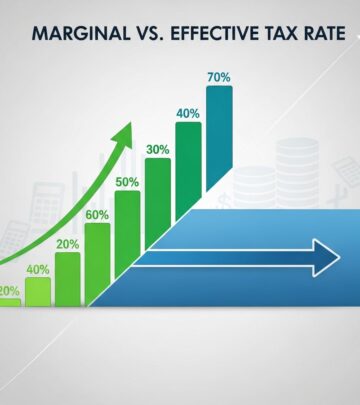
Marginal tax rate is the rate on your next dollar of income, guiding decisions like raises or deductions. Effective tax rate is total tax divided by taxable income, reflecting average burden—typically 5-10% lower than marginal.
Visualize brackets as stacked buckets: fill the lowest first at 10%, overflow to 12%, and so on. Pre-tax contributions (e.g., 401(k)) reduce fillable income.
Common Misconceptions About Tax Brackets
Many believe crossing into a higher bracket taxes all income at that rate—a myth. Only excess income incurs the higher rate. Another error: assuming brackets are static; they inflate annually. Bunching income to stay in lower brackets is possible but requires planning.
Factors Influencing Your Bracket Placement
Filing status widens or narrows brackets—joint filers enjoy double single thresholds. Deductions (standard $15,000 single in 2025 or itemized) and credits slash taxable income. Dependents qualify for additional allowances.
- Standard Deduction: Reduces income pre-bracket calculation.
- Tax Credits: Dollar-for-dollar reductions post-calculation (e.g., child tax credit).
- Adjustments: Above-the-line subtractions like student loan interest.
Planning Strategies to Optimize Taxes
Maximize retirement accounts: 2025 401(k) limit $23,500 reduces taxable income. Harvest losses in investments to offset gains taxed separately. Time bonuses or sales to avoid bracket jumps. For high earners, consider Roth conversions or charitable contributions.
Married couples: Filing jointly often lowers overall rates due to wider brackets. Use tax software or professionals for simulations.
State Taxes and Additional Considerations
Federal brackets don’t include state taxes, which vary (e.g., no income tax in Florida, progressive in California). Local taxes may apply. Self-employed pay self-employment tax on top.
Frequently Asked Questions
What happens if my income pushes me into a higher bracket?
Only the excess amount is taxed higher; lower portions retain original rates.
Do tax brackets change every year?
Yes, adjusted for inflation by the IRS.
How do I find my tax bracket?
Review IRS tables based on filing status and taxable income.
What’s the difference between taxable and gross income?
Taxable is gross minus deductions/exemptions.
Can deductions lower my bracket?
They reduce income, potentially dropping you to a lower bracket.
Tools and Resources for Tax Planning
IRS withholding estimator and publication 505 aid projections. Free file options for simple returns. Consult CPAs for complexity.
References
- How Tax Brackets Work: 2025 Examples and Myth Busting — TaxAct Blog. 2025. https://blog.taxact.com/how-tax-brackets-work/
- How Do Tax Brackets Work? | TaxEDU Explainers — Tax Foundation (YouTube). 2023. https://www.youtube.com/watch?v=kYeZko1WKHQ
- What is My Tax Bracket? — TurboTax (Intuit). 2025. https://turbotax.intuit.com/tax-tips/irs-tax-return/what-is-my-tax-bracket/L3Dtkab8G
- How tax brackets work — Fidelity Investments. 2025. https://www.fidelity.com/learning-center/personal-finance/how-do-tax-brackets-work
- How Federal Tax Brackets Work (and What They Mean for You in 2025) — Copeland Buhl. 2025. https://www.copelandbuhl.com/insights/blog/how-federal-tax-brackets-work-and-what-they-mean-for-you-in-2025/
- How do federal income tax rates work? — Tax Policy Center. 2023. https://taxpolicycenter.org/briefing-book/how-do-federal-income-tax-rates-work
- 2025-2026 Tax Brackets & Federal Income Tax Rates — H&R Block. 2025. https://www.hrblock.com/tax-center/irs/tax-brackets-and-rates/what-are-the-tax-brackets/
Similar Articles








Read full bio of medha deb