Tax-Advantaged Savings Accounts: Essential Guide For 2026
Discover how tax-advantaged savings accounts maximize your wealth through tax breaks on contributions, growth, and withdrawals for retirement, health, and more.

Tax-advantaged savings accounts provide powerful tax benefits designed to encourage saving for specific long-term goals such as retirement, education, healthcare, and now family milestones through new options like Trump Accounts. These accounts offer deductions on contributions, tax-free growth on earnings, or tax-free withdrawals, significantly boosting net savings compared to standard taxable accounts.
What Are Tax-Advantaged Savings Accounts?
Tax-advantaged savings accounts are specialized financial vehicles that defer, reduce, or eliminate taxes on contributions, investment growth, or distributions when used for qualified purposes. Unlike regular savings or brokerage accounts where interest, dividends, and capital gains are taxed annually, these accounts shield earnings from immediate taxation, allowing compound growth to accelerate.
There are two primary categories: tax-deferred accounts, which provide upfront tax deductions but tax withdrawals later, and tax-exempt accounts (often called Roth-style), where contributions are after-tax but qualified withdrawals are entirely tax-free. Some hybrid accounts offer benefits at both stages.
- Tax-deferred benefits: Reduce taxable income now, pay taxes on withdrawal (ideally at a lower rate).
- Tax-exempt benefits: Pay taxes upfront, enjoy tax-free growth and withdrawals.
- Tax-free growth: Common to both, earnings compound without annual IRS drag.
Why Consider Tax-Advantaged Accounts?
When selecting savings options, factors like interest rates and fees dominate discussions, but taxes often represent the largest hidden cost—up to 37% of earnings in high brackets. Tax-advantaged accounts address this by minimizing the tax bite, potentially increasing after-tax returns by 20-40% over decades.
For instance, $10,000 invested at 7% annual return grows to about $76,000 in 30 years in a taxable account (after average 20% taxes on gains). In a tax-advantaged account, it could reach $100,000+ due to deferred or eliminated taxes. This edge compounds, making these accounts essential for goals like retirement or college funding.
Types of Tax Benefits
Tax-Deductible Contributions
Tax-deferred accounts like Traditional IRAs and 401(k)s allow contributions to reduce your adjusted gross income (AGI) dollar-for-dollar, lowering your current tax bill. For 2026, IRA limits rise to $7,500 (up from $7,000 in 2025). If you’re in the 22% bracket, a $7,500 contribution saves $1,650 in taxes immediately.
This deduction also qualifies you for other AGI-based benefits, like education credits or premium tax credits. Taxes apply on withdrawal, but retirement often means lower brackets.
Tax-Free Growth
All tax-advantaged accounts shield dividends, interest, and capital gains from annual taxes. In a standard account, a 5% dividend yield in the 22% bracket loses $1,100 yearly on $10,000. Tax-advantaged growth preserves every dollar for reinvestment.
Over 20 years, this difference can double effective returns. Earnings in tax-deferred accounts are taxed upon withdrawal; tax-exempt ones avoid this if rules are met.
Tax-Free Withdrawals
Roth IRAs, Roth 401(k)s, HSAs (for medical expenses), and 529s (for education) allow penalty-free, tax-free distributions after age or qualification periods. Contributions to Roths can be withdrawn anytime tax-free since already taxed.
Popular Tax-Advantaged Savings Accounts
Retirement Accounts: IRAs and 401(k)s
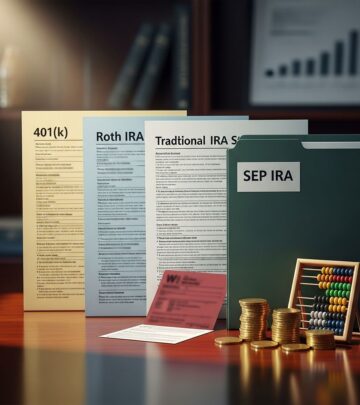
Traditional IRA: Contributions deductible up to $7,500 (2026); tax-deferred growth; required minimum distributions (RMDs) start at age 73. Ideal if you expect lower taxes in retirement.
Roth IRA: After-tax contributions; tax-free qualified withdrawals after age 59½ and 5-year holding. No RMDs for owner. Best for young savers or rising tax brackets.
401(k): Employer-sponsored; higher limits ($23,500 employee + employer match in 2026); same tax treatments as IRAs. Many offer Roth options.
| Account Type | Contribution Deductible? | Growth | Withdrawals |
|---|---|---|---|
| Traditional IRA/401(k) | Yes | Tax-deferred | Taxed as income |
| Roth IRA/401(k) | No | Tax-free | Tax-free if qualified |
Health Savings Accounts (HSAs)
HSAs pair with high-deductible health plans (HDHPs). Triple tax benefits: deductible contributions, tax-free growth, tax-free withdrawals for qualified medical expenses anytime. Unused funds roll over indefinitely and earn interest.
2026 updates expand eligible plans. No minimum contribution; annual limits apply (e.g., $4,150 individual). After 65, non-medical withdrawals taxed like Traditional IRA (no penalty).
- Pay deductibles, copays, coinsurance tax-free.
- Invest like IRA for retirement healthcare.
Education Savings: 529 Plans
State-sponsored 529s offer tax-free growth and withdrawals for tuition, books, K-12, apprenticeships, and up to $10,000 student loans. Contributions often state-tax deductible.
No federal deduction, but earnings compound tax-free. Rollovers to Roth IRAs allowed starting 2024 (lifetime $35,000 limit).
New in 2026: Trump Accounts
Under the One Big Beautiful Bill Act, Trump Accounts launch July 5, 2026, for children under 18. Tax-deferred growth; $1,000 government seed for 2025-2028 newborns; $5,000 annual cap ($2,500 employer).
No earned income needed; parents/guardians manage until 18. Withdrawals taxed as ordinary income; early ones before 59½ may incur 10% penalty. Investments limited to low-cost index funds/ETFs.
| Feature | Details |
|---|---|
| Eligibility | Children under 18 with SSN |
| Government Contribution | $1,000 one-time for newborns 2025-2028 |
| Annual Limit | $5,000 total ($2,500 employer) |
| Tax Treatment | Tax-deferred growth; taxed on withdrawal |
| Access | No withdrawals before 18; Roth conversion possible at 18 |
Pros and Cons of Tax-Advantaged Accounts
Pros:
- Substantial tax savings amplify growth.
- Encourages disciplined saving for goals.
- Government incentives like matches (401(k)) or seeds (Trump Accounts).
- Asset protection in some cases (e.g., HSAs, 529s).
Cons:
- Penalties for early/non-qualified withdrawals (10% + taxes).
- Contribution limits restrict high savers.
- Income eligibility phases (e.g., Roth IRA).
- Lock-up periods reduce liquidity.
Comparison of Key Accounts
| Account | Purpose | 2026 Limit | Tax on Withdrawal |
|---|---|---|---|
| Traditional IRA | Retirement | $7,500 | Taxed |
| Roth IRA | Retirement | $7,500 | Tax-free qualified |
| HSA | Healthcare | $4,150+ (est.) | Tax-free medical |
| 529 Plan | Education | Varies by state | Tax-free qualified |
| Trump Account | Child future | $5,000/child | Taxed |
How to Choose the Right Account
Assess your goals, timeline, tax bracket (now vs. future), and liquidity needs. Max employer matches first (free money). Layer accounts: 401(k) for retirement, HSA for health, 529/Trump for kids. Consult a tax advisor for personalized fit.
Track phase-outs: Roth IRA direct contributions phase at $146,000-$161,000 MAGI single (2026 est.).
Frequently Asked Questions (FAQs)
What is the difference between tax-deferred and tax-exempt accounts?
Tax-deferred offers upfront deductions but taxes withdrawals; tax-exempt taxes contributions but allows tax-free qualified withdrawals.
Can I have both Traditional and Roth accounts?
Yes, diversify tax strategies across account types.
Are Trump Accounts available now?
Contributions start July 5, 2026; newborns 2025-2028 get $1,000 seed.
What happens if I withdraw early from an HSA?
Non-medical: taxed + 20% penalty before 65; after 65, taxed no penalty.
Do 529 plans affect financial aid?
Parent-owned 529s count less (5.64% EFC impact) than student assets.
References
- Tax-Advantaged Accounts: How They Can Boost Your Savings — TurboTax Intuit. 2025. https://turbotax.intuit.com/tax-tips/investments-and-taxes/tax-advantaged-accounts-how-they-can-boost-your-savings/c4fKPc6Tf
- New in 2026: More plans now work with Health Savings Accounts — HealthCare.gov. 2026. https://www.healthcare.gov/hsa-options/
- What are Trump Accounts and how do you open one? — Fidelity. 2026. https://www.fidelity.com/learning-center/personal-finance/trump-accounts
- 2026 Trump savings accounts — H&R Block. 2026. https://www.hrblock.com/tax-center/irs/tax-law-and-policy/one-big-beautiful-bill-trump-accounts/
- What to Know About Trump Accounts — Charles Schwab. 2026. https://www.schwab.com/learn/story/trump-accounts
- Treasury, IRS issue guidance on Trump Accounts — IRS.gov. 2026. https://www.irs.gov/newsroom/treasury-irs-issue-guidance-on-trump-accounts-established-under-the-working-families-tax-cuts-notice-announces-upcoming-regulations
- 9 Ways Retirement Will Be Different in 2026 — AARP. 2026. https://www.aarp.org/money/retirement/biggest-changes-2026/
Similar Articles








Read full bio of Sneha Tete