Tariffs and Rising Rates: Wallet Impact
Explore how new tariffs could drive up inflation and interest rates, affecting mortgages, loans, and savings in 2026 and beyond.

Recent tariff policies are poised to influence economic conditions significantly, potentially leading to elevated interest rates that directly affect consumer finances. As businesses face higher import costs, these expenses often pass to consumers, reigniting inflationary pressures after years of cooling prices.
The Mechanics of Tariffs Driving Inflation
Tariffs function as taxes on imported goods, increasing costs for companies reliant on foreign supplies. When these firms raise prices to maintain margins, overall consumer prices climb. Forecasts indicate U.S. inflation, measured by PCE, could rise to 2.7% in 2026 from around 2.6% in 2025, largely due to businesses passing on tariff burdens.
This inflationary uptick stems from sectors like manufacturing, construction, and retail, where imported materials dominate. For instance, higher costs in steel or electronics components cascade into everyday products, from appliances to vehicles. Economists note that while initial tariff effects might be one-time, sustained policies could embed higher prices into the economy.
- Short-term effect: Immediate price hikes on imported items.
- Medium-term ripple: Supply chain adjustments amplifying costs domestically.
- Long-term risk: Persistent inflation if retaliatory measures from trade partners escalate.
Federal Reserve’s Response to Tariff-Induced Pressures
The Federal Reserve targets 2% inflation, adjusting the federal funds rate to influence borrowing costs economy-wide. With tariffs pushing prices up, the Fed may pause or reverse recent rate cuts. After reducing rates by 1.75 percentage points since late 2024, officials project only modest further easing, with the target range reaching 2.25%-2.50% by late 2027.
Longer-term rates, like the 10-year Treasury yield at 4.2% in late 2025, have remained stubborn despite short-term cuts. This reflects market anticipation of ongoing inflation risks from tariffs, limiting declines in mortgage and corporate bond rates. Fed statements highlight caution, sticking to a single cut in 2026 amid higher inflation projections.
| Rate Type | 2024 Avg | 2025 Avg | 2026 Projection | 2028 Projection |
|---|---|---|---|---|
| Federal Funds | ~5.3% | Lowered | Stable/Elevated | 2.25-2.50% |
| 10-Year Treasury | 4.2% | 4.3% | ~4.0% | 3.25% |
| 30-Year Mortgage | 6.7% | 6.6% | 6.2%+ | 5.0% |
This table summarizes rate trajectories, showing persistent elevation in 2026 before gradual declines.
How Higher Rates Hit Mortgage Holders and Buyers
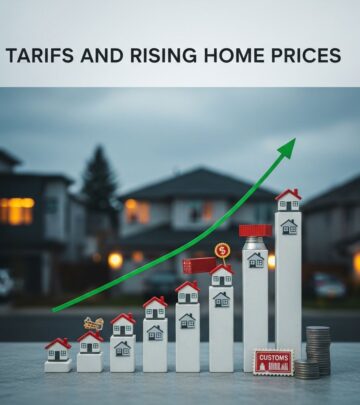
Mortgage rates closely track Treasury yields, so tariff-driven inflation could stall relief for homebuyers. Rates hovering above 6% into 2026 mean larger monthly payments; a $400,000 loan at 6.5% costs about $275 more monthly than at 5.5%.
Existing adjustable-rate mortgage holders face refi challenges if rates stay high. In the UK, similar dynamics could push base rates above 4.5% by early 2026, per broker polls, due to transatlantic trade tensions. Homebuyers might delay purchases, cooling housing demand but prolonging affordability issues.
Credit Cards, Auto Loans, and Everyday Borrowing
Consumer debt feels the pinch acutely. Credit card rates, already over 20%, could climb further as prime rates follow Fed moves. Auto loans, averaging 7-8%, might exceed 9% if inflation persists, adding thousands to vehicle financing costs.
Personal loans for debt consolidation or emergencies become pricier, straining budgets amid rising living expenses. Savers benefit marginally from higher yields on CDs or high-yield accounts, but borrowers—most households—bear the brunt.
Rate Hikes: Winners vs. Losers
- Savers: Better returns on deposits (4-5% possible).
- Borrowers: Higher costs on variable debt.
- Investors: Bond values dip; stocks volatile from growth drags.
Broader Economic Drag and Growth Slowdown
Tariffs boost costs but curb growth long-term by disrupting trade. U.S. nonresidential investment may slow to 0.9% in 2026, compounded by high rates. J.P. Morgan estimates effective tariff rates rising significantly, potentially to over 20% with reciprocals, hitting inflation and GDP.
Currency effects add complexity: the dollar weakened 6.3% by early 2026, partly offsetting tariffs but signaling growth worries. Markets price in volatility, with futures showing delayed Fed cuts.
Strategies to Shield Your Finances
Proactive steps can mitigate impacts:
- Lock in fixed rates: Refinance mortgages or loans before hikes.
- Build cash reserves: Aim for 6-12 months’ expenses in high-yield accounts.
- Diversify debt: Prioritize fixed over variable rates.
- Budget for inflation: Cut non-essentials; stock up on goods pre-tariff hikes.
- Hedge investments: Favor short-term bonds or tariff-resilient sectors.
Monitor Fed announcements and tariff updates for timely adjustments.
Global Ripples: UK and Beyond
Trade wars extend effects internationally. UK inflation near 2.6% in early 2025 risks reversal from U.S. tariffs, prompting BoE hikes. Retaliatory tariffs could inflate import prices, mirroring U.S. dynamics and raising eurozone borrowing costs.
FAQs
Will tariffs definitely raise interest rates?
Not guaranteed, but likely if inflation exceeds targets. Fed prioritizes price stability.
How much could my mortgage payment increase?
A 1% rate rise on a $300,000 loan adds ~$200 monthly over 30 years.
Are savers better off with higher rates?
Yes, CDs and money markets yield more, but inflation erodes real gains.
When might rates fall again?
Post-2026 if growth slows and tariff effects fade, per forecasts.
Should I buy a home now?
Weigh locking in vs. waiting; consult rates and local markets.
Tariff policies reshape monetary landscapes, demanding vigilance from consumers. By understanding these links, individuals can navigate higher costs effectively.
References
- Inflation Set to Rise in 2026 as Tariff Costs Hit Consumers — Morningstar. 2026. https://www.morningstar.com/economy/inflation-set-rise-tariff-costs-hit-consumers-2026
- What Trump’s Tariffs Mean for Interest Rates — Derivative Logic. 2026. https://derivativelogic.com/sts/what-trumps-tariffs-mean-for-interest-rates
- Why tariffs and a trade war could mean your mortgage interest rate rises — Broom Consultants. 2026-03-23. https://www.broomconsultants.com/why-tariffs-and-a-trade-war-could-mean-your-mortgage-interest-rate-rises/
- Fed keeps rates unchanged, sticks with single cut in 2026 — Reuters (YouTube). 2026. https://www.youtube.com/watch?v=pZTtROnszC8
- US Tariffs: What’s the Impact? — J.P. Morgan. 2026. https://www.jpmorgan.com/insights/global-research/current-events/us-tariffs
- Tracking the Economic Effects of Tariffs — The Budget Lab at Yale. 2026. https://budgetlab.yale.edu/research/tracking-economic-effects-tariffs
Similar Articles








Read full bio of Sneha Tete