Tariffs and Rising Home Prices
Explore how new U.S. tariffs on key building materials are driving up construction costs and home prices across the nation.
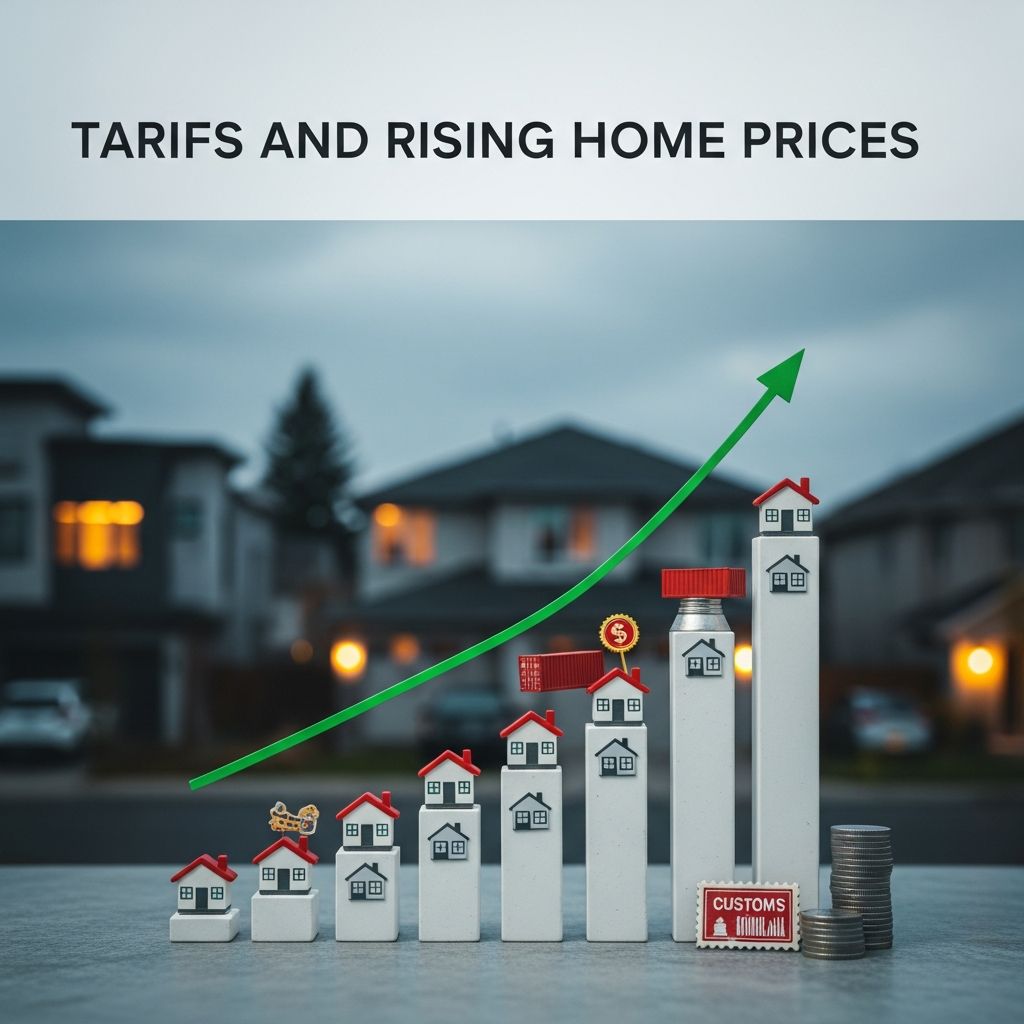
Recent U.S. tariff policies have introduced significant upward pressure on residential construction expenses, directly contributing to elevated home prices amid an ongoing housing shortage. These measures, targeting essential materials like lumber, steel, and aluminum, are projected to add thousands of dollars to the cost of each new home, exacerbating affordability challenges for buyers and renters alike.
The Mechanics of Tariff-Induced Cost Escalation
Tariffs function as taxes on imported goods, increasing the price of materials critical to homebuilding. For instance, softwood lumber now faces a 10% tariff alongside anti-dumping duties, while steel, copper, and aluminum endure up to 50% levies. These hikes ripple through the supply chain, raising overall construction budgets by an estimated 3.3%.
Builders report that materials are already 34% costlier than in late 2020, with tariffs poised to push this even higher. Industry projections indicate a 4-6% rise in total construction costs, translating to $5,000-$20,000 per new home, though the National Association of Home Builders tempers this at around $9,200.
Quantifying the Impact on New Home Development
Higher input costs deter marginal projects, slowing new construction and deepening supply deficits. Analysis suggests tariffs could prevent 450,000 homes from being built through 2030, with annual shortfalls exceeding 100,000 units by decade’s end.
At prevailing build rates, $27 billion in annual tariffs equate to $17,500 extra per home; if output declines as forecasted, this climbs to $18,500 by 2028. Construction sector output may drop 4.1% over three years due to these policies.
| Material | Tariff Rate | Estimated Cost Impact per Home |
|---|---|---|
| Lumber | 10% + duties | $3,000-$5,000 |
| Steel/Aluminum | Up to 50% | $2,000-$4,000 |
| Copper & Cabinets | 30-50% (2026) | $1,500-$3,000 |
| Total | – | $9,200-$20,000 |
This table summarizes expert estimates on material-specific burdens, highlighting the compounded effect on single-family homes.
Broadening Effects on Housing Affordability
In supply-constrained regions, reduced building activity intensifies competition, propelling prices higher. Median home sales prices have surged 31%—over $120,000—since 2020, and tariff-driven additions could sideline millions from ownership.
Household costs are also rising: tariffs already cost families $1,000 last year, projected at $1,300 in 2026 even without expansions. Housing bears the brunt via pricier furniture, renovations, and builds.
- Homebuyers: Face $17,500+ premiums on new properties, stretching budgets amid high mortgage rates.
- Renters: Landlords pass on renovation and maintenance hikes, elevating rents in tight markets.
- Investors: Median owner costs with mortgages hit $2,035 monthly in 2024; tariffs stall developments.
Ripple Effects Across the Real Estate Sector
Tariffs don’t merely inflate new builds; they encumber renovations, multifamily projects, and affordable housing. Developers operate at slimmer margins or reduced capacity due to volatile pricing, with U.S. subcontractors and producers raising rates to match import surges.
Average tariff rates approach 19.7%—unseen since 1933—driving retail prices up nearly 5%. Businesses anticipate further hikes and labor disruptions in 2026 if policies persist.
Modular and manufactured housing face parallel pressures, though price growth has slowed nationally (1.3% YoY per Case-Shiller), lagging wage gains at 3.7%.
Regional Variations and Market Dynamics
Impacts vary by locale: Sun Belt boomtowns with acute shortages feel acute pain, while softening metros see decelerating growth or declines. Uncertainty from policy flux—e.g., 10% lumber tariffs from October 2025—amplifies hesitancy.
Experts like NewHomeSource’s Ali Wolf note tariffs as a core uncertainty vector, compounding high rates and low inventory.
Strategic Responses from Builders and Policymakers
Builders mitigate via domestic sourcing, though U.S. producers capitalize on scarcity to hike prices. Some compromise profits short-term, anticipating full pass-through to end-users.
National Association of Home Builders warns of headwinds, urging targeted relief. Policymakers weigh protectionism’s trade-offs: shielding jobs versus affordability erosion.
Long-Term Outlook for 2026 and Beyond
Barring reversals, tariffs portend sustained cost pressures into 2026, potentially resurging inflation in housing-adjacent goods like electronics and autos. Equitable Growth forecasts price spikes and labor shifts.
Yet, normalization in listings and wage outpacing prices offer glimmers; sustained high costs could reshape demand toward rentals or smaller units.
Frequently Asked Questions
How much will tariffs add to my home purchase?
Expect $9,200-$20,000 on new homes, varying by size and materials; renovations see proportional hikes.
Will tariffs worsen the housing shortage?
Yes, by curbing viable projects, potentially halving expected supply growth through 2030.
Are there exemptions for affordable housing?
None specified; impacts hit broadly, squeezing developers and raising tenant costs.
Can builders absorb these costs?
Short-term yes, via margins; long-term, pass-through to buyers is likely.
What materials are most affected?
Lumber, steel, aluminum, copper, cabinets—core to framing, wiring, and finishes.
Navigating the Tariff Era as a Buyer
Prospective owners should monitor rates, prioritize pre-tariff inventory, or eye fixer-uppers with cost buffers. Renters: budget for 5%+ hikes. Investors: reassess yields amid stalled supply.
In sum, while aimed at domestic industry, tariffs inadvertently inflate the very homes Americans seek, demanding adaptive strategies in a constrained market.
References
- Trump Administration Tariffs Could Result in 450000 Fewer New Homes Through 2030 — Center for American Progress. 2025. https://www.americanprogress.org/article/trump-administration-tariffs-could-result-in-450000-fewer-new-homes-through-2030/
- Trump’s Tariffs Cost American Households $1000 Last Year—and That Number Is Going Up in 2026 — Realtor.com. 2025. https://www.realtor.com/advice/finance/trump-tariff-2025-cost-1000-tax-foundation/
- Here’s how U.S. Tariffs May Affect Home Prices in 2025 — NewHomeSource. 2025. https://www.newhomesource.com/news/policy-industry/how-tariffs-may-affect-home-prices-in-2025/
- How Will Tariffs Affect Real Estate in 2026? — Buildium. 2025. https://www.buildium.com/blog/how-will-tariffs-affect-real-estate/
- Here’s how US tariffs may affect home prices in 2025 — Tucson.com. 2025. https://tucson.com/news/nation-world/business/personal-finance/article_cdf5e8db-d4b5-51c7-96ab-d6a8d67918b8.html
- Assessing the Impacts of Trump’s Tariffs on Affordable Housing — Tax Credit Advisor. 2025. https://www.taxcreditadvisor.com/articles/trump-tariffs-affordable-housing-impacts/
Similar Articles








Read full bio of medha deb