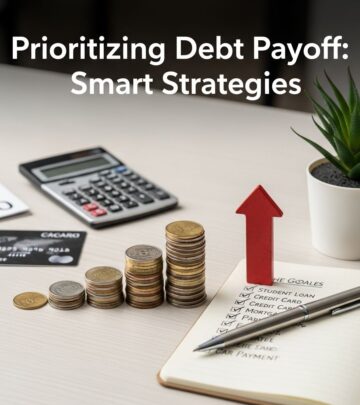
Taming Your Debt: Aggressive Repayment Strategies
Master proven tactics to crush debt fast: from cash-only budgets to snowball methods and income dedication.

Debt can feel like an insurmountable mountain, but with aggressive repayment strategies, you can climb out faster than you think. This guide outlines proven tactics to confront your debt head-on, restructure your finances, and accelerate payoff using methods like the debt avalanche and snowball, backed by real-world examples and financial principles.
Face How Much You Owe
The foundation of any successful debt repayment plan starts with brutal honesty. Avoidance only prolongs the pain—gather every statement, log into accounts, and call creditors to tally the exact total owed. This clarity reveals the scope of your challenge and enables precise strategizing.
For instance, list all debts with balances, interest rates (APRs), and minimum payments. A sample debt portfolio might include:
- Credit Card #1: $2,000 at 12% APR, $50 min.
- Credit Card #2: $3,000 at 18% APR, $75 min.
- Credit Card #3: $4,000 at 22% APR, $100 min.
- Credit Card #4: $1,000 at 15% APR, $25 min.
Total: $10,000. Knowing these numbers prevents surprises and tracks progress.
Go Cash-Only
Switching to cash-only enforces spending discipline. At month’s start, withdraw your budgeted cash and divide into envelopes labeled for categories like groceries, gas, and entertainment. Once an envelope empties, spending stops—no credit card bailouts.
This method curbs impulse buys and “almost” purchases. Redirect saved money straight to debt. Track savings meticulously: if you forgo $20 daily lattes, that’s $600 monthly toward principal. Combine with a spending freeze—seek free fun like library events or park walks—while banking every dollar saved.
Chart It Out
Visualize progress with a debt chart. Use a whiteboard or spreadsheet to plot balances decreasing over time. Mark milestones, like paying off a $1,000 card, with celebrations (non-spending ones, like a home movie night).
Bi-weekly payments amplify this: instead of one monthly $500 payment, split into $250 every two weeks. This yields 26 payments yearly (13 months’ worth), reducing daily-accruing interest. Creditors often accept this, accelerating payoff by months.
| Method | Months to Payoff | Interest Paid |
|---|---|---|
| Monthly Payments | 26 | $2,200 |
| Bi-Weekly Payments | 24 | $1,950 |
Automate payments to ensure consistency—link bank to creditors, setting amounts above minimums.
Start Communicating
Open dialogue with creditors. Explain your situation honestly: job loss, medical bills, etc., and affirm commitment to pay. Request lower APRs, waived fees, or hardship plans. Many negotiate, especially if you’re proactive before delinquency.
If denied, explore balance transfers to 0% intro APR cards (e.g., 15 months). Transfer $10,000 at $500/month: after promo, $2,500 remains, cleared in 6 months at 13% APR for $85 interest—saving $1,900 vs. standard plans.
Refinance loans similarly for lower rates, maintaining original payments to shorten terms.
Attach a Source of Income for Each Debt or Debt Category
Supercharge repayment by earmarking side hustles. Weekend barista shifts ($200/week) fund car loan; evening tutoring ($300/week) hits credit cards. This creates dedicated streams, untouched by main budget temptations.
Even stretched budgets benefit: a $15/hour gig 10 hours/week nets $600/month purely for debt, rivaling raises. Track via apps, directing 100% to principal.
Pay Off the Small Debts First
Ignore math purists—the debt snowball builds momentum. List debts smallest to largest, pay minimums on all, extra on tiniest. Once cleared, roll funds to next.
Example ($10,000 total, $500/month):
| Order | Debt | Months | Total Interest |
|---|---|---|---|
| Snowball | #4 ($1k) → #1 ($2k) → #2 ($3k) → #3 ($4k) | 26 | $2,092 |
Psychological wins—quick victories sustain motivation, outweighing slight interest premium.
Alternative: Avalanche Method
For math-focused: debt avalanche targets highest APR first, minimums elsewhere. Example: #3 (22%) → #2 (18%) → #4 (15%) → #1 (12%). Same $10,000/$500/month: 25 months, $1,811 interest—saving $281 vs. snowball.
| Method | Priority | Months | Interest |
|---|---|---|---|
| Avalanche | Highest APR | 25 | $1,811 |
| Snowball | Smallest Balance | 26 | $2,092 |
Choose avalanche for savings, snowball for motivation.
Pay Non-Renewable Debts First
Prioritize irreplaceable debts like student loans over cards (which tempt reuse). Clearing loans reduces total load visibly, building discipline to avoid re-accumulation.
Stay Motivated and Debt-Free
Last payment euphoria is real—chart completion fuels permanence. Post-payoff, adopt envelopes permanently, automate savings, shun new debt. Readers report $8,500 principal in two months via prioritization.
Frequently Asked Questions (FAQs)
What’s the debt snowball method?
Pay minimums on all debts, extra on smallest balance first, rolling payments to next. Builds quick wins for motivation.
How does debt avalanche differ?
Targets highest interest rate first to minimize total interest, ideal for cost savings.
Should I use cash-only budgeting?
Yes, envelopes limit spending, freeing cash for debt without credit slip-ups.
Can bi-weekly payments help?
Absolutely—26 half-payments yearly equal 13 full, cutting interest via faster principal reduction.
What if creditors won’t lower rates?
Balance transfer to 0% APR or refinance; maintain aggressive payments.
Is side income dedication extreme?
Not if stretched—dedicated streams accelerate payoff without main budget cuts.
Implement these strategies systematically for debt freedom. Track weekly, adjust as needed, celebrate milestones.
References
- 5-Day Debt Reduction Plan: Pay It Off — Wise Bread. 2023-05-15. https://www.wisebread.com/5-day-debt-reduction-plan-pay-it-off
- Taming Your Debt: Aggressive Repayment Strategies — Wise Bread. 2023-08-22. https://www.wisebread.com/taming-your-debt-aggressive-repayment-strategies
- Are You Paying Off Credit Card Debt the Wrong Way? — Wise Bread. 2023-11-10. https://www.wisebread.com/are-you-paying-off-credit-card-debt-the-wrong-way
- Consumer Financial Protection Bureau: Debt Collection FAQs — U.S. Government (consumerfinance.gov). 2025-01-05. https://www.consumerfinance.gov/ask-cfpb/what-is-a-debt-relief-program-en-1457/
- Federal Reserve: Interest Rates and Debt Management — Federal Reserve Board (.gov). 2024-09-18. https://www.federalreserve.gov/publications/files/consumer-compliance-handbook-202409.pdf
Similar Articles








Read full bio of Sneha Tete