Symmetrical Distribution: Definition and Applications
Understanding symmetrical distribution: The bell curve concept in statistical analysis and financial markets.

What Is Symmetrical Distribution?
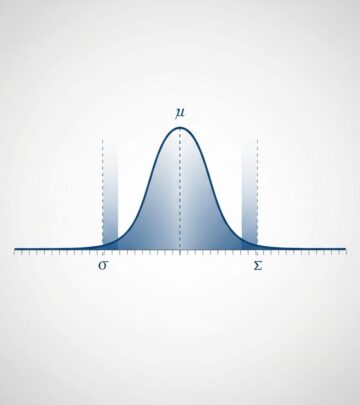
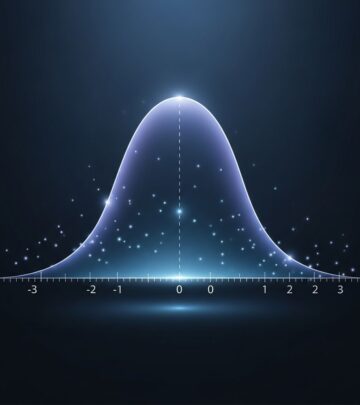
Symmetrical distribution, also referred to as a normal distribution or bell curve, is a fundamental statistical concept widely used in finance, wealth management, and data analysis. It represents a probability distribution where data values are evenly distributed around a central value, creating a perfectly balanced and symmetrical pattern. In this type of distribution, the most frequent values cluster around the center, while occurrences of values farther from the center become progressively less frequent.
The concept of symmetrical distribution is essential for understanding how financial variables behave and how investors can make informed decisions about risk management and portfolio construction. When plotted graphically, a symmetrical distribution produces the characteristic bell-shaped curve, which has become synonymous with normal distributions in statistics and finance.
Key Characteristics of Symmetrical Distribution
Symmetrical distributions possess several distinctive characteristics that make them valuable in statistical and financial analysis:
Central Tendency and Alignment
One of the most important features of a symmetrical distribution is that the mean, median, and mode are all located at the exact center of the distribution. The mean represents the average value, the median is the middle value when data is ordered, and the mode is the most frequently occurring value. When all three measures of central tendency coincide at the distribution’s center, this indicates that the data is perfectly balanced around this central point.
Equal Data Distribution
In a symmetrical distribution, data points are equally distributed on both sides of the central value. This means that if you take any value above the mean, you will find a corresponding value below the mean at the same distance. The distribution displays no skew, meaning there is no tendency for data to lean toward either the left or right side of the distribution.
Zero Skewness
Skewness is a statistical measure that quantifies the asymmetry of a distribution. A symmetrical distribution always has zero skewness, indicating that the tails on both sides of the mean are balanced. This contrasts with skewed distributions, which have positive or negative skewness values and indicate imbalance in the distribution’s tails.
Standard Deviation Properties
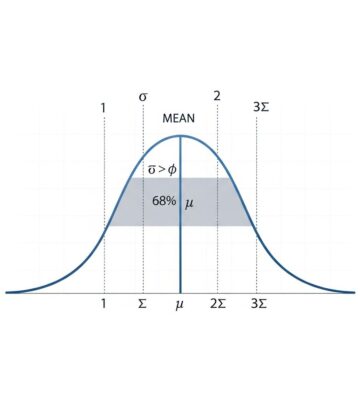
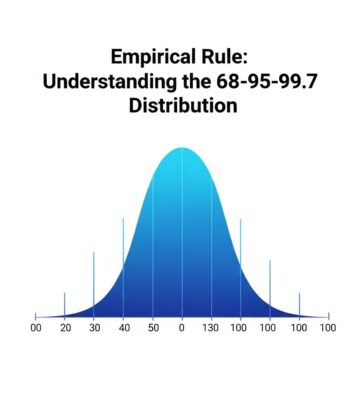
The standard deviation, which measures the spread of data around the mean, is symmetrically distributed in a normal distribution. This means that approximately 68% of all data points fall within one standard deviation of the mean, about 95% fall within two standard deviations, and approximately 99.7% fall within three standard deviations. This predictable pattern is crucial for risk assessment and probability calculations.
How Symmetrical Distribution Works in Practice
Understanding how symmetrical distribution functions is essential for applying it to real-world financial scenarios. The bell curve shape reveals how values cluster around the mean with decreasing frequency as you move toward the extremes of the distribution.
In practical applications, when a dataset follows a symmetrical distribution, analysts and wealth managers can make reliable predictions about the likelihood of specific outcomes. For instance, if investment returns are assumed to follow a symmetrical distribution, it becomes possible to calculate the probability that returns will fall within a certain range. This predictability is invaluable for constructing investment strategies and managing risk exposure.
The symmetrical nature of the distribution also simplifies mathematical calculations and statistical modeling. Because the distribution is perfectly balanced, formulas and techniques developed for symmetrical distributions can be applied with confidence. This computational efficiency makes symmetrical distribution a preferred baseline assumption for many statistical models in finance.
Applications in Wealth Management and Finance
Risk Assessment and Measurement
Wealth managers rely heavily on symmetrical distribution assumptions when assessing investment risk. By assuming that asset returns follow a symmetrical distribution, managers can estimate the likelihood of extreme events and calculate critical risk metrics such as Value at Risk (VaR) and Expected Shortfall. These metrics help determine potential downside risk and tail events, which are crucial for effective risk allocation and mitigation strategies.
Portfolio Optimization
Symmetrical distribution plays a central role in modern portfolio optimization techniques, particularly mean-variance analysis. This approach assumes that asset returns follow a normal distribution and uses this assumption to construct efficient frontiers that maximize expected returns for a given level of risk. By identifying uncorrelated or negatively correlated assets and combining them into a portfolio, wealth managers can reduce overall portfolio risk while maintaining or improving expected returns.
Asset Allocation Strategies
When wealth managers assume symmetrical distribution for asset returns, they can estimate expected returns and assess the risk associated with different asset classes. This information is crucial for constructing well-diversified portfolios that balance risk and return according to investor preferences. The ability to predict how different assets will behave under various market conditions enables more strategic allocation decisions.
Financial Variable Analysis
Symmetrical distribution is used to describe the behavior and characteristics of various financial variables including investment returns, asset prices, and portfolio performance. Understanding these distributions helps investors and analysts interpret historical data and make projections about future market behavior. The bell curve model provides a framework for understanding what constitutes normal market movements versus outlier events.
Advantages of Using Symmetrical Distribution
Simplified Statistical Analysis
Symmetrical distribution provides a predictable and well-understood framework for statistical analysis, making it easier to model and interpret financial data accurately. The mathematical properties of normal distributions are thoroughly documented and widely understood, allowing analysts to apply proven techniques and formulas. This simplicity enhances the effectiveness of wealth management strategies and reduces the likelihood of analytical errors.
Reliable Risk Metrics
By assuming symmetrical distribution, wealth managers can confidently calculate risk metrics and probability estimates. The known properties of normal distributions allow for accurate calculation of confidence intervals, probability thresholds, and risk measurements that inform investment decisions and risk management policies.
Portfolio Construction Framework
The assumption of symmetrical distribution enables the systematic application of portfolio optimization techniques. This framework allows wealth managers to make objective, mathematically rigorous decisions about asset allocation that align with investor risk tolerance and return objectives.
Predictable Modeling Properties
Symmetrical distributions allow for the application of various established statistical techniques that have been refined and validated over decades of use in finance and other fields. This extensive knowledge base reduces uncertainty in financial modeling and increases confidence in analytical conclusions.
Limitations and Considerations
While symmetrical distribution is a powerful tool in financial analysis, it is important to recognize its limitations. Real-world financial data does not always perfectly conform to a normal distribution. Markets often experience skewed returns, with occasional extreme events that occur more frequently than a normal distribution would predict. Additionally, the assumption of symmetrical distribution may underestimate tail risk, particularly during periods of market stress or financial crisis.
Analysts should therefore validate that their data reasonably approximates a symmetrical distribution before relying heavily on models based on this assumption. When data shows significant skewness or other deviations from normality, alternative distribution models or risk management approaches may be more appropriate.
Symmetrical Distribution vs. Asymmetrical Distribution
| Characteristic | Symmetrical Distribution | Asymmetrical Distribution |
|---|---|---|
| Shape | Bell-shaped curve | Skewed left or right |
| Mean, Median, Mode | All occur at center point | Separated at different points |
| Skewness Value | Zero | Positive or negative |
| Data Distribution | Equal on both sides of center | More concentrated on one side |
| Tail Balance | Tails are balanced | One tail longer than the other |
| Statistical Complexity | Simpler calculations | More complex analysis required |
Unlike asymmetrical distributions, which do not skip or tilt in either direction, symmetrical distributions present a balanced view of data behavior. Asymmetric distributions can be either left-skewed (negatively skewed) with a longer left tail, or right-skewed (positively skewed) with a longer right tail. In skewed distributions, the mean is typically pulled in the direction of the longer tail, making the median often a more representative measure of central tendency than the mean.
Practical Examples in Financial Markets
In analyzing investment returns, such as stock or bond returns, a symmetrical distribution is frequently assumed as a baseline model. This assumption allows financial analysts to calculate expected returns and estimate the probability of achieving specific performance targets. For retirement planning, when datasets show symmetrical distribution patterns, all three measures of central tendency converge at a single point, providing clear and unambiguous central tendency information.
However, it is important to note that while many financial variables approximate normal distributions over certain time periods, real market data often shows deviations from perfect symmetry, particularly during volatile or crisis periods. Professional investors and risk managers therefore combine the assumption of symmetrical distribution with additional risk monitoring techniques to account for these deviations.
Frequently Asked Questions
Q: Why is symmetrical distribution important in finance?
A: Symmetrical distribution is important in finance because it provides a mathematical framework for calculating risk metrics, optimizing portfolios, and making investment decisions. It allows wealth managers to estimate probabilities, assess potential outcomes, and construct diversified portfolios aligned with investor objectives.
Q: How does symmetrical distribution differ from skewness?
A: Skewness measures the asymmetry of a distribution. A symmetrical distribution has zero skewness, meaning data is balanced around the mean. Skewed distributions have non-zero skewness values, indicating that data leans toward one side of the distribution.
Q: Can real financial data perfectly follow a symmetrical distribution?
A: While much financial data approximates symmetrical distribution, real-world data often shows some deviation from perfect normality. Financial markets experience extreme events and tail risks that can make actual distributions slightly skewed or have fatter tails than a perfect normal distribution would predict.
Q: What is the relationship between standard deviation and symmetrical distribution?
A: In a symmetrical distribution, the standard deviation is symmetrically distributed around the mean, with approximately 68% of data within one standard deviation, 95% within two, and 99.7% within three standard deviations of the mean.
Q: How is symmetrical distribution used in portfolio optimization?
A: Symmetrical distribution is used in mean-variance analysis, a portfolio optimization technique that assumes asset returns follow a normal distribution. This allows wealth managers to construct efficient frontiers that maximize expected return for a given risk level.
Q: What does zero skewness indicate about a distribution?
A: Zero skewness indicates that a distribution is symmetrical, with balanced tails on both sides of the mean. When a distribution is both symmetrical and unimodal, the mean, median, and mode all occur at the same central point.
References
- Symmetrical Distribution: Definition, How It Works, Applications — Finance Strategists. 2024. https://www.financestrategists.com/wealth-management/fundamental-vs-technical-analysis/symmetrical-distribution/
- Skewness in Probability Theory and Statistics — Wikipedia. 2024. https://en.wikipedia.org/wiki/Skewness
- Skewness: Understanding Symmetrical and Asymmetrical Distributions — Data Analyze. 2024. https://dataanalyze.wordpress.com/skewness/
- Normal Distributions and the Hedge Fund Universe — Crystal Funds Insights. 2024. https://www.crystalfunds.com/insights/normal-distribution-and-hedge-fund-universe
Similar Articles








Read full bio of medha deb