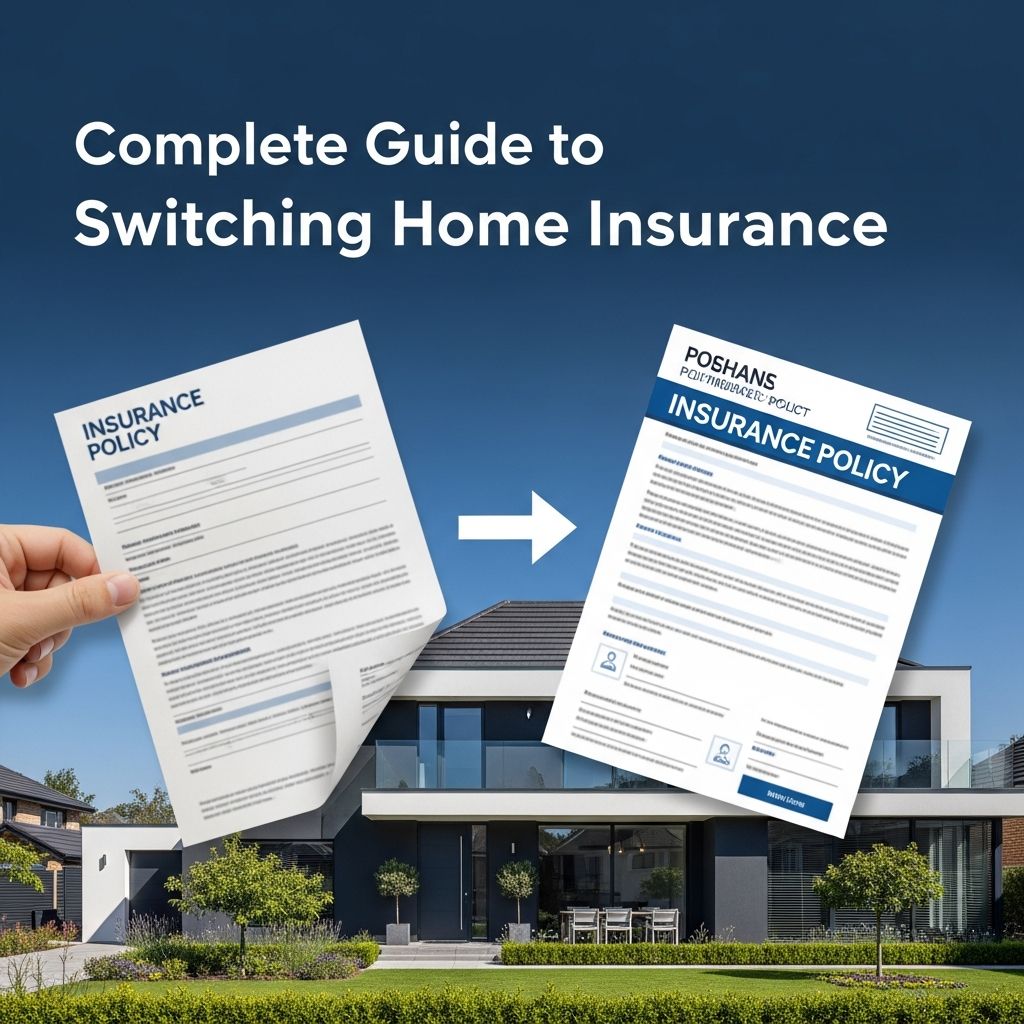
Complete Guide to Switching Home Insurance
Master the process of changing homeowners insurance providers seamlessly
Homeowners often find themselves questioning whether their current insurance provider offers the best value and coverage for their needs. Whether you’re seeking lower premiums, improved customer service, or enhanced protection, the ability to switch insurance carriers provides flexibility in managing your property protection. Understanding the mechanics of this transition—including timing, lender coordination, and coverage continuity—ensures a smooth changeover without exposing your home to uninsured periods.
Understanding Your Right to Change Insurance Providers
One of the most important clarifications for homeowners is that you maintain the freedom to change your insurance company at virtually any point during your policy term. Unlike some financial products that lock you into long-term commitments, homeowners insurance policies allow mid-term cancellations, though certain conditions and considerations apply.
The timing of your switch significantly influences the financial and procedural aspects of the transition. Most insurance carriers impose cancellation fees when you terminate a policy before its renewal date, though the amount varies by insurer and state regulations. Additionally, you may be entitled to a refund of unused premiums when you cancel, though the calculation depends on whether your insurer uses pro-rata or short-rate refund methods.
Understanding these financial implications upfront helps you determine whether switching immediately provides sufficient savings to justify any cancellation penalties, or whether waiting until your renewal date represents the more economical choice.
Optimal Timing Strategies for Switching Coverage
Several key moments present ideal opportunities for changing your insurance provider:
- Policy Renewal Date: This represents the simplest transition point, as your existing coverage naturally expires without requiring early termination. Most insurance professionals recommend using this window for shopping and comparing quotes, as it eliminates cancellation fees and simplifies administrative coordination.
- Mortgage Refinancing or Lender Changes: When refinancing your mortgage or switching to a new lender, you’re already updating insurance documentation. This creates a natural opportunity to evaluate your current coverage and explore more competitive options from different providers.
- Property Modifications: Significant home improvements, renovations, or additions may change your insurance needs. These modifications often justify a policy review and comparison with alternative carriers that might better address your updated property profile.
- Coverage Gaps or Service Issues: If your current provider fails to cover specific risks important to your situation or delivers inadequate customer service, switching becomes immediately justified regardless of timing.
- Premium Increases: When your insurer raises your rates substantially, comparing quotes from competitors helps determine whether the increase reflects market-wide trends or represents an opportunity to secure better pricing elsewhere.
Comprehensive Assessment of Your Current Coverage
Before initiating contact with new insurance providers, take time to thoroughly review your existing policy document. This foundational step ensures that any new quotes you obtain provide equivalent or superior protection, preventing the common mistake of switching to a cheaper policy that leaves you underinsured.
Key elements to examine in your current policy include:
- Dwelling coverage limits and whether they represent replacement cost or actual cash value
- Personal property protection amounts and any special item limitations
- Liability coverage minimums and umbrella policy coordination
- Deductible amounts for standard claims and separate deductibles for specific perils
- Exclusions and limitations that may affect your specific risk profile
- Special endorsements or riders covering valuable items or unique exposures
This detailed understanding of your current protection enables you to compare new quotes on an apples-to-apples basis. Many homeowners discover that their existing coverage includes protections they valued but overlooked during previous policy reviews, while others identify underinsured areas worth addressing during the switching process.
Shopping and Comparing Insurance Quotes
Once you understand your current coverage parameters, the next phase involves gathering quotes from multiple carriers. Most major insurance companies provide online quote tools that generate estimates within minutes based on property information and desired coverage levels.
When requesting quotes, ensure consistency in the details you provide across carriers. Varying property descriptions, claim histories, or coverage specifications will produce incomparable estimates and waste time. Conversely, using identical specifications across multiple quotes facilitates direct price comparisons.
Beyond premium cost, evaluate additional factors that influence long-term satisfaction:
- Available discounts for bundling home and auto policies, installing security systems, maintaining good credit, or achieving other risk reduction measures
- Digital tools and mobile apps for policy management, claims reporting, and document access
- Customer service availability including phone, chat, and online support options
- Claims handling reputation and average processing timeframes
- Financial stability ratings from agencies like A.M. Best or Standard & Poor’s
Many homeowners narrow their options to three or four carriers, then conduct more detailed research into customer reviews and complaint histories before making a final selection.
Managing the Transition Without Coverage Interruptions
The most critical aspect of switching insurance carriers involves coordinating effective dates to prevent any lapse in coverage. Even a single day without active homeowners insurance exposes your property to catastrophic financial risk and typically violates mortgage lending requirements.
The standard protocol involves:
- Selecting an effective date for your new policy that matches or immediately precedes your current policy’s cancellation date
- Purchasing your new policy and confirming the effective date in writing before contacting your current insurer
- Notifying your current insurer of cancellation only after receiving written confirmation that your new coverage is active
- Requesting written confirmation of the cancellation date and any refund due for unused premiums
Insurance professionals often recommend setting your new policy’s effective date to slightly overlap your existing coverage period. For example, if your current policy expires on June 30, you might activate new coverage on June 28. While this means paying two days of duplicate premiums, it provides a safety margin if administrative delays occur and ensures no coverage gap exists.
Coordinating with Your Mortgage Lender
If your mortgage is funded through an escrow account—where your lender collects monthly insurance premiums along with your mortgage payment—you must notify your lender about the insurance change. Your lender has a financial interest in ensuring continuous coverage and will need to update payment instructions to your new carrier.
The coordination process typically involves:
- Early Notification: Inform your lender about your intent to switch providers several weeks before the planned transition. This allows sufficient time for lender review and approval of your new policy.
- Policy Documentation Submission: Provide your new insurer’s declarations page to your lender. This document outlines coverage limits, deductibles, and effective dates, allowing the lender to verify that coverage meets their requirements.
- Coverage Verification: Your lender may request additional documentation confirming your new insurer’s financial stability and claims-handling capabilities.
- Escrow Account Adjustment: Your lender will adjust your monthly escrow payment to reflect the new premium amount. If your new insurance costs more than your previous policy, your mortgage payment increases; conversely, lower premiums reduce your payment amount.
- Premium Payment Authorization: Your lender provides payment instructions to your new insurer, establishing direct premium billing through your escrow account.
Communicating clearly and providing requested documentation promptly prevents delays that might otherwise disrupt the transition timeline.
Addressing Cancellation and Refund Procedures
Once your new policy is fully active and your lender has been updated, you can safely initiate cancellation of your old policy. Contact your current insurer through their standard cancellation process, typically by phone or online account management.
During this conversation:
- Provide the effective cancellation date, ideally matching or slightly after your new policy’s start date
- Request written confirmation of the cancellation in addition to any verbal acknowledgment
- Inquire about the refund process and expected timeline for receiving unused premium refunds
- Confirm that no future billings or charges will be processed after the cancellation date
Insurance companies typically process refunds within 30 days of cancellation, though some carriers provide checks while others apply credits to payment methods used for premium billing. Understanding your insurer’s specific refund procedures helps you verify that credits or payments arrive as expected.
Frequently Asked Questions About Switching Insurance
Will switching insurance affect my mortgage payment?
Yes, potentially. If your new insurance premium differs from your previous policy, your lender will adjust your monthly escrow payment accordingly. Higher premiums increase your total mortgage payment, while lower premiums reduce it.
How long does the switching process typically take?
The process generally requires two to three weeks from initial quote shopping through completion of lender coordination and cancellation. This timeline accounts for quote gathering, lender approval, new policy activation, and administrative processing.
Can I switch insurance during the middle of my policy term without penalties?
Yes, you can switch at any time, though most insurers charge cancellation fees for mid-term terminations. Comparing potential savings against cancellation costs helps determine whether immediate switching provides financial benefits compared to waiting for your renewal date.
What if my new policy doesn’t cover something my old policy included?
This scenario emphasizes the importance of detailed policy comparison before purchasing. If you discover coverage gaps after purchasing new insurance, contact your new insurer about adding endorsements or riders that restore equivalent protection. Some carriers offer special endorsements covering valuable items or unique exposures that may not be included in standard policies.
Do I need to inform my mortgage lender before canceling my old policy?
Yes, absolutely. Your lender must approve your new policy and update payment instructions before you cancel your old coverage. Failing to notify your lender could result in payment complications or lender-enforced insurance that costs significantly more than market rates.
Common Mistakes to Avoid During Your Switch
Understanding frequent errors helps you navigate the switching process more effectively:
- Canceling old coverage before new protection activates: This creates dangerous coverage gaps and violates mortgage requirements. Always confirm new policy activation in writing before canceling existing coverage.
- Failing to coordinate with your lender: Skipping lender notification can result in payment issues, forced coverage placement, or technical mortgage complications.
- Accepting the first quote without comparison shopping: Spending time gathering multiple quotes often reveals significant savings opportunities that justify the effort invested.
- Reducing coverage limits to lower premiums: While cost matters, underinsuring your property creates financial vulnerability that far outweighs modest monthly savings.
- Ignoring available discounts: Many homeowners overpay because they don’t inquire about bundling discounts, safety system credits, or other risk reduction incentives.
- Neglecting to request written cancellation confirmation: Verbal cancellation acknowledgments create disputes if billing continues or refunds don’t arrive. Always obtain written documentation.
Maximizing Your New Insurance Relationship
After successfully switching providers, take proactive steps to optimize your new insurance experience. Many carriers offer online account management systems that allow you to view your policy, make changes, report claims, and access important documents from any device. Familiarizing yourself with these tools enhances convenience and enables faster claims reporting if needed.
Additionally, periodically review your coverage—ideally annually—to ensure it remains appropriate for your current circumstances. Home improvements, property value changes, or shifts in your financial situation may warrant coverage adjustments that your new carrier should be notified about promptly.
Finally, maintain organized records of all insurance documents, correspondence, and cancellation confirmations. These materials prove invaluable if disputes arise or if you need to reference specific coverage details during claims situations.
References
- Can You Switch Homeowners Insurance Anytime? — Baldwin Insurance. https://baldwin.com/insights/can-you-switch-homeowners-insurance-anytime/
- How to Switch Home Insurance Companies — Liberty Mutual Insurance Resources. https://www.libertymutual.com/insurance-resources/property/how-to-switch-home-insurance-companies
- How to Change Your Homeowners Insurance the Right Way — SelectQuote. https://www.selectquote.com/auto-and-home-insurance/articles/change-homeowners-insurance
- How to Change Home Insurance with Escrow: A Step-by-Step Guide — TGS Insurance. https://tgsinsurance.com/how-to-change-home-insurance-with-escrow/
- 5 Steps to Changing Homeowners Insurance — Allstate Resources. https://www.allstate.com/resources/home-insurance/changing-homeowners-insurance
- How to Switch Home Insurance Companies — Bankrate Insurance Guide. https://www.bankrate.com/insurance/homeowners-insurance/changing-homeowners-insurance/
Similar Articles








Read full bio of medha deb