Swarthmore College: Elite Liberal Arts Education with Exceptional Value
Discover Swarthmore College: A premier liberal arts institution combining academic excellence with remarkable affordability and student outcomes.
Swarthmore College: An Elite Liberal Arts Institution
Swarthmore College stands as one of America’s most prestigious liberal arts institutions, offering a distinctive blend of academic rigor, financial accessibility, and extraordinary opportunities for undergraduate success. Founded in 1864 by the Quakers, this Pennsylvania-based college has established itself as a leader in higher education through its unwavering commitment to excellence and student-centered learning. With approximately 1,700 undergraduates enrolled on its sprawling 425-acre campus located just 11 miles outside Philadelphia, Swarthmore provides students with a uniquely intimate educational experience coupled with access to major metropolitan resources and research opportunities.
Campus Environment and Location
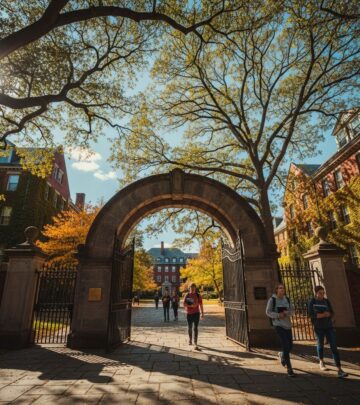
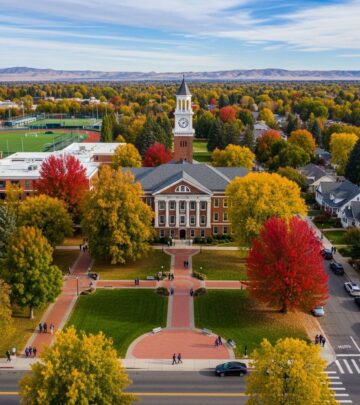
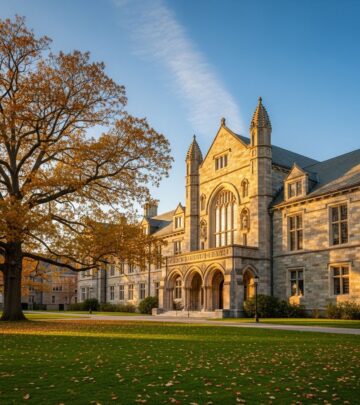
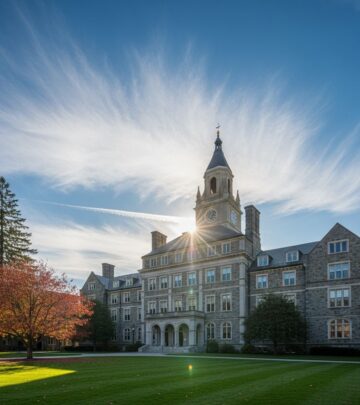
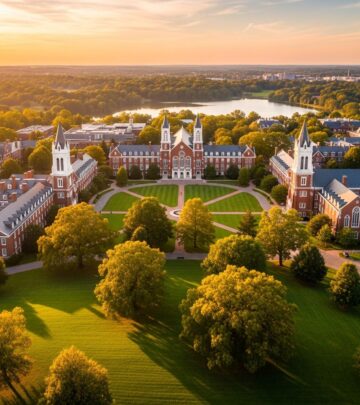
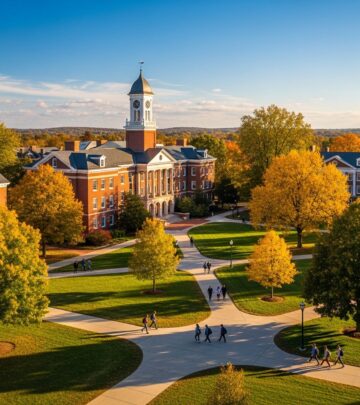
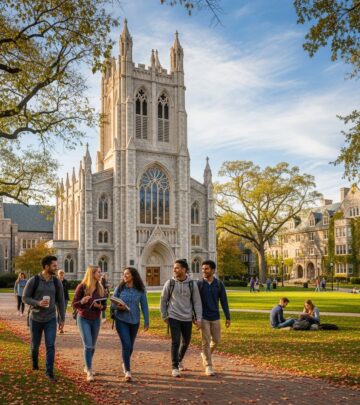
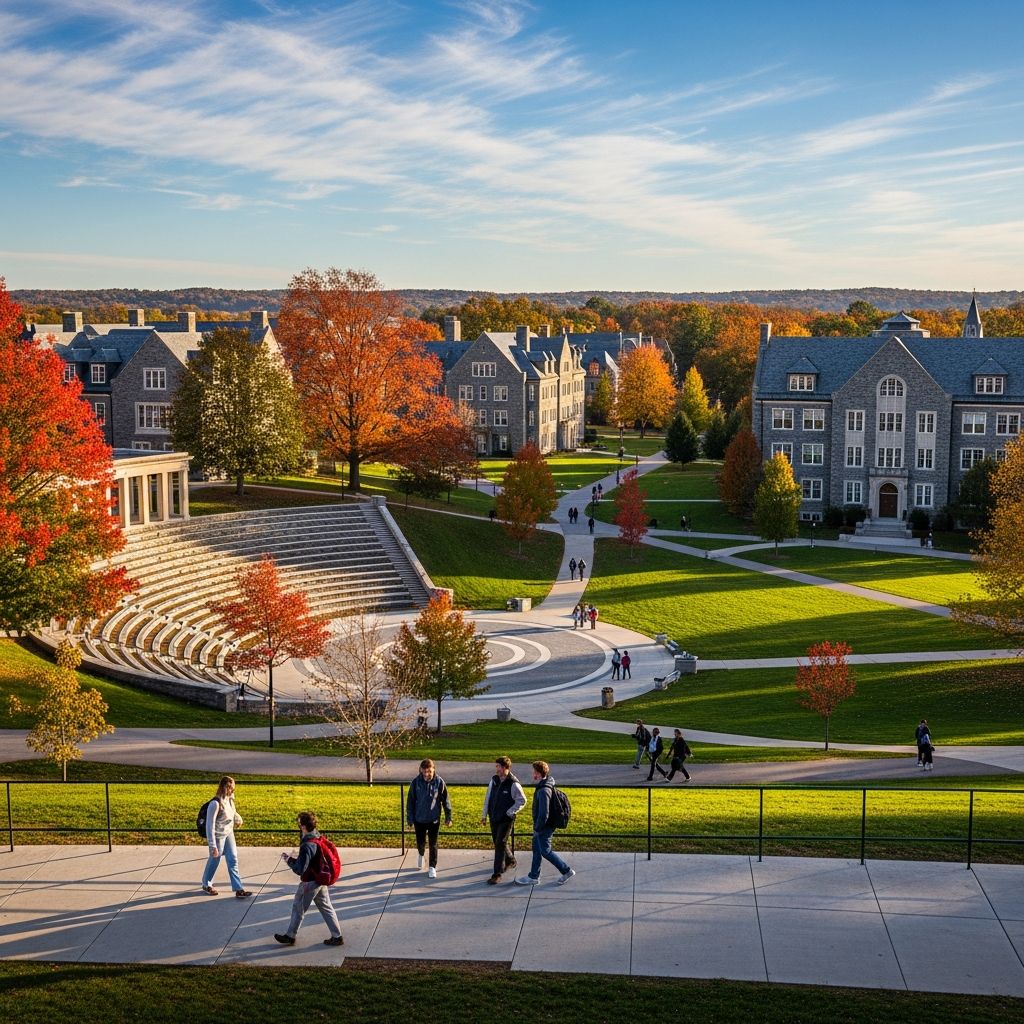
The Swarthmore campus represents a remarkable educational setting, with most of its 425-acre grounds comprising an arboretum that seamlessly blends natural beauty with academic purpose. This idyllic setting creates an environment conducive to focused study and personal reflection, while the proximity to Philadelphia ensures students are never isolated from urban culture, professional opportunities, and diverse learning experiences. Students can easily access the city via a convenient train station located at the edge of campus, reaching Philadelphia’s Center City in approximately 30 minutes. This strategic location provides the best of both worlds: a serene, nature-filled campus for concentrated academics and campus life, combined with immediate access to one of America’s major cities for internships, cultural experiences, and professional networking.
Academic Excellence and Curricular Opportunities
Swarthmore distinguishes itself through an exceptionally comprehensive curriculum that remains unmatched among liberal arts colleges of its size. The institution offers more than 600 courses spanning all academic disciplines, providing students with remarkable depth and breadth in their educational pursuits. The college features an accredited engineering program—a distinctive offering among liberal arts schools—alongside traditional humanities, sciences, and social sciences programs.
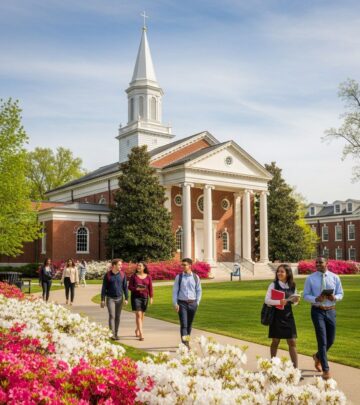
The faculty-student relationship at Swarthmore exemplifies the liberal arts college model at its finest. With an 8:1 student-faculty ratio, classes remain typically small, fostering meaningful interactions between professors and students. This intimate learning environment enables faculty to mentor students effectively and encourage active participation in the learning process. Many students take advantage of the college’s honors program, which provides additional opportunities for advanced study and independent research.
A unique feature of Swarthmore’s academic offerings is the ability for students to expand their educational horizons beyond the campus. Swatties can enroll in courses at nearby Bryn Mawr College, Haverford College, and the University of Pennsylvania through a consortium arrangement. This cross-registration opportunity allows students to access specialized programs and courses that might not be available at Swarthmore while maintaining their primary institutional affiliation and residential life.
Research and Creative Opportunities
Swarthmore’s commitment to undergraduate research distinguishes it from many peer institutions that reserve significant research opportunities for graduate students. The college provides over $800,000 in annual funding to support student-led research and creative projects conducted alongside dedicated faculty mentors. Remarkably, two-thirds of undergraduate students participate in research or independent creative projects during their time at Swarthmore, an exceptionally high percentage that underscores the institution’s dedication to hands-on learning.
This emphasis on student research directly contributes to the college’s exceptional graduate school outcomes. Approximately 22% of Swarthmore graduates pursue and complete doctoral programs, representing the third-highest percentage among all U.S. colleges and universities. Within five years of graduation, 26.4% of students enter graduate school, demonstrating the college’s role in preparing future scholars and researchers. Additionally, 78% of student and graduate applicants gain admission to medical school, while 80% of law school applicants are admitted, reflecting the rigorous preparation students receive at Swarthmore.
Financial Aid and Affordability
Meeting Full Financial Need
Swarthmore’s approach to financial aid represents one of its most compelling advantages, particularly for middle and lower-income families. The college meets 100% of demonstrated financial need for all admitted students without requiring loans as part of the financial aid package. This need-blind admission policy for U.S. citizens and permanent residents means that admission and financial aid decisions are made completely independently—a student’s ability to pay does not affect admission chances.
Aid Statistics and Impact
Currently, 54% of Swarthmore’s student body receives need-based aid from the college, with the institution allocating more than $56 million annually to financial aid. The range of financial aid awards extends from $1,000 to $85,802, reflecting the college’s commitment to supporting students across the financial spectrum. The average aid award, combining campus jobs and scholarships, totals $71,465 per student. This substantial support dramatically reduces the effective cost of attendance: while Swarthmore’s sticker price appears daunting at first glance, the average financial aid award reduces the total cost of attendance by approximately 68% to just $20,584 for aided students.
Minimal Student Debt
A particularly notable aspect of Swarthmore’s financial aid philosophy is the commitment to keeping loans off the table. All financial aid is provided in the form of scholarships and grants rather than loans, though some students choose to borrow for various reasons. Among recent graduates who did borrow, the average debt was $18,262—approximately 40% less than the national average for borrowers at private colleges. This approach significantly reduces the financial burden students carry into their post-collegiate lives.
Cost Breakdown and Financial Planning
For prospective students and families planning their educational investment, understanding Swarthmore’s comprehensive cost structure is essential. The current tuition and fees total $90,692 annually, encompassing multiple components:
| Cost Component | Amount |
|---|---|
| Tuition & Books | $68,766 |
| Housing | $11,076 |
| Food | $10,390 |
| Student Activity Fee | $460 |
| Total | $90,692 |
Admissions and Enrollment
Swarthmore maintains highly selective admissions standards reflective of its elite status. Of 975 students admitted, approximately 430 enroll annually, demonstrating the college’s competitive 12% admission rate. This selective process ensures a student body of academically accomplished and intellectually curious individuals committed to rigorous study and meaningful contributions to campus life.
Post-Graduate Outcomes and Career Success
Immediate and Long-Term Employment
Swarthmore’s emphasis on rigorous academics and research preparation translates directly into strong career outcomes. Upon graduation, 66.4% of students plan to enter the workforce immediately, positioning themselves competitively in the job market. Early-career earnings for Swarthmore graduates average $61,000, placing the college among the top performers in this metric and demonstrating strong return on investment.
Graduate School Preparation
For students pursuing advanced degrees, Swarthmore’s preparation proves invaluable. Within five years of graduation, 26.4% of students enter graduate school. The college’s strong track record in graduate admissions extends across multiple disciplines: 78% of medical school applicants gain admission, while 80% of law school applicants are accepted. Perhaps most impressively, 21.8% of Swarthmore graduates complete doctoral programs, placing the college in the top tier nationally for doctoral degree attainment.
Institutional Resources and Financial Sustainability
Swarthmore’s commitment to educational excellence is supported by substantial institutional resources. The college operates with total annual operating expenses of $220.2 million, reflecting significant investment in faculty, facilities, and student services. The endowment market value stands at $2.7 billion, with per-student endowment resources ranking 15th in the United States. Revenue sources demonstrate a diversified funding model: 37% comes from student fees, 55% from endowment returns, and 5% from other sources, ensuring financial stability and continued investment in the educational mission.
Library and Academic Resources
With seven libraries on campus and more than 40 distinct paths of study, Swarthmore provides exceptional access to information and research resources. These libraries form an integrated system supporting the college’s commitment to rigorous academics and student-centered research. The extensive path system allows students to design individualized majors and concentrations, accommodating diverse intellectual interests while maintaining academic standards.
Community and Economic Impact
Beyond its role as an educational institution, Swarthmore contributes substantially to the regional economy. The college’s operations and workforce generate a $387.7 million annual impact on the Pennsylvania economy while supporting 2,431 jobs in the region. This economic contribution reflects Swarthmore’s importance as both an employer and an engine of local prosperity.
Rankings and Recognition
Swarthmore’s reputation for combining academic excellence with financial accessibility has earned recognition from leading educational rankings and publications. The college consistently appears among the top institutions nationally for best college values, reflecting the exceptional combination of rigorous academics, generous financial aid, and strong outcomes. Money Magazine’s comprehensive ranking methodology evaluated over 700 U.S. four-year colleges across three primary categories: Quality of Education (30%), Affordability (40%), and Outcomes (30%), using 25 specific factors. Swarthmore’s performance across these metrics consistently places it among America’s elite institutions.
Frequently Asked Questions
Q: What is Swarthmore’s admission rate and how selective is the college?
A: Swarthmore maintains a highly competitive 12% admission rate, with approximately 975 of 8,000+ applicants admitted annually, resulting in an incoming class of approximately 430 students. This selectivity reflects the college’s commitment to maintaining a student body of exceptional academic achievement and intellectual engagement.
Q: How does Swarthmore make financial aid decisions?
A: For U.S. citizens and permanent residents, Swarthmore makes admission and financial aid decisions independently. The college meets 100% of demonstrated financial need without requiring loans, meaning a student’s ability to pay does not affect admission chances. Currently, 54% of the student body receives need-based aid.
Q: What types of academic programs does Swarthmore offer?
A: Swarthmore offers more than 600 courses across more than 40 paths of study, spanning humanities, sciences, social sciences, and engineering. Students can also cross-register at nearby Bryn Mawr, Haverford, and the University of Pennsylvania to access additional specialized programs.
Q: What percentage of Swarthmore students participate in research?
A: Approximately two-thirds (66%) of undergraduate students participate in research or independent creative projects alongside faculty mentors. The college provides over $800,000 annually to support these student-led initiatives.
Q: What are the post-graduate outcomes for Swarthmore graduates?
A: Swarthmore graduates achieve exceptional outcomes: 22% complete doctoral programs (3rd highest nationally), early-career earnings average $61,000, 78% of medical school applicants are admitted, and 80% of law school applicants are admitted.
Q: What is the student-faculty ratio at Swarthmore?
A: Swarthmore maintains an 8:1 student-faculty ratio, ensuring small classes and meaningful faculty-student interactions that characterize the liberal arts college experience.
References
- Swarthmore College Ranked Among Best Value Colleges — Swarthmore College Office of News & Events. 2017. https://www.swarthmore.edu/news-events/swarthmore-tops-list-best-value-colleges-and-universities
- Swarthmore College by the Numbers — Swarthmore College Office of Institutional Effectiveness, Research & Assessment. 2025. https://www.swarthmore.edu/meet-swarthmore/swarthmore-numbers
- The 10 Best Small Colleges in the U.S. — Money Magazine. 2020. https://money.com/best-small-colleges/
- Swarthmore College — The Princeton Review. 2024. https://www.princetonreview.com/college/swarthmore-college-1024057
- College Rankings Methodology: Money Magazine — Money Magazine. 2020. https://money.com/best-colleges/
- Swarthmore College, PA – Complete Profile, Rankings and Data — Money Magazine. 2025. https://money.com/best-colleges/profile/swarthmore-college/
Similar Articles








Read full bio of medha deb