Sustainability: Definition, Importance & Business Impact
Understanding sustainability: integrating environmental, social, and economic responsibility into modern business strategies.
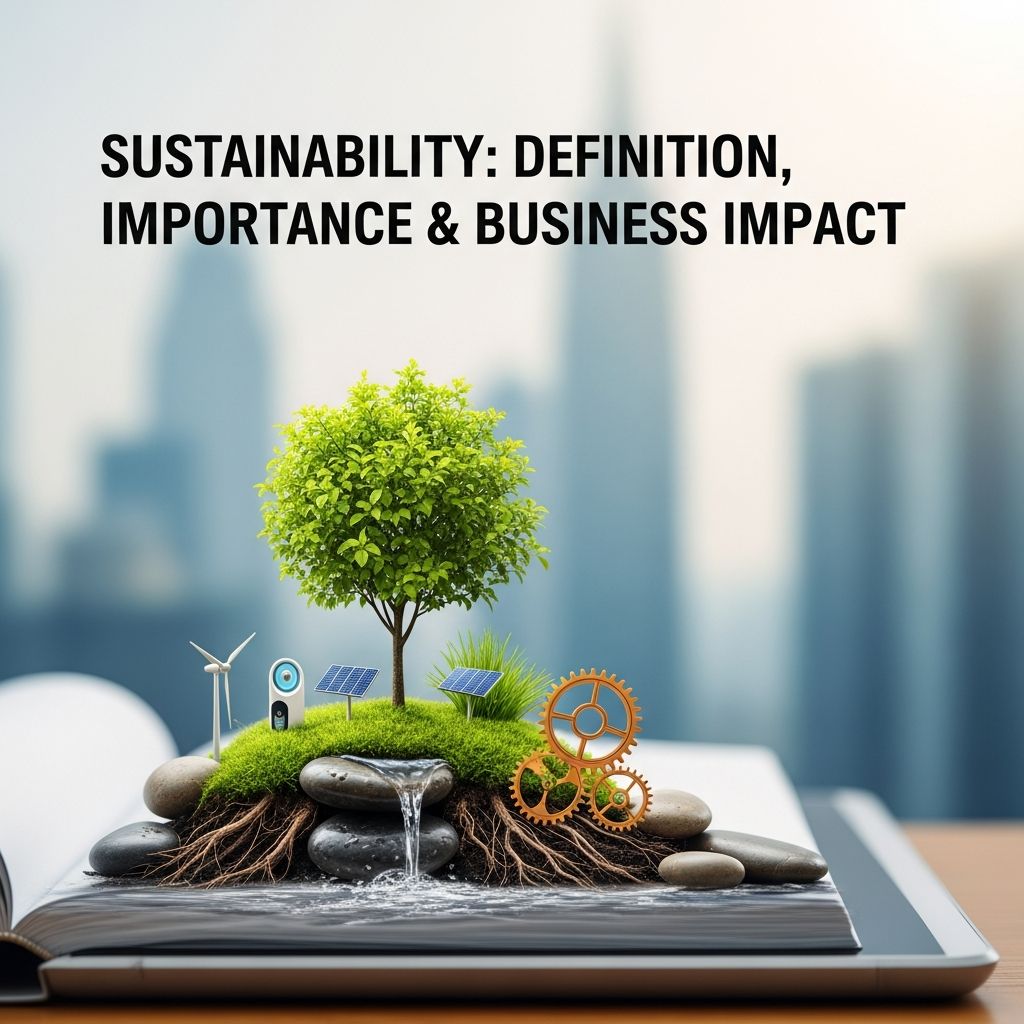
Sustainability has become one of the most important concepts in modern business. As companies face increasing pressure from consumers, regulators, and stakeholders to operate responsibly, understanding and implementing sustainability practices has evolved from a nice-to-have to a business imperative. This comprehensive guide explores what sustainability means in business, why it matters, and how organizations can successfully integrate sustainable practices into their operations and long-term strategies.
What Is Sustainability in Business?
Sustainability in business refers to integrating economic, environmental, and social responsibilities into everyday operations and long-term strategies. This holistic approach ensures that a business can thrive while contributing positively to society and minimizing its environmental footprint. Rather than viewing these responsibilities as competing interests, modern businesses increasingly recognize that sustainable operations create a balanced approach to profitability and positive impact.
At its core, sustainability encompasses three interconnected pillars that form the foundation of any comprehensive business sustainability strategy. Understanding each pillar is essential for companies seeking to develop effective and meaningful sustainability initiatives.
The Three Pillars of Business Sustainability
Effective business sustainability rests on three fundamental pillars that work together to create a comprehensive framework for responsible business operations:
Economic Sustainability
Economic sustainability involves practices that ensure a business can be profitable and viable over the long term. This doesn’t simply mean focusing on short-term gains or maximizing quarterly profits. Instead, it’s about creating a resilient economic model that can withstand market fluctuations, economic cycles, and future uncertainties.
Key components of economic sustainability include efficient resource management, cost-effective operations, and strategic investment in innovation. Companies pursuing economic sustainability recognize that operational efficiency directly impacts their bottom line. Additionally, economic sustainability includes ensuring fair wages and creating equitable growth opportunities for employees, underscoring that a business cannot truly thrive if its workforce is left behind or undercompensated.
It’s crucial to note that economic sustainability should not overshadow the other two pillars. Profit at the expense of environmental degradation or social harm is not the focus of sustainable business practices. Instead, economic sustainability emphasizes creating sustainable profitability that balances business success with broader responsibilities.
Environmental Sustainability
Environmental sustainability emphasizes minimizing the negative impact of business activities on the natural world. This comprehensive approach includes reducing carbon emissions, conserving water resources, managing waste responsibly, and transitioning to renewable energy sources. Environmental sustainability recognizes that businesses operate within ecological systems that have finite resources and limited capacity to absorb pollution and waste.
By adopting green practices and environmentally conscious operations, businesses not only contribute to combating climate change but also often discover significant cost savings through reduced energy consumption and lower waste-disposal expenses. Additionally, environmentally-minded companies are more likely to attract both customers and talented employees who value green practices and corporate environmental responsibility, further strengthening their market position and competitive advantage.
Focusing on environmental sustainability also helps companies comply with related federal laws and regulations, such as the Clean Air Act and the Clean Water Act. Proactive environmental management reduces the risk of regulatory penalties and positions companies favorably with government agencies and environmental organizations.
Social Sustainability
Social sustainability focuses on the well-being of people and communities affected by a business’s operations. This pillar covers everything from employee rights and working conditions to community engagement, philanthropic initiatives, and broader social impact. Companies committed to social sustainability often embed practices such as diversity and inclusion programs, comprehensive health and safety regulations, fair labor practices, and community development programs into their core operations.
These efforts help foster a sense of trust and loyalty among employees and stakeholders, creating a robust social framework that supports long-term business success. When employees feel valued and supported, they demonstrate higher engagement, productivity, and retention. Similarly, communities that benefit from a company’s social initiatives often become advocates for the business, enhancing brand reputation and customer loyalty.
Why Is Sustainability Important in Business?
Sustainability has transitioned from a peripheral concern to a central element of successful business strategy. Understanding why sustainability matters helps leaders make compelling cases for sustainable investments and initiatives.
Contributes to Business Longevity and Resilience
Sustainable practices often lead to improved operational efficiency and reduced costs, which directly impact a company’s bottom line and long-term viability. For instance, implementing energy-efficient technologies can significantly lower utility expenses, while sustainable supply chain practices can reduce waste and enhance operational efficiencies across the organization. Companies that prioritize sustainability are better positioned to navigate regulatory changes, market shifts, and economic uncertainties, providing a competitive edge in an ever-evolving business landscape.
This resilience proves particularly valuable during economic downturns or supply chain disruptions. Companies with diversified, sustainable supply chains and efficient resource management recover more quickly from challenges than those dependent on inefficient or unsustainable practices.
Drives Innovation and Efficiency Gains
Sustainability often serves as a powerful catalyst for innovation. Companies that focus on sustainable practices are more likely to explore new materials, processes, and technologies that can lead to greater efficiency and cost savings. For example, investing in renewable energy can reduce waste and resource dependency, ultimately enhancing the overall efficiency of business operations. This innovation mindset extends beyond environmental initiatives to create new business opportunities, product lines, and market advantages.
Sustainable innovation frequently leads to breakthrough products and services that address emerging consumer demands and market needs. Companies that innovate around sustainability often capture first-mover advantages in growing market segments.
Regulatory Compliance and Corporate Resilience
The regulatory landscape is increasingly favoring sustainable business practices across industries and geographies. By proactively adopting sustainable measures, companies can ensure compliance with current and future regulations, avoiding costly fines and penalties. This preparedness not only enhances corporate resilience but also positions businesses favorably in the eyes of regulators, policymakers, and institutional investors who increasingly scrutinize corporate governance and environmental practices.
Attracts Investment and Improves Market Position
Investors and financial institutions increasingly prioritize environmental, social, and governance (ESG) criteria when making investment decisions. Companies demonstrating strong sustainability commitments attract capital at more favorable terms, access broader investor bases, and build stronger relationships with institutional stakeholders. This enhanced access to capital provides competitive advantages and supports growth initiatives.
Implementing Sustainability: Key Strategies
Fostering a Culture of Sustainability
To embed sustainability deeply into an organization, leaders must cultivate a corporate culture that values and actively supports sustainable practices. This involves setting the tone from the top and ensuring that sustainability is woven into the company’s mission, values, and daily operations. Programs such as employee training, recognition for sustainable achievements, and encouraging innovation in sustainability help foster this organizational culture.
Companies like Google have appointed dedicated chief sustainability officers responsible for coordinating sustainability efforts across the organization. These leaders focus on collaboration as a key strategy for working toward net zero goals and ensuring that sustainability becomes embedded in all business decisions.
Establishing Core Sustainability Metrics and KPIs
Key Performance Indicators (KPIs) are essential for measuring the success of sustainability initiatives and holding organizations accountable for progress. Common sustainability KPIs include:
- Carbon Footprint: Measuring greenhouse gas emissions to monitor efforts to reduce carbon output and track progress toward emissions reduction targets
- Energy Consumption: Tracking the amount of energy used and the proportion sourced from renewable resources to assess progress in energy transition
- Water Usage and Waste Management: Assessing efficient water use and waste reduction efforts to minimize resource consumption
- Supply Chain Sustainability: Evaluating the environmental and social practices of suppliers and partners to ensure alignment with corporate values
- Employee Well-being: Metrics such as employee satisfaction, retention rates, diversity and inclusion measures, and workplace safety indicators
- Community Impact: Assessing the company’s contribution to local communities through initiatives like philanthropy, volunteer programs, and community development
The Business Case for Sustainability
Beyond ethical and environmental considerations, sustainability delivers tangible business benefits that drive financial performance and competitive advantage. Companies that successfully implement sustainability initiatives often experience improved brand reputation, enhanced customer loyalty, reduced operational costs, and stronger employee engagement.
Market research consistently demonstrates that consumers increasingly prefer brands that demonstrate genuine commitment to sustainability. This preference translates into increased market share, premium pricing opportunities, and customer lifetime value. Similarly, talented employees prefer working for companies that align with their values and demonstrate social and environmental responsibility.
Challenges and Future Outlook
While sustainability benefits are clear, companies face real challenges in implementation. These include capital investment requirements, operational complexity, measurement difficulties, and the need for organizational change management. However, as sustainability becomes increasingly central to business strategy and regulatory requirements, companies that address these challenges gain significant competitive advantages.
The future of business sustainability will likely involve greater integration of technology, increased transparency and reporting, stronger regulatory frameworks, and more sophisticated sustainability measurement and accountability mechanisms. Companies that begin their sustainability journey now will be best positioned to thrive in this evolving landscape.
Frequently Asked Questions (FAQs)
Q: What is the difference between sustainability and corporate social responsibility (CSR)?
A: While related, sustainability and CSR have different focuses. Sustainability is a comprehensive strategy addressing economic, environmental, and social factors integrated into core business operations. CSR typically refers to voluntary initiatives and philanthropic efforts. Sustainability is more strategic and pervasive, while CSR is often more project-based and discretionary.
Q: How can small businesses implement sustainability practices?
A: Small businesses can start with assessments of their environmental and social impact, setting realistic goals, and implementing incremental improvements. Priorities might include energy efficiency, waste reduction, fair labor practices, and community engagement. Many resources and frameworks exist specifically designed for small business sustainability.
Q: What is net zero and how does it relate to sustainability?
A: Net zero refers to achieving zero net greenhouse gas emissions by balancing emissions produced with emissions removed from the atmosphere. It’s a key sustainability goal for many organizations addressing climate change and is increasingly central to corporate sustainability strategies.
Q: How do companies measure the success of sustainability initiatives?
A: Companies measure sustainability success through key performance indicators (KPIs) such as carbon emissions reductions, energy consumption from renewables, waste diversion rates, employee retention and satisfaction, community impact metrics, and supply chain sustainability assessments. Regular reporting and third-party verification strengthen accountability.
Q: Why do investors care about corporate sustainability?
A: Investors recognize that companies with strong sustainability practices demonstrate better risk management, operational efficiency, innovation capacity, and long-term resilience. Sustainability practices correlate with improved financial performance, reduced regulatory risk, and better employee and customer retention, making sustainable companies more attractive investments.
References
- Sustainability in Business: What It Is and Why It Matters — Seattle University, Albers School of Business & Economics. 2024. https://www.seattleu.edu/business/online/albers/blog/what-is-sustainability-in-business
- Clean Air Act — United States Environmental Protection Agency. 2024. https://www.epa.gov/clean-air-act-overview
- Clean Water Act — United States Environmental Protection Agency. 2024. https://www.epa.gov/clean-water-act
- Environmental, Social, and Governance (ESG) Investing — U.S. Securities and Exchange Commission. 2024. https://www.sec.gov/tcr
- The Business Case for Sustainability — Harvard Business School Publishing. 2023. https://www.hbs.edu
Similar Articles








Read full bio of Sneha Tete