21 Surprising Money Facts You Probably Never Knew
Discover fascinating facts about coins, cash, debt, and spending that reveal how money really works in everyday life.

Money is part of almost everything we do, but most of us use it every day without really stopping to think about it. From the coins in your pocket to the credit card in your wallet, there are tons of fascinating — and sometimes shocking — facts about how money is made, used, and borrowed.
This guide breaks down 21 fun money facts in three key areas:
- Coins: Quirky details about the change jingling in your purse.
- Physical bills: Surprising truths about paper money and how long it lasts.
- Consumer debt and spending: Eye-opening statistics about how people really use money.
Use these facts as motivation to look more closely at your own spending, saving, and debt — and to start making choices that move you toward financial freedom.
6 Money Facts About Coins
Coins may seem small and insignificant, but they tell a surprising story about history, design, and the cost of creating money.
1. Some coins cost more to make than they are worth
In the United States, it has often cost more than one cent to produce a single penny, and close to or above five cents to make a nickel in recent years, largely because of metal prices and manufacturing costs. That means the government can lose money every time it mints these coins.
- Lesson for you: Small amounts really add up — including small inefficiencies. The same way pennies can be costly to produce, small, repeated fees or “tiny” purchases can quietly drain your budget.
2. Coins have a surprisingly long life span
Circulating coins can remain in use for decades. Many U.S. coins last around 30 years or more before they become too worn to circulate and are pulled out of use.
- By contrast, paper money usually wears out much faster.
- Takeaway: Physical coins are built for durability, but your financial habits last even longer. Good habits you build now can serve you for a lifetime.
3. The edges of some coins were designed to prevent cheating
The ridged edges on many coins — like quarters — originate from a time when coins were made of precious metals. People would shave off tiny bits of metal from the edges and keep the shavings. Ridges made tampering obvious and helped protect the value of the coin.
- Modern parallel: Just like ridges discourage cheating, strong personal boundaries and rules (like “no new debt” or “24-hour wait on non-essential purchases”) protect your money from being “shaved off” by impulsive decisions.
4. Special commemorative coins can be legal tender
Many countries issue commemorative coins to mark major events or anniversaries. These coins are often legal tender, meaning they can be used as money — even though many people keep them as collectibles instead.
- Key insight: Value is sometimes about perception. Just like a commemorative coin, your financial skills can be far more valuable than they look on the surface when you invest time in building them.
5. Coins are carefully designed to resist counterfeiting
Modern coins use a combination of metals, specific weights, detailed images, and precise dimensions that are difficult and expensive to copy accurately. Central banks use these design features to protect the integrity of the currency.
- Personal finance angle: In the same way, building a strong financial system for yourself – with automation, tracking, and clear goals – makes it harder for financial mistakes to “sneak in.”
6. The smallest denominations often fall out of everyday use
Several countries have eliminated very small coins from circulation because the cost of producing them outweighed their usefulness in everyday transactions. Canada, for example, phased out its one-cent coin and now rounds cash transactions to the nearest five cents.
- Lesson: Just as economies streamline small coins, you can streamline your budget by eliminating tiny, low-value expenses that don’t truly add happiness or progress toward your goals.
9 Money Facts About Physical Bills
Paper cash may be used less often in a digital world, but physical bills are still full of interesting secrets — from what they’re made of to how often they’re replaced.
7. Most “paper” money is not actually paper
Many banknotes are made from a blend of cotton and linen, not traditional wood-pulp paper. This makes them more durable, harder to tear, and better able to survive constant folding and handling.
- Connection to your money: Just like bills are designed to survive wear and tear, your financial plan should be flexible and resilient enough to handle real-life ups and downs.
8. Different denominations have different life spans
Lower-value bills like small denominations wear out much faster than higher-value notes because they change hands more frequently. Central banks regularly remove damaged or worn bills from circulation and replace them with new ones.
| Type of money | Typical lifespan | Main reason for replacement |
|---|---|---|
| Small denomination bills | Short (often a few years) | Frequent handling and wear |
| High denomination bills | Longer | Less frequent use in daily purchases |
| Coins | Decades | Physical wear over a long time |
9. Physical cash remains important even in a digital world
Digital payments have grown rapidly, but central banks report that cash is still widely used, especially for small purchases and by people with limited access to banking or digital tools.
- Practical tip: Even if you mostly tap or swipe, keeping a small amount of cash on hand can be useful for emergencies or locations that do not accept cards.
10. Banknotes include multiple hidden security features
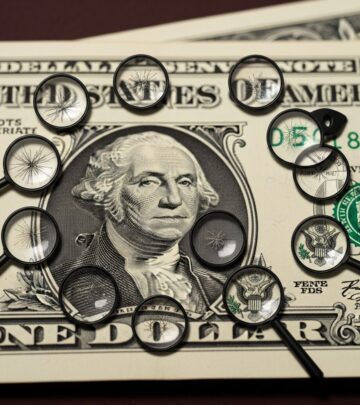
Modern bills often include watermarks, micro-printing, color-shifting ink, security threads, and holograms to deter counterfeiting. Many of these details are hard to see without holding the note up to light or tilting it at an angle.
- Financial mindset reminder: What you see at first glance — like someone’s lifestyle or social media highlight reel — rarely tells the whole money story. Look for the “hidden features” of your own finances: net worth, savings rate, and long-term goals.
11. Old or damaged bills are regularly destroyed
Central banks inspect and remove worn, torn, or heavily soiled banknotes from circulation. These notes are destroyed and replaced with newly printed bills to keep the money supply clean and usable.
- Parallel to your budget: Just as old notes are taken out of circulation, it can help to regularly review your budget and “retire” outdated expenses that no longer match your priorities.
12. Currency design often reflects national identity
Bills typically feature historical figures, cultural symbols, and national landmarks. Their visual design is meant to represent a country’s story and values.
- Personal reflection: In the same way, the way you use your money reflects your values. When you look at your spending, ask yourself: “Does this reflect the life I want to build?”
13. Some bills can survive a spin in the washing machine
The cotton-linen blend used in many banknotes and the durable inks applied during printing help bills survive brief exposure to water and rough handling, although repeated washing will eventually damage them.
- Money habit takeaway: Your finances don’t have to be perfect. What matters is building a structure sturdy enough to recover from occasional mistakes — like overspending one month — and then getting back on track.
14. Cash can play a useful role in budgeting
Some people use a “cash envelope” method, physically setting aside money for categories like groceries, fun, or transportation. Because you can literally see the cash leaving your wallet, it can make overspending feel more real and easier to control.
- Try this: If you struggle with card overspending, test one category in cash for a month and see how it changes your behavior.
15. The total amount of cash in circulation can rise even as card use grows
Central banks in several countries have reported that the value of banknotes in circulation has increased over time, sometimes because people hold more cash as a store of value, even while they shift everyday purchases to digital payments.
- Insight: People often hold on to what feels safe. You can use that instinct positively by creating safety nets like an emergency fund and automatic savings.
6 Money Facts About Consumer Debt and Spending
This final section is less “fun” — but incredibly important. Understanding how people borrow and spend can motivate you to make more intentional choices with your own money.
16. Household debt has reached very high levels
In many countries, household debt — including mortgages, credit cards, auto loans, and student loans — has grown substantially over the past decades. In the United States, for example, total household debt is in the tens of trillions of dollars according to central bank data.
- What this means for you: Being “normal” often means being deeply in debt. Choosing a different path may feel unusual, but it can dramatically improve your future freedom.
17. Credit cards are a major source of revolving debt
Credit card balances can be especially costly because interest rates are typically much higher than on other types of loans. Carrying a balance from month to month means you pay interest, often at rates well above 15–20% annually.
- Even relatively small balances can become expensive if they sit for a long time.
- Smart move: Aim to pay your statement balance in full every month whenever possible.
18. A large share of adults live paycheck to paycheck
Surveys in advanced economies show that a significant portion of households have little or no financial buffer and would struggle to cover an unexpected expense without borrowing or selling something.
- Action step: Even setting aside a small, consistent amount each month into an emergency fund can gradually move you out of this vulnerable position.
19. Many people would have trouble covering a modest emergency in cash
Household finance research often finds that a notable percentage of people would find it difficult to quickly come up with a few hundred dollars (or equivalent) for an unexpected bill without borrowing, selling items, or missing other payments.
- Use this fact as motivation: Start building a buffer, even if you can only save a very small amount at first. Consistency matters more than size when you are just starting out.
20. Spending decisions are strongly influenced by psychology
Behavioral economics research shows we are not always rational with money. We are influenced by habits, emotions, social pressure, and mental shortcuts, which can lead to overspending or under-saving.
- Examples include impulse purchases, lifestyle creep, and the temptation to buy now and worry later.
- Helpful strategy: Put barriers between yourself and impulsive spending — like deleting saved cards from online stores or waiting 24 hours before buying non-essential items.
21. Small, steady changes can dramatically improve your financial picture
Studies on saving and debt reduction suggest that people are more successful when they make small, consistent changes rather than extreme, short-lived ones. Automating transfers to savings or debt payments is one of the most effective ways to stick with these changes over time.
- Key takeaway: You do not need a huge salary or a perfect plan to build wealth. You need a simple system you can repeat month after month.
How to Use These Money Facts to Improve Your Finances
Knowing interesting trivia about coins and bills is fun — but the real power of these money facts is how you apply them in your day-to-day life. Here are a few ideas:
- Review your debt: List every balance, interest rate, and minimum payment. Decide which debt you will focus on first.
- Track your spending for 30 days: Get curious, not judgmental. See where your money really goes.
- Start or grow an emergency fund: Even a small automatic transfer each payday helps.
- Set one clear money goal: For example, “Pay off my smallest credit card” or “Save $500 in my emergency fund.”
- Learn one new money skill: Such as how interest works, how to read a pay stub, or how to create a simple budget.
The same way coins and bills are carefully designed, you can design a financial life that supports your long-term dreams — one small, intentional decision at a time.
Frequently Asked Questions (FAQs)
Q: Why should I care about these money facts?
A: Fun details about coins and bills make money feel less intimidating, and the statistics about debt and spending can motivate you to get more intentional with your own financial decisions.
Q: Do these money facts apply everywhere?
A: Specific numbers vary by country, but the patterns — like household debt growing, cash still playing a role, and psychology influencing spending — show up across many economies.
Q: How can I start improving my finances with limited income?
A: Focus on what you can control: track your spending, avoid high-interest debt when possible, start a very small emergency fund, and look for concrete ways to boost income over time.
Q: Is using credit cards always bad?
A: No. Credit cards can be helpful tools if you pay your statement balance in full each month and avoid interest. Problems arise when balances are carried and grow at high interest rates.
Q: What is one simple first step I can take today?
A: Take 10 minutes to log in to your accounts, write down your current balances and due dates, and set an automatic payment or transfer that moves you one step closer to your next money goal.
References
- How Currency Gets into Circulation — Board of Governors of the Federal Reserve System. 2023-06-01. https://www.federalreserve.gov/faqs/currency_12771.htm
- Money and Payments: The U.S. Dollar in the Age of Digital Transformation — Board of Governors of the Federal Reserve System. 2022-01-20. https://www.federalreserve.gov/publications/money-and-payments-discussion-paper.htm
- Phasing Out the Penny — Government of Canada, Department of Finance. 2012-03-29. https://www.canada.ca/en/department-finance/news/2012/03/phasing-out-penny.html
- Household Debt and Credit — Federal Reserve Bank of New York. 2024-05-14. https://www.newyorkfed.org/microeconomics/hhdc.html
- Economic Well-Being of U.S. Households in 2023 — Board of Governors of the Federal Reserve System. 2024-05-21. https://www.federalreserve.gov/publications/2024-economic-well-being-of-us-households-in-2023-executive-summary.htm
- Financial Literacy and Financial Education: Review of Existing Evidence and Future Directions — OECD. 2020-10-01. https://www.oecd.org/financial/education/financial-literacy-and-financial-education-review-of-existing-evidence-and-future-directions.htm
Similar Articles








Read full bio of medha deb