Surplus: Definition, Types, and Economic Impact
Understanding budget surpluses, trade surpluses, and their economic implications.

What Is a Surplus?
A surplus occurs when the amount of a resource or commodity exceeds the quantity demanded. In economic terms, a surplus represents a situation where supply outweighs demand, resulting in an excess quantity of goods, services, or funds. This concept is fundamental to understanding market dynamics, government finances, and international trade relationships.
Surpluses can manifest in various contexts throughout the economy. When analyzing financial health at both individual and national levels, understanding surpluses becomes critical for informed decision-making. The term is most commonly used in government budgeting and international trade, though it applies broadly across economic systems.
Understanding Budget Surplus
A budget surplus occurs when a government’s revenues exceed its expenditures during a specific fiscal period. This means the government collects more money through taxes and other income sources than it spends on programs, services, and operations.
Key Characteristics of Budget Surplus:
- Revenue Exceeds Spending: Government income from taxes, fees, and other sources surpasses total government outlays
- Fiscal Health Indicator: Generally viewed as a sign of responsible fiscal management and budgeting
- Debt Reduction Potential: Surpluses can be used to pay down national debt or invested in future initiatives
- Economic Context Matters: Whether a surplus is beneficial depends on economic conditions and reasons behind it
During economic expansion periods, governments often experience budget surpluses as tax revenues increase due to higher incomes and business profits. However, surpluses can also indicate insufficient public investment in infrastructure, education, or healthcare during times when such investments would stimulate economic growth.
Understanding Trade Surplus
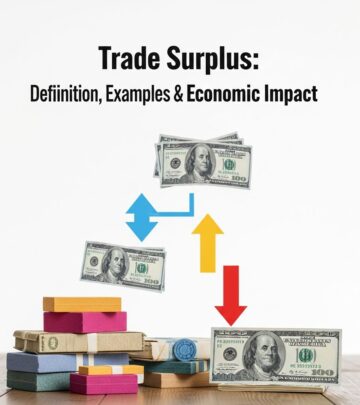
A trade surplus occurs when a country exports more goods and services than it imports. This represents a positive balance in the current account, where the value of outgoing goods exceeds incoming goods. Nations with trade surpluses accumulate foreign currency and strengthen their international trade positions.
Factors Contributing to Trade Surplus:
- Competitive Exports: Domestic products are highly desirable internationally due to quality or price advantages
- Strong Currency: A strong domestic currency can make exports more attractive on price
- Import Controls: Tariffs or trade restrictions that reduce imported goods
- Specialized Production: Countries with unique resources or advanced manufacturing capabilities
- Global Demand: International market demand for specific products or services
Major economies like Germany, China, and Japan have historically maintained substantial trade surpluses through competitive manufacturing and export-oriented strategies. Trade surpluses can generate employment in export industries and accumulate foreign reserves for national economic security.
Surplus vs. Deficit: Key Differences
Understanding the distinction between surpluses and deficits is essential for grasping fundamental economic concepts. While a surplus indicates excess revenue or exports, a deficit represents the opposite situation.
| Aspect | Surplus | Deficit |
|---|---|---|
| Definition | Income exceeds expenditures | Expenditures exceed income |
| Budget Impact | Positive cash position | Borrowing requirement |
| Trade Implication | More exports than imports | More imports than exports |
| Long-term Effects | Debt reduction, reserves building | Debt accumulation, interest costs |
| Economic Signal | Can indicate efficiency or underinvestment | Can indicate growth or fiscal mismanagement |
Economic Implications of Surpluses
Surpluses carry complex economic implications that vary based on context and economic conditions. A surplus is not universally beneficial or detrimental; its significance depends on the broader economic environment.
Positive Aspects of Surpluses:
- Reduced government debt burden and lower interest payments on existing debt
- Increased fiscal flexibility for future economic emergencies or investments
- Enhanced confidence from investors and international markets regarding fiscal stability
- Ability to fund capital projects or reduce tax burdens
- Accumulation of foreign exchange reserves in trade surpluses
Potential Concerns with Surpluses:
- May indicate underinvestment in public infrastructure or services
- Could signal inadequate spending on education, healthcare, or social programs
- Persistent surpluses might suggest the economy is not growing optimally
- Trade surpluses can create international tensions and trade disputes
- May represent inefficient resource allocation when investments could generate greater returns
Economists often debate whether persistent surpluses represent prudent financial management or missed opportunities for productive investment. During recessions, governments typically prioritize spending to stimulate recovery, accepting deficits as necessary. Conversely, during expansion phases, surpluses may allow debt reduction and fiscal consolidation.
Government Surplus and Fiscal Policy
Government budget surpluses play a crucial role in fiscal policy implementation and economic management. Policymakers must balance the benefits of deficit reduction against potential economic growth considerations.
How Governments Use Surpluses:
- Debt Repayment: Allocate funds to reduce accumulated national debt
- Reserve Building: Establish emergency funds for economic downturns
- Infrastructure Investment: Fund long-term capital projects and improvements
- Tax Reduction: Lower tax rates to stimulate consumer spending
- Social Programs: Expand healthcare, education, or welfare initiatives
The choice of how to use surpluses reflects broader political and economic philosophies. Conservative approaches favor debt reduction, while progressive views often emphasize public investment and social spending. The optimal strategy depends on existing debt levels, economic growth rates, and demographic factors.
Trade Surplus Dynamics
Trade surpluses reflect competitive advantages in international markets but also generate complex economic relationships. Countries accumulating significant trade surpluses develop unique economic structures and dependencies.
Effects of Persistent Trade Surpluses:
- Currency appreciation pressures from foreign exchange inflows
- Accumulation of foreign currency reserves and investment assets
- Potential political friction with trading partners experiencing deficits
- Structural adjustments in domestic economy toward export-oriented sectors
- Increased vulnerability to global demand fluctuations
Trade surpluses can mask underlying economic imbalances. Countries with large surpluses may have weak domestic consumption due to high savings rates or low domestic investment opportunities. This can create sustainability concerns as trading partners accumulate debt and resentment builds over trade imbalances.
Real-World Examples
Examining actual examples helps clarify surplus concepts and their economic consequences.
Budget Surplus Example:
During the late 1990s and early 2000s, the United States experienced budget surpluses, with the government collecting more revenue than it spent. This occurred during a period of strong economic growth, technological advancement, and rising corporate profits. The surpluses allowed the government to reduce national debt and build reserves. However, subsequent recessions and increased spending reversed this position, returning to significant deficits.
Trade Surplus Example:
Germany consistently maintains substantial trade surpluses, exporting high-quality manufactured goods including automobiles, machinery, and chemicals. These surpluses contribute significantly to German economic strength and employment but also create tensions with trading partners, particularly regarding trade imbalances with other European Union members.
Measuring and Monitoring Surpluses
Economists and policymakers use specific metrics to measure and track surpluses across different contexts.
Key Measurement Tools:
- Budget Balance: Government revenue minus total expenditures
- Trade Balance: Value of exports minus value of imports
- Current Account Balance: Broader measure including services, income flows, and transfers
- Structural vs. Cyclical Surpluses: Distinguishing underlying fiscal position from temporary fluctuations
These measurements help economists understand whether surpluses represent permanent structural advantages or temporary conditions likely to reverse. Cyclical surpluses may disappear during economic downturns, while structural surpluses reflect fundamental competitive or policy advantages.
Challenges and Controversies
Surpluses present numerous challenges and controversies in economic policy and international relations.
Policy Challenges:
- Determining optimal debt levels and when surpluses should prioritize repayment
- Balancing short-term fiscal consolidation with long-term investment needs
- Managing political pressures to spend surpluses during recessions
- Addressing international complaints regarding persistent trade imbalances
Trade surpluses can provoke protectionist responses and trade tensions. Countries experiencing deficits may impose tariffs or restrictions, disrupting global trade and potentially triggering retaliatory measures. International organizations like the International Monetary Fund and World Trade Organization attempt to address these imbalances through dialogue and policy recommendations.
Frequently Asked Questions
Q: Is a budget surplus always good for the economy?
A: Not necessarily. While surpluses reduce debt, they may indicate underinvestment in public goods or be counterproductive during recessions when government spending could stimulate growth. The appropriateness of surpluses depends on economic conditions, debt levels, and long-term needs.
Q: What causes trade surpluses?
A: Trade surpluses result from competitive advantages in exports, strong product quality or pricing, currency factors, natural resources, technological innovation, and differences in consumer preferences between countries.
Q: How do surpluses affect currency values?
A: Trade surpluses increase demand for domestic currency as foreign buyers need it to purchase exports. This demand typically strengthens the currency, which can eventually reduce competitiveness by making exports more expensive.
Q: Can a country have a budget surplus and trade deficit simultaneously?
A: Yes. These are separate measures involving different transactions. A country can balance its government budget while importing more goods than it exports, or vice versa.
Q: What is a structural surplus?
A: A structural surplus represents the underlying fiscal position adjusted for cyclical economic factors. It shows what the budget balance would be under normal economic conditions, excluding temporary booms or recessions.
References
- Fiscal Policy and Public Debt Management — International Monetary Fund. 2024. https://www.imf.org/en/Topics/imf-and-job-market/fiscal-policy
- Understanding Trade Balances and Surpluses — World Bank Open Data. 2025. https://data.worldbank.org/indicator/NE.RSB.GNFS.CD
- U.S. Historical Budget Data — U.S. Department of the Treasury. 2024. https://fiscal.treasury.gov/reports-statements/historical-debt-outstanding/historical-debt-outstanding.html
- Trade Surplus and Economic Growth Nexus — OECD Statistics Database. 2024. https://data.oecd.org/trade/trade-balance.htm
- Current Account and Balance of Payments: A Guide — Federal Reserve Economic Data (FRED). 2024. https://fred.stlouisfed.org
Similar Articles








Read full bio of Sneha Tete