Surpassing $5K Credit Card Spending: Key Impacts
Discover the financial consequences, credit score effects, and smart strategies when your credit card charges exceed $5,000.

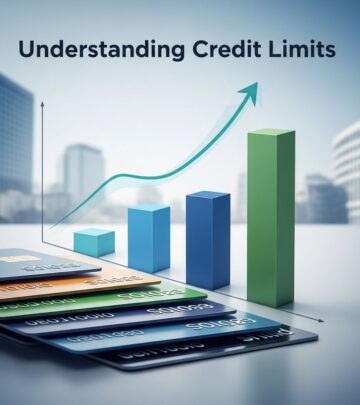
A credit limit defines the maximum borrowing amount on a credit card, serving as a cap on spending until repayment restores availability. When expenditures climb past $5,000—common on cards with limits around the U.S. average of nearly $30,000—various financial dynamics activate, from heightened interest costs to potential credit score declines.
Defining Credit Limits and Their Role in Everyday Use
Credit limits represent the total credit issuers authorize for use on revolving accounts like credit cards. This figure acts as a safeguard, preventing unchecked borrowing while allowing flexibility for purchases. Issuers calculate limits based on credit score, income, debt-to-income ratio, and payment history, with variations by card type.
For instance, standard consumer cards often start between $1,000 and $5,000, while premium options may offer $5,000 to $15,000 initially. Business cards can reach $10,000 to $50,000. After consistent responsible use, limits frequently increase. Available credit equals the limit minus current balance, fluctuating with spending and payments.
Financial Triggers When Hitting High Spending Thresholds
Exceeding $5,000 in charges activates several mechanisms. Primarily, interest accrues on unpaid balances at annual percentage rates (APRs) typically ranging from 15% to 30% or higher, compounding daily. A $5,000 balance at 20% APR could add about $1,000 in yearly interest if unpaid.
High spending also elevates credit utilization—the balance-to-limit ratio—which factors into 30% of FICO scores. Experts advise keeping this under 30%, ideally 10%. On a $10,000 limit, $5,000 usage hits 50%, potentially dropping scores by 50-100 points.
Credit Score Ramifications of Elevated Balances
Credit utilization heavily influences scores. Low ratios signal control, boosting scores; high ones suggest risk, harming them. Research indicates carriers of month-to-month balances spend more post-limit increases, treating added credit as spendable income.
A $5,000 balance on a $15,000 limit yields 33% utilization—borderline risky. On lower limits, it exceeds safe levels faster. Scores recover with payments reducing utilization, but sustained high balances prolong damage.
Table: Credit Utilization Impact on Scores
| Utilization Rate | Typical Score Effect | Example ($10K Limit) |
|---|---|---|
| <10% | Positive boost | $1,000 balance |
| 10-30% | Neutral to mild positive | $1,000-$3,000 |
| 30-50% | Mild negative | $3,000-$5,000 |
| >50% | Significant drop | >$5,000 |
Data synthesized from major issuers’ guidelines.
Over-Limit Scenarios and Associated Penalties
Attempting charges beyond the limit prompts declines, protecting against deeper debt. However, if opted into over-limit coverage, transactions may process with fees: up to $25 first time, $35 subsequent within six months, capped at the overage amount.
Capital One, for example, skips such fees but may decline or approve excess charges based on account status. Frequent overages signal risk, potentially leading to limit reductions or account freezes.
Interest Accumulation on Large Balances
Post-$5,000 spending, minimum payments cover only interest plus a sliver of principal, extending payoff timelines. On $5,000 at 22% APR with 2% monthly minimums, full repayment could span decades, ballooning total cost via compounding.
- Daily interest: (APR/365) x balance.
- Grace period vanishes with carried balances, charging from purchase date.
- Promotional 0% APRs mitigate but end, spiking costs.
Strategies to Handle and Avoid High-Spending Pitfalls
Maintain spending below 30% of limits. Track via apps or statements. Request limit increases judiciously to dilute utilization without extra spending.
Pay balances fully monthly to dodge interest. For existing high balances:
- Prioritize high-APR debt.
- Balance transfer to 0% promo cards.
- Debt consolidation loans at lower rates.
Automated payments ensure timely hits, preserving scores.
Types of Cards and Their Limit Profiles
Different cards suit varying needs:
| Card Type | Starting Limit Range | Post-Good Use |
|---|---|---|
| Secured | $200–$500 | $500–$1,500 |
| Student | $500–$1,500 | $1,500–$3,000 |
| Standard | $1,000–$5,000 | $3,000–$10,000 |
| Premium | $5,000–$15,000 | $10,000–$30,000 |
| Business | $10,000–$50,000 | $25,000+ |
Adapted from issuer data. $5,000+ spending fits premium/business cards best.
Psychological and Behavioral Spending Traps
Higher limits foster overspending illusions, per studies. Users scale habits to new caps, delaying payoff signals. Counter with self-imposed budgets at 30% of limits, regardless of actual cap.
Long-Term Financial Health Considerations
Sustained $5,000+ balances hinder loan approvals for mortgages or autos due to elevated utilization and debt ratios. Positive habits—low utilization, on-time payments—yield limit growth and score gains over time.
Frequently Asked Questions
What is the average U.S. credit card limit?
Nearly $30,000, though optimal use stays under 30%.
Does exceeding $5,000 always hurt my score?
If utilization tops 30%, yes; pay down promptly to minimize impact.
Can I request a higher limit to offset $5K spending?
Yes, if creditworthy, lowering utilization without added debt.
What fees hit if I go over-limit after $5K spend?
Up to $25-$35 if opted in, transaction-specific.
Is 50% utilization risky at $5K on $10K limit?
Highly; aim below 30% for score health.
Pro Tips for Sustainable Credit Management
- Monitor utilization monthly via free credit reports.
- Set spending alerts near 25% of limit.
- Use 0% balance transfers strategically.
- Build emergency funds to reduce card reliance.
- Review statements for unauthorized $5K+ spikes.
References
- Is Your Credit Card Spending Limit Too High? — SoFi. 2024. https://www.sofi.com/learn/content/credit-card-spending-limit/
- What Is a Credit Limit & How Does It Work? — Ramp. 2024. https://ramp.com/blog/what-is-a-credit-limit
- How credit card limits work, and why they’re risky — Arizona Daily Star. 2024-10-15. https://tucson.com/news/nation-world/business/personal-finance/article_6a9a4bfb-2464-5bd1-b70a-142b92761771.html
- What Is a Credit Limit? — Capital One. 2024. https://www.capitalone.com/learn-grow/money-management/what-is-a-credit-limit/
- What is a credit limit? — U.S. Bank. 2024. https://www.usbank.com/credit-cards/credit-card-insider/credit-card-basics/what-is-a-credit-limit.html
- What is a Credit Limit and Why Does it Matter? — Bank of America Better Money Habits. 2024. https://bettermoneyhabits.bankofamerica.com/en/credit/understanding-your-credit-limit
Similar Articles








Read full bio of Sneha Tete