Supply Curve: Definition, How It Works, and Examples
Understanding supply curves: The relationship between price and quantity supplied in markets.
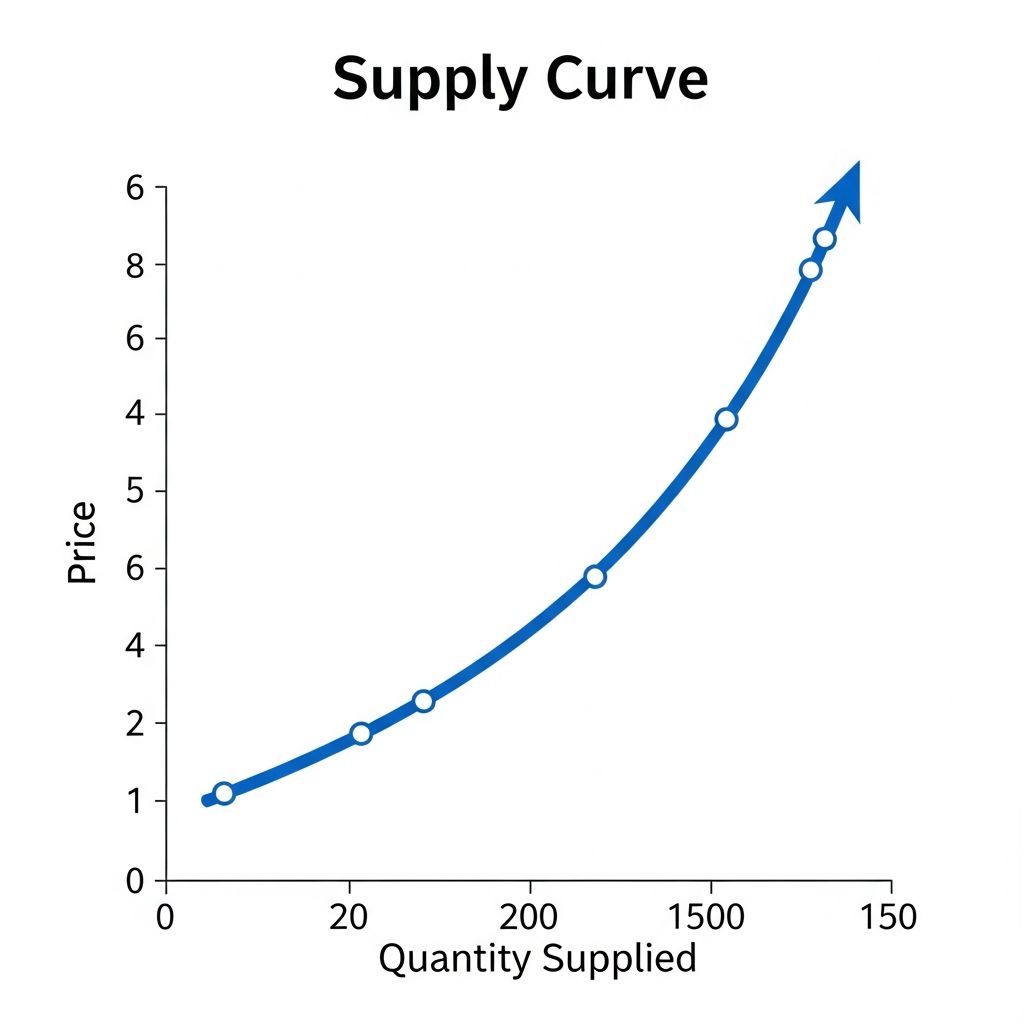
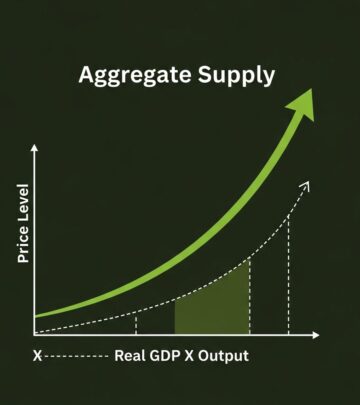
The supply curve is a fundamental concept in economics that visualizes the relationship between the price of a product and the quantity that suppliers are willing to provide at that price. This essential economic tool helps businesses, economists, and policymakers understand how market forces operate and determine pricing strategies. When plotted on a graph, the supply curve typically displays price on the vertical axis and quantity supplied on the horizontal axis, creating an upward-sloping line that reflects the core principle of supply economics.
Understanding the supply curve is crucial for anyone involved in business, investing, or economic analysis. The curve provides insights into producer behavior, market dynamics, and the factors that influence the availability of goods and services in the economy. By examining how suppliers respond to price changes, stakeholders can make more informed decisions about production levels, pricing, and market participation.
What Is a Supply Curve?
A supply curve is a graphical representation that shows the quantity of a product or resource that producers are willing to supply at various price points. On this curve, price serves as the independent variable, while the quantity supplied acts as the dependent variable, meaning that the amount producers offer depends directly on the price level. The supply curve is one of the two most important curves in economic analysis, alongside the demand curve.
The distinctive characteristic of a typical supply curve is its upward slope from left to right. This positive relationship between price and quantity supplied demonstrates that as prices increase, producers have greater incentive and motivation to supply more of a good or service. Conversely, when prices decline, suppliers are less motivated to produce and offer the product, resulting in lower quantities supplied to the market.
The Law of Supply
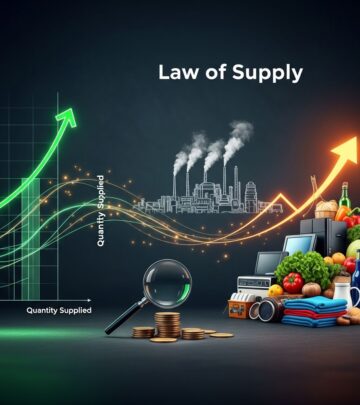
The supply curve is fundamentally based on the law of supply, one of the most basic and widely accepted principles in economics. The law of supply states that, all else being equal, there is a positive relationship between the price of a good and the quantity supplied. In simpler terms, when the price of a product rises, producers and suppliers will increase the quantity they are willing to produce and sell.
This relationship exists because higher prices provide producers with greater profit margins and stronger financial incentives to increase production. For example, if the price of soccer balls increases significantly, manufacturers will find it more profitable to invest in additional production capacity, hire more workers, and source more raw materials to supply the increased quantity demanded at the higher price point. This fundamental principle applies across virtually all markets and industries.
How Supply Curves Work
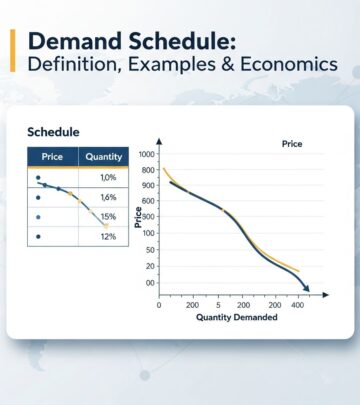
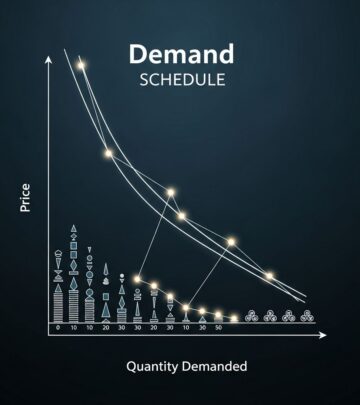
Supply curves operate on the principle that producers respond rationally to price signals in the marketplace. When creating a supply curve, economists plot individual data points representing the quantity supplied at each specific price level, then connect these points to form the curve. Consider a practical example: if product X has an initial price of $1 per unit with a supplied quantity of 10 units, and when the price increases to $2, suppliers are willing to provide 20 units, and at $3 the quantity rises to 30 units, these three points would form part of the supply curve.
The slope and shape of the supply curve reflect how suppliers respond to price changes. A steeper curve indicates that suppliers are more responsive to price increases, while a flatter curve suggests less responsiveness. The responsiveness is quantified through a measure called supply elasticity, which compares the percentage change in quantity supplied to the percentage change in price. This relationship helps economists understand the flexibility of supply in different industries and market conditions.
Supply Elasticity and Curve Characteristics
Supply elasticity plays a critical role in determining the appearance and slope of a supply curve. Supply elasticity is calculated as the percentage change in quantity supplied divided by the percentage change in price. When supply elasticity is less than 1, it is considered low or inelastic, meaning that quantity supplied is not very responsive to price changes, resulting in a shallower supply curve. When supply elasticity is 1 or higher, it is considered high or elastic, indicating that suppliers are highly responsive to price changes, which produces a steeper supply curve.
In extreme cases, supply curves can appear nearly vertical or nearly horizontal. A vertical supply curve occurs when the quantity supplied cannot increase regardless of price changes. This situation commonly applies to items with fixed quantities, such as original artwork or rare collectibles. For instance, only a limited number of Monet paintings exist in the world, and no matter how dramatically prices increase, additional paintings cannot be created to satisfy demand. Conversely, a nearly horizontal supply curve might occur in situations where a single monopoly supplier dominates the market and can maintain stable prices even when production volumes change.
Factors That Shift the Supply Curve
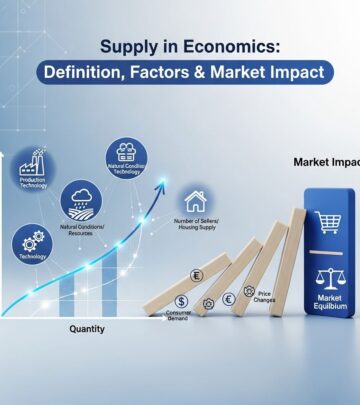
While the slope of the supply curve remains relatively stable in the short term, the entire curve can shift either left or right based on various factors. These shifts indicate changes in the overall willingness and ability of suppliers to provide goods at every price point. Understanding these shifting factors is essential for predicting market changes and their impact on pricing and availability.
Production Costs
Changes in production costs significantly affect the supply curve’s position. When the costs of raw materials, labor, or other production inputs decrease, suppliers can produce goods more profitably at every price level, shifting the supply curve to the right, indicating increased supply. Conversely, rising production costs shift the curve to the left as suppliers become less willing to produce at existing price levels.
Technology Advancements
Technological improvements can dramatically increase production efficiency and reduce costs, shifting the supply curve rightward and expanding supply. New technologies enable producers to manufacture more goods with fewer resources, making production more profitable even at lower prices.
Number of Producers
The number of suppliers in a market directly impacts overall supply. When new producers enter the market, the supply curve shifts right as total market supply increases. When producers exit the market, the supply curve shifts left as supply decreases.
Taxes and Subsidies
Government policies through taxes and subsidies can shift the supply curve by changing the profitability of production. Subsidies that reduce production costs shift the curve rightward, while taxes that increase costs shift it leftward.
Supply and Demand Equilibrium
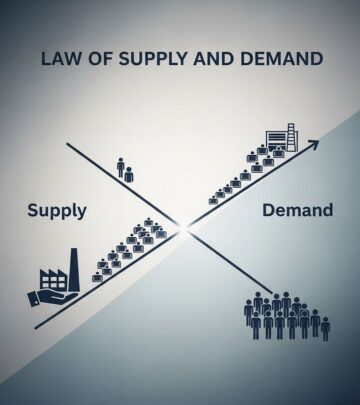
The supply curve reaches its full analytical power when examined alongside the demand curve. When both curves are plotted on the same graph, they typically intersect at exactly one point, called market equilibrium. At this equilibrium point, the quantity supplied exactly equals the quantity demanded, and the price at this intersection is known as the equilibrium price or market-clearing price.
The equilibrium price represents the “just right” price where the market naturally settles. At this price, consumers have sufficient incentive to purchase the product, and producers have adequate incentive to create and sell it. Both parties—buyers and sellers—are satisfied with the market conditions, creating a stable market state where no natural pressure exists to change prices or quantities.
Market Shortages and Surpluses
When the market price falls below the equilibrium level, the quantity demanded exceeds the quantity supplied, creating a shortage. Shortages cause upward pressure on prices as consumers compete for limited supplies. Conversely, when prices rise above equilibrium, the quantity supplied exceeds the quantity demanded, creating a surplus. Surpluses exert downward pressure on prices as suppliers compete to sell excess inventory. These natural market forces push prices back toward equilibrium, demonstrating how supply and demand curves interact to regulate market conditions.
Practical Applications and Importance
Supply curves serve numerous practical purposes in real-world business and economic analysis. Companies use supply curve analysis to determine optimal pricing strategies that maximize profitability while maintaining competitive market positions. By understanding how quantity supplied responds to price changes, businesses can make informed decisions about production levels, inventory management, and capacity planning.
Economists utilize supply curves to analyze market behavior, predict the impact of policy changes, and understand industry dynamics. Policymakers rely on supply curve analysis when designing tax policies, subsidies, and regulations that affect market outcomes. Investors examine supply curves to identify market opportunities and understand the sustainability of business models and industries.
Examples of Supply Curves in Different Markets
Supply curves vary significantly across different industries and markets. In agriculture, supply curves are often quite elastic because farmers can relatively quickly adjust planted acreage in response to price changes. In manufacturing, supply curves may be less elastic in the short term because factories require time and capital investment to adjust production capacity. In services, supply curves depend heavily on the availability of skilled labor and can vary dramatically based on training requirements and workforce participation rates.
Frequently Asked Questions
Q: What does an upward-sloping supply curve indicate?
A: An upward-sloping supply curve indicates that as prices increase, the quantity supplied also increases. This positive relationship reflects the law of supply, where producers are motivated to supply more goods when they can sell them at higher prices and earn greater profits.
Q: How does the supply curve differ from the demand curve?
A: The supply curve typically slopes upward, showing that suppliers provide more at higher prices. The demand curve typically slopes downward, showing that consumers purchase less at higher prices. Together, they determine the market equilibrium price and quantity.
Q: What causes a supply curve to shift?
A: Supply curves shift due to changes in production costs, technological advancements, the number of producers in the market, government taxes and subsidies, and other factors that affect producers’ willingness or ability to supply goods. A rightward shift indicates increased supply, while a leftward shift indicates decreased supply.
Q: What is market equilibrium?
A: Market equilibrium is the point where the supply curve and demand curve intersect, where the quantity supplied equals the quantity demanded. At this equilibrium price, the market is in balance with no tendency to change, and both consumers and producers are satisfied.
Q: How does supply elasticity affect the supply curve?
A: Supply elasticity measures how responsive quantity supplied is to price changes. Low elasticity produces a flatter supply curve, indicating suppliers don’t significantly change quantities when prices change. High elasticity produces a steeper curve showing suppliers are very responsive to price changes.
Q: Can a supply curve be vertical or horizontal?
A: Yes, in special cases. A vertical supply curve occurs when quantity cannot increase regardless of price, such as with rare artworks. A horizontal supply curve might occur with monopoly suppliers where price remains stable despite production changes.
References
- Supply Curve — EBSCO Research Starters. Accessed November 2025. https://www.ebsco.com/research-starters/economics/supply-curve
Similar Articles








Read full bio of Sneha Tete