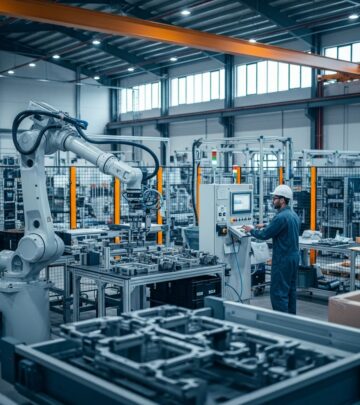
Supply Chain: Definition, Types, and Management
Understanding supply chain management, operations, and optimization strategies for businesses.

What Is a Supply Chain?
A supply chain is a network of individuals, companies, resources, activities, and technologies involved in the creation and sale of a product. The supply chain encompasses everything from the raw materials used to manufacture a product to the delivery of that finished product to the end consumer. It represents the complete journey a product takes from conception through production, distribution, and ultimately to the customer’s hands.
Supply chains can vary significantly in complexity depending on the industry and the nature of the products or services being delivered. A simple supply chain might involve a small manufacturer selling directly to consumers, while a complex supply chain could include multiple suppliers, manufacturers, distributors, retailers, and logistics providers spread across different continents.
Understanding Supply Chain Components
An effective supply chain is composed of several critical components that work together to ensure smooth operations:
- Suppliers: These are the organizations that provide raw materials, components, or services necessary for production.
- Manufacturers: Companies that transform raw materials into finished goods or assemble components into final products.
- Distributors: Entities responsible for storing and transporting products to retailers or directly to consumers.
- Retailers: Businesses that sell products directly to end consumers through physical stores or online platforms.
- Logistics Providers: Companies that manage transportation, warehousing, and inventory management throughout the supply chain.
- Customers: The final consumers or businesses that purchase the finished products.
Types of Supply Chains
Supply chains can be categorized in several ways based on their structure, industry, and operational characteristics:
Linear Supply Chain
A linear supply chain follows a straightforward path from suppliers to manufacturers to distributors to retailers to end consumers. This type is common in industries with well-established processes and stable demand. The linear model is relatively simple to manage but may lack flexibility in responding to market changes.
Network Supply Chain
A network supply chain involves multiple interconnected pathways where products can flow through various routes to reach customers. This model provides greater flexibility and resilience, as products can be rerouted if disruptions occur at any point. It’s common in complex industries like automotive and electronics.
Dynamic Supply Chain
A dynamic supply chain is highly responsive to market conditions and customer demands. This model allows companies to quickly adjust production and distribution strategies based on real-time data and market trends. It’s increasingly popular in fast-moving consumer goods (FMCG) and technology sectors.
Collaborative Supply Chain
In a collaborative supply chain, all participants share information, resources, and responsibilities to optimize overall performance. This approach requires strong partnerships and communication among all stakeholders and often results in reduced costs and improved efficiency.
Key Functions of Supply Chain Management
Effective supply chain management encompasses several core functions:
Procurement
Procurement involves identifying, evaluating, and purchasing raw materials and components from suppliers. Effective procurement strategies ensure quality inputs, competitive pricing, and reliable supply.
Production Planning
Production planning determines what, when, and how much to produce based on demand forecasts and available resources. This function balances production capacity with customer demand to minimize waste and stockouts.
Inventory Management
Inventory management maintains optimal stock levels to meet customer demand while minimizing carrying costs. This involves tracking inventory throughout the supply chain and using forecasting techniques to predict future needs.
Logistics and Distribution
Logistics and distribution ensure that products are transported efficiently from warehouses to distribution centers to retailers and ultimately to customers. This function includes route optimization, carrier selection, and delivery management.
Demand Forecasting
Demand forecasting uses historical data, market trends, and analytical techniques to predict future customer demand. Accurate forecasting helps prevent stockouts and excess inventory.
Supply Chain Challenges
Modern supply chains face numerous challenges that can disrupt operations and increase costs:
Demand Volatility
Unpredictable changes in customer demand can lead to either excess inventory or stockouts. Market trends, seasonal variations, and economic conditions can all contribute to demand volatility.
Supply Disruptions
Disruptions such as natural disasters, geopolitical events, supplier failures, or pandemics can halt production and distribution. The COVID-19 pandemic highlighted the vulnerability of global supply chains to unexpected events.
Rising Costs
Transportation costs, labor expenses, and raw material prices continue to rise, squeezing profit margins. Fuel price volatility and wage increases particularly impact logistics operations.
Quality Control
Maintaining consistent product quality across multiple suppliers and manufacturing facilities presents ongoing challenges. Quality issues can damage brand reputation and result in costly recalls.
Technology Integration
Integrating new technologies like artificial intelligence, blockchain, and IoT devices into existing supply chain systems requires significant investment and expertise. Legacy systems often struggle to communicate with modern platforms.
Supply Chain Optimization Strategies
Organizations employ various strategies to improve supply chain efficiency and resilience:
Lean Manufacturing
Lean manufacturing focuses on eliminating waste and improving efficiency by streamlining processes and reducing unnecessary activities. Just-in-time (JIT) inventory practices are a key component of lean supply chains.
Supply Chain Diversification
Diversifying suppliers and sourcing locations reduces dependency on single sources and mitigates risk. This strategy requires careful management to avoid increased complexity.
Technology Adoption
Implementing advanced technologies such as enterprise resource planning (ERP) systems, artificial intelligence, and real-time tracking enables better visibility and decision-making across the supply chain.
Supplier Relationship Management
Building strong relationships with suppliers through regular communication, fair pricing, and long-term commitments fosters reliability and collaboration.
Data Analytics
Using advanced analytics to analyze supply chain data helps identify inefficiencies, predict demand, and optimize operations. Big data analytics provides valuable insights for strategic decision-making.
The Role of Technology in Supply Chain Management
Modern technology plays an increasingly vital role in managing complex supply chains:
Enterprise Resource Planning (ERP)
ERP systems integrate all business functions including procurement, production, inventory, and distribution into a unified platform. This integration improves data visibility and coordination across departments.
Artificial Intelligence and Machine Learning
AI and machine learning algorithms can optimize route planning, forecast demand with greater accuracy, and identify patterns in supply chain data. These technologies enable predictive analytics for proactive decision-making.
Internet of Things (IoT)
IoT devices track products and equipment throughout the supply chain, providing real-time location and condition data. This visibility helps prevent theft, monitor product quality, and improve asset utilization.
Blockchain Technology
Blockchain creates immutable records of transactions and product movements, enhancing transparency and traceability. This technology is particularly valuable for verifying authenticity and ensuring compliance in regulated industries.
Warehouse Automation
Automated warehousing systems including robots, conveyor systems, and automated storage and retrieval systems (AS/RS) increase efficiency and reduce labor costs. These systems also improve accuracy in order fulfillment.
Global Supply Chain Considerations
Operating in a global supply chain introduces additional complexities:
Customs and Regulations
International trade involves navigating complex customs regulations, tariffs, and compliance requirements that vary by country. Understanding these regulations is critical for avoiding delays and penalties.
Currency Fluctuations
Exchange rate volatility affects the cost of international sourcing and can impact profitability. Hedging strategies are often employed to mitigate currency risk.
Geopolitical Risks
Trade disputes, sanctions, and political instability in supplier countries can disrupt supply chains. Companies must monitor geopolitical developments and maintain contingency plans.
Transportation and Lead Times
Longer transportation distances in global supply chains increase lead times and create challenges for inventory management. Sea freight, air freight, and intermodal transportation each have different cost and speed tradeoffs.
Sustainable Supply Chain Practices
Increasingly, organizations are incorporating sustainability into their supply chain strategies:
Environmental Responsibility
Reducing carbon emissions through more efficient transportation, packaging optimization, and renewable energy use helps minimize environmental impact. Many companies set sustainability targets aligned with climate goals.
Ethical Sourcing
Ensuring suppliers meet labor standards, safety requirements, and ethical practices protects workers and brand reputation. Third-party audits verify compliance with corporate social responsibility standards.
Waste Reduction
Implementing circular economy principles, recycling programs, and waste minimization initiatives reduces landfill impact and can lower costs through material recovery.
Supply Chain Performance Metrics
Organizations use key performance indicators (KPIs) to measure supply chain effectiveness:
| Metric | Description | Importance |
|---|---|---|
| On-Time Delivery Rate | Percentage of orders delivered by the promised date | Measures reliability and customer satisfaction |
| Inventory Turnover | How many times inventory is sold and replaced within a period | Indicates efficiency and working capital management |
| Order Fulfillment Rate | Percentage of customer orders fulfilled completely and accurately | Reflects operational accuracy and customer service quality |
| Supply Chain Cycle Time | Total time from order placement to product delivery | Shows efficiency and responsiveness |
| Cost Per Unit | Total supply chain cost divided by units produced | Measures cost efficiency and competitiveness |
| Supplier Quality Rate | Percentage of products from suppliers meeting quality standards | Ensures product quality and brand reputation |
Frequently Asked Questions (FAQs)
Q: What is the primary goal of supply chain management?
A: The primary goal is to ensure products reach customers efficiently, on time, and at the lowest possible cost while maintaining quality standards. Effective supply chain management balances cost, quality, speed, and reliability to maximize customer satisfaction and profitability.
Q: How does supply chain management differ from logistics?
A: Supply chain management encompasses the entire network of suppliers, manufacturers, distributors, and retailers involved in bringing a product to market. Logistics is a subset of supply chain management focused specifically on transportation, warehousing, and inventory management.
Q: Why is supply chain visibility important?
A: Supply chain visibility allows companies to track products and inventory in real-time, identify bottlenecks, respond quickly to disruptions, and make informed decisions. Visibility reduces uncertainty, minimizes delays, and enables proactive problem-solving.
Q: How can companies build resilience into their supply chains?
A: Companies can build resilience by diversifying suppliers, maintaining safety stock for critical items, investing in technology for better visibility, developing contingency plans, and building collaborative relationships with supply chain partners.
Q: What role does data analytics play in modern supply chains?
A: Data analytics enables companies to forecast demand more accurately, optimize inventory levels, identify cost-saving opportunities, predict potential disruptions, and make data-driven decisions. Analytics transforms raw supply chain data into actionable insights for strategic improvement.
Q: How does automation impact supply chain efficiency?
A: Automation increases efficiency by reducing manual errors, accelerating order fulfillment, lowering labor costs, improving inventory accuracy, and enabling 24/7 operations. Automated systems can process orders and manage inventory faster and more accurately than manual processes.
Q: What are the benefits of a collaborative supply chain?
A: Collaborative supply chains reduce costs through shared resources, improve efficiency through better coordination, enhance innovation through shared knowledge, increase supply chain resilience, and create mutual value for all participants through transparency and open communication.
References
- Supply Chain Management and Logistics — Council of Supply Chain Management Professionals (CSMP). Accessed November 2025. https://www.ascm.org/
- Best Practices in Supply Chain Management — Institute for Supply Management (ISM). 2024. https://www.ismworld.org/
- The Global Supply Chain — World Bank Group. 2024. https://www.worldbank.org/
- Emerging Technologies in Supply Chain Management — McKinsey & Company. October 2024. https://www.mckinsey.com/
- Supply Chain Resilience and Risk Management — International Trade Centre (ITC/UN/WTO). 2024. https://www.intracen.org/
Similar Articles








Read full bio of Sneha Tete