Sunroof Vs Moonroof: 5 Roof Types And Key Pros And Cons
Discover key differences, benefits, drawbacks, and tips for choosing between sunroofs and moonroofs to enhance your driving experience.
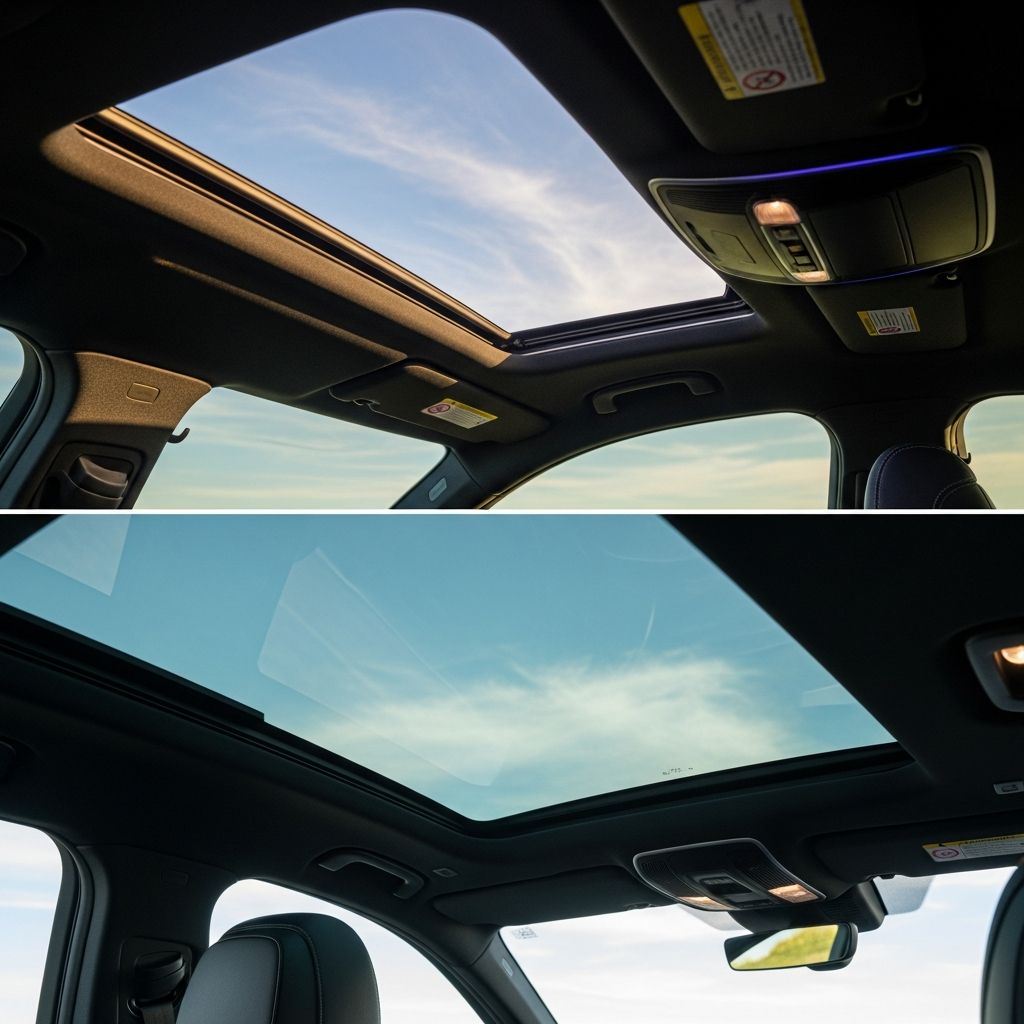
Understanding the nuances between sunroofs and moonroofs helps drivers make informed choices when selecting vehicles with enhanced cabin features. These roof openings provide light, air, and views, but differ in materials, operations, and impacts on driving.
Defining Sunroofs and Moonroofs
Sunroofs typically feature a solid, painted metal or opaque panel that slides or tilts to open, blocking light and sky views when closed. This design prioritizes ventilation over constant illumination.
Moonroofs, a subset of sunroofs, use tinted glass panels that allow sky visibility and light penetration even when shut. They often include electric controls and interior shades for adjustable light control.
Varieties of Roof Openings
Modern vehicles offer diverse sunroof and moonroof configurations to suit different needs.
- Pop-up Sunroofs: Manually tilt upward for basic ventilation without sliding.
- Spoiler Sunroofs: Tilt and slide rearward over the roof exterior for increased openness.
- Panoramic Sunroofs: Extend across large roof areas, often with multiple panels and retractable covers for expansive views.
- Standard Moonroofs: Slide or tilt within the roofline, providing balanced light and air.
- Panoramic Moonroofs: Cover front and rear seating areas, sometimes with dual panels for SUVs, enhancing spaciousness.
Panoramic versions dominate newer models, creating an open-air feel without full convertibles.
Advantages of Installing Sunroofs or Moonroofs
These features elevate daily drives and long trips.
- Abundant natural light brightens interiors, improving mood and visibility.
- Fresh air circulation reduces reliance on windows, minimizing noise and turbulence.
- Tilt positions enable secure venting, blocking rain while cooling cabins on hot days.
- Glass designs foster a sense of expanded space, aiding comfort for taller passengers or those prone to claustrophobia.
- Enhanced scenic enjoyment during road trips, with overhead views of landscapes or stars.
- Superior security over fabric convertibles, as tempered glass resists slashing.
- No storage hassles compared to removable tops like Targas.
Potential Drawbacks to Consider
Despite benefits, these additions have trade-offs.
| Drawback | Impact | Mitigation |
|---|---|---|
| Heat Absorption | Glass traps solar heat, increasing AC use | Use built-in shades or tint films |
| Added Weight | Raises center of gravity, subtly affecting handling | Modern stability controls compensate |
| Repair Costs | Motors, seals, and glass are pricey to fix | Regular maintenance prevents issues |
| Leak Risks | Clogged drains cause water intrusion | Clean channels seasonally |
Weight from panels and mechanisms can influence dynamics at high speeds, though electronic aids maintain stability.
Safety and Structural Integrity
Concerns about roof strength are minimal. Crash tests by organizations like the Insurance Institute for Highway Safety (IIHS) confirm sunroofs and moonroofs do not significantly weaken overall roof crush resistance. Tempered glass withstands impacts better than convertible fabrics.
However, higher centers of gravity warrant cautious driving in corners. Features like pinch-protection sensors halt closure if obstructions are detected, enhancing occupant safety.
Upkeep Essentials for Longevity
Proper care extends functionality and prevents costly repairs.
- Drain Cleaning: Flush rubber channels quarterly with soapy water to avoid clogs from debris.
- Seal Inspection: Check weatherstripping annually for cracks; lubricate with silicone spray.
- Shade Maintenance: Operate monthly to prevent sticking; dust fabrics gently.
- Glass Cleaning: Use automotive glass cleaner; avoid abrasives on tints.
- Winter Prep: Remove ice buildup carefully to protect mechanisms.
Neglect often leads to leaks, the top complaint for these systems. Professional servicing every two years ensures optimal performance.
Financial Aspects and Insurance
Options add $1,000–$3,000 to purchase prices, varying by size and type. Insurance premiums may rise slightly due to repair values, but comprehensive policies cover glass and mechanisms.
Resale values benefit from popular panoramic moonroofs, appealing to family buyers seeking luxury feels.
Selecting the Ideal Option
Neither type is superior; choice depends on lifestyle.
- Opt for moonroofs if prioritizing constant light and views, ideal for scenic drives.
- Choose sunroofs for maximal openness if available, though rare today.
- Prioritize panoramic for SUVs with multiple rows.
- Test tilt ventilation and shade opacity during drives.
Glass with full sunshades offers versatility: full views, light blocking, or total darkness. Avoid fixed glass roofs without shades in sunny climates.
Future Innovations in Roof Tech
Advancements include electrochromic glass for instant tinting, hybrid solar panels generating energy, and app-controlled operations. Larger, lighter composites improve efficiency without weight penalties.
Frequently Asked Questions
Can sunroofs and moonroofs leak?
Yes, primarily from clogged drains, but routine cleaning prevents this.
Do they affect fuel economy?
Negligibly; added weight has minor drag, offset by aerodynamics in designs.
Are panoramic roofs safe for kids?
Sensors and sturdy glass make them secure; supervise use.
How much do repairs cost?
Motors: $500–$1,500; seals: $200–$500; full replacements: $2,000+.
Convertible alternative?
They offer 80% of openness with full security and weather protection.
References
- Moonroof vs. Sunroof: Explore the Differences — Mazda USA. 2023-01-15. https://www.mazdausa.com/resource-center/moonroof-vs-sunroof
- Moonroof vs. Sunroof: What Is the Difference Between Them? — MotorTrend. 2024-05-20. https://www.motortrend.com/features/moonroof-vs-sunroof-differences
- Moonroof vs Sunroof: What’s Different Between Them? — Allstate. 2023-11-10. https://www.allstate.com/resources/car-insurance/moonroof-vs-sunroof
Similar Articles








Read full bio of Sneha Tete