Sunk Cost: Definition, Fallacy, and Business Decision Impact
Understand sunk costs and how the sunk cost fallacy impacts financial decision-making in business.

What Is a Sunk Cost?
A sunk cost is a financial expenditure that has already been incurred and cannot be recovered or retrieved in the future. This type of cost represents money, time, or resources that have been spent in the past and are no longer available for use. Sunk costs are also referred to as retrospective costs because they represent past expenses that cannot be undone. Unlike prospective costs, which are future costs that may be avoided through specific actions or decisions, sunk costs are fixed in the past and remain regardless of what decisions are made moving forward.
The fundamental principle behind sunk costs is that they should not influence rational decision-making about the future. In economics and business, this concept is sometimes described using colloquial phrases such as “water under the bridge” or “crying over spilt milk.” These expressions capture the idea that past expenditures, once spent, should not affect current or future business decisions. Rational actors should evaluate future decisions based solely on prospective costs and benefits, not on what has already been paid.
Understanding Sunk Costs vs. Other Cost Types
To fully comprehend sunk costs, it is important to distinguish them from other types of costs that businesses encounter. Costs can be categorized in several ways, and understanding these distinctions is crucial for sound financial decision-making.
Fixed Costs vs. Variable Costs
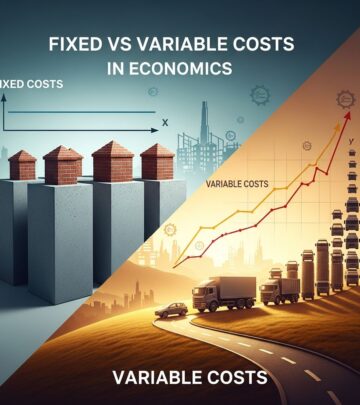
Fixed costs are expenses that remain constant regardless of the volume of production or output. These might include rent, salaries, or insurance premiums that a company must pay regularly. Variable costs, on the other hand, fluctuate based on production volume or business activity levels. Examples include raw materials or delivery costs that increase with higher output.
However, economists have noted that not all past expenses should be classified as fixed or variable costs. A sunk cost is fundamentally different from both. For instance, if a company spends $400 million on a one-time enterprise software installation, that initial expenditure is a sunk cost because it cannot be recovered. The monthly payments for software maintenance or licensing fees would constitute fixed costs, while the ongoing data center power usage would represent variable costs. This distinction is critical for proper financial analysis.
The Sunk Cost Fallacy
While rational economic theory suggests that sunk costs should be ignored in decision-making, real-world behavior often diverges from this principle. The sunk cost fallacy is a cognitive bias that occurs when individuals or organizations continue to invest resources into a project or decision primarily because they have already invested substantial resources in the past. This fallacy leads people to “throw good money after bad” rather than cutting their losses and moving forward.
How the Fallacy Operates
The sunk cost fallacy manifests when decision-makers believe that their previous investments justify further expenditures, even when those future investments are no longer economically sound. People demonstrate a greater tendency to continue an endeavor once an investment in money, effort, or time has been made. This psychological phenomenon can lead to several negative outcomes in business and personal finance.
For example, if a company has already spent $30 million on a factory project originally projected to cost $100 million and yield $120 million in value, but the value projection has fallen to $65 million, the rational decision would be to abandon the project. However, many decision-makers might continue spending the additional $70 million required to complete it, hoping to recover their initial investment. This represents the sunk cost fallacy in action.
The Bygones Principle
The correct approach to handling sunk costs is known as the “bygones principle” or the “marginal principle.” This principle is grounded in rational choice theory and expected utility hypothesis, which suggest that it is rational to disregard any state of the world that yields the same outcome regardless of one’s choice. Since past decisions cannot be changed, they should not factor into current decision-making processes.
According to the marginal principle, decisions should be based solely on the marginal costs and benefits of moving forward. In the factory example above, if the value projection instead fell to $75 million, a rational decision-maker should continue the project because the $70 million in additional costs would be recouped by the $75 million in value, even though the original $30 million expenditure would be lost. The key insight is that the original $30 million is irrelevant to this decision—only the future costs and benefits matter.
Why People Fall Victim to the Sunk Cost Fallacy
Understanding why people succumb to the sunk cost fallacy is essential for recognizing and avoiding it. Several psychological and social factors contribute to this cognitive bias.
Personal Responsibility
The sunk cost effect appears to operate chiefly in individuals who feel a personal responsibility for the investments in question. When someone has personally championed a project or made the initial decision to invest, they may feel emotionally invested in seeing that project succeed, even when rationality suggests abandonment is the better choice.
Avoiding the Appearance of Wastefulness
Another significant factor is the desire not to appear wasteful. People may continue investing in failing projects because stopping the investment would constitute an admission that prior money was wasted. This social and psychological motivation can override rational economic thinking. The fear of being perceived as having made a poor decision can drive continued investment in an attempt to justify previous expenditures.
Emotional Attachment and Ownership
In group decision-making contexts, the sunk cost fallacy can be particularly pronounced. When a group has invested significant resources into a project or decision, members may feel a sense of ownership and attachment to it. This emotional connection makes it difficult for them to objectively evaluate whether the project remains viable. Additionally, this fallacy can contribute to groupthink, where members are unwilling to voice dissenting opinions or consider alternative options because they don’t want to appear as if they are undermining the group’s investment.
Real-World Examples of Sunk Costs in Business
Sunk costs appear in various business contexts, and recognizing them helps companies make better decisions.
Brand Marketing and Promotion
A common example of a sunk cost in business is expenditure on brand name promotion. Marketing and advertising campaigns incur costs that cannot typically be recovered. It is not possible to later “demote” a brand name in exchange for cash recovery. Once money is spent on marketing initiatives, those dollars are gone regardless of the campaign’s success.
Research and Development (R&D) Costs
Research and development represents another classic example of sunk costs. Pharmaceutical companies, technology firms, and other innovative businesses often spend millions on R&D projects that ultimately fail to produce commercially viable products. These expenditures cannot be recovered, making them pure sunk costs that should not influence decisions about future R&D investments.
Failed Infrastructure Projects
Perhaps the most dramatic example of sunk costs involves incomplete infrastructure projects. Imagine a company has spent $20 million building a power plant, but during construction, circumstances changed and the value of the facility dropped to zero because it is incomplete and cannot be sold or salvaged. The company faces a choice: spend an additional $10 million to complete the plant or abandon it and build a different but equally valuable facility for $5 million. Rationally, abandoning the original project and building the alternative facility is the superior choice, even though it represents a complete loss of the original $20 million investment. The original expenditure is a sunk cost and should not influence the decision.
Cost Overruns and Project Continuation
The sunk cost fallacy frequently leads to cost overruns in business projects. When decision-makers allow sunk costs to influence their judgment, they often continue pouring money into failing ventures rather than cutting losses. This can result in projects that consume far more resources than initially budgeted while delivering minimal value.
If decision-makers are irrational or have misaligned incentives, they may choose to complete a failing project despite its poor prospects. Managers might continue funding projects to avoid admitting failure, to maintain employment, or to preserve their reputation within the organization. These incentive structures can perpetuate the sunk cost fallacy despite the irrationality it represents.
Avoiding the Sunk Cost Fallacy in Group Decision-Making
Organizations can take steps to mitigate the effects of the sunk cost fallacy, particularly in group settings where it can be especially problematic.
Establish Clear Decision-Making Criteria
Groups should establish clear decision-making criteria and protocols that emphasize objective analysis. By creating formal frameworks for evaluation, organizations can help ensure that decisions are based on data and rational analysis rather than emotions or attachment to past investments.
Encourage Dissenting Opinions
Open communication and the active encouragement of dissenting opinions can help groups avoid groupthink and the reinforcement of poor decisions. When team members feel safe voicing concerns about projects, alternative perspectives can be considered, and options can be more thoroughly evaluated.
Separate Past and Future Costs
Financial analysis should clearly separate sunk costs from prospective costs. By highlighting what cannot be recovered, organizations can help decision-makers focus on what actually matters—future costs and future benefits. This distinction should be explicit and prominent in financial reports and decision-making documents.
Regular Project Reviews
Conducting periodic reviews of ongoing projects with fresh eyes can help identify when continuation is no longer rational. These reviews should specifically exclude sunk costs from the evaluation and focus solely on whether future benefits justify future costs.
The Psychology Behind Sunk Cost Behavior
Research in behavioral economics has revealed that the sunk cost effect may reflect non-standard measures of utility, which are ultimately subjective and unique to individuals. People evaluate situations differently based on their personal values, risk tolerance, and psychological makeup.
The concept of utility in economics traditionally assumes that individuals act rationally to maximize their satisfaction or benefit. However, sunk cost behavior demonstrates that people often incorporate non-monetary factors into their utility calculations. The desire to avoid admitting mistakes, the psychological benefit of persistence, and the pain of loss can all influence decisions in ways that pure rational economic theory does not account for.
Frequently Asked Questions
Q: What is the difference between a sunk cost and a fixed cost?
A: A sunk cost is a past expenditure that cannot be recovered and should not influence future decisions. A fixed cost is an ongoing expense that remains constant regardless of production volume. While both are sometimes confused, they are distinct concepts important for proper financial analysis.
Q: Should I ever consider sunk costs when making decisions?
A: No. Rational decision-making requires ignoring sunk costs entirely. Only prospective costs and benefits should factor into future decisions. Allowing sunk costs to influence your choices leads to poor financial outcomes.
Q: How can I identify sunk costs in my business?
A: Sunk costs are past expenditures that cannot be recovered or redirected. Examples include completed marketing campaigns, failed R&D projects, and non-refundable upfront payments. Ask yourself: “Can this money be recovered or redirected?” If the answer is no, it is a sunk cost.
Q: Why do so many people and companies fall victim to the sunk cost fallacy?
A: The sunk cost fallacy persists because of psychological factors including personal responsibility, fear of appearing wasteful, emotional attachment to projects, and social pressure. These factors can override rational economic thinking, especially in group settings.
Q: What is the marginal principle?
A: The marginal principle, also known as the bygones principle, states that decisions should be based solely on the marginal (additional) costs and benefits of moving forward, completely disregarding past expenditures that cannot be changed.
References
- Sunk Cost — Wikipedia. 2024. https://en.wikipedia.org/wiki/Sunk_cost
- Sunk Cost Fallacy — The Uncertainty Project. 2024. https://www.theuncertaintyproject.org/bias/sunk-cost-fallacy
Similar Articles








Read full bio of medha deb