Sum-of-the-Years’-Digits Depreciation Method
Master accelerated depreciation: Calculate SYD method with formulas, examples, and step-by-step guidance.
Understanding the Sum-of-the-Years’-Digits Depreciation Method
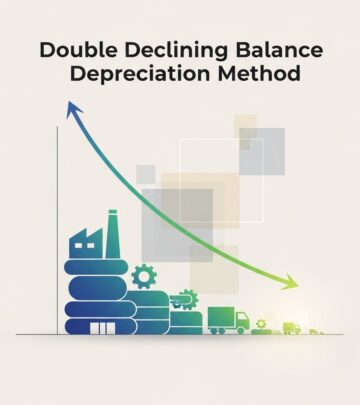
The sum-of-the-years’-digits (SYD) depreciation method is an accelerated depreciation technique that allows businesses to recognize a larger portion of an asset’s depreciable value in the earlier years of its useful life, with decreasing depreciation amounts in subsequent years. Unlike the straight-line depreciation method, which distributes depreciation evenly across an asset’s useful life, SYD provides a more aggressive approach that aligns with how many assets lose value more rapidly when they are newer and more productive.
This method is particularly useful for assets that are most productive during their initial years of operation. Equipment, machinery, and technology investments often experience greater depreciation early on, making SYD a more accurate reflection of actual asset deterioration and reduced functionality over time.
How the Sum-of-the-Years’-Digits Method Works
The SYD method operates by creating a fraction for each year of the asset’s useful life. The numerator of this fraction represents the remaining years of useful life (starting from the highest number in year one and decreasing), while the denominator remains constant and represents the sum of all digits in the asset’s useful life years.
For example, if an asset has a five-year useful life, the digits would be 5, 4, 3, 2, and 1. These digits are added together to create the denominator: 5 + 4 + 3 + 2 + 1 = 15. This denominator is then used with decreasing numerators (5/15, 4/15, 3/15, 2/15, 1/15) to calculate depreciation for each year.
The Sum-of-the-Years’-Digits Formula
To calculate SYD depreciation, use the following formula:
(Remaining Useful Life / Sum of Years Digits) × (Cost Basis – Salvage Value) = Annual Depreciation Expense
Alternatively, you can calculate the sum of years digits using this mathematical shortcut:
Sum of Years Digits = n(n+1)/2
Where n equals the useful life in years. This formula eliminates the need to manually add all individual digits, particularly useful for assets with longer useful lives.
Step-by-Step Calculation Process
Step 1: Determine the Depreciable Basis
First, calculate the total amount that will be depreciated by subtracting the salvage value from the asset’s cost basis. The salvage value represents the estimated amount the asset will be worth at the end of its useful life.
Depreciable Basis = Cost of Asset – Salvage Value
Step 2: Calculate the Sum of Years Digits
Add together all the digits representing the asset’s useful life years. For a five-year asset, this would be 1 + 2 + 3 + 4 + 5 = 15. Alternatively, use the formula n(n+1)/2 to calculate this quickly.
Step 3: Apply the Fraction for Each Year
For each year of the asset’s life, create a fraction using the remaining years as the numerator and the sum of years digits as the denominator. Multiply this fraction by the depreciable basis to determine that year’s depreciation expense.
Practical Example of SYD Depreciation
To illustrate how the sum-of-the-years’-digits method works in practice, consider the following scenario:
A service business purchases equipment at a cost of $160,000. The asset is expected to have a useful life of 5 years and will be sold for $10,000 at the end of its life. The depreciable basis is therefore $160,000 – $10,000 = $150,000.
The sum of years digits is calculated as: 5 + 4 + 3 + 2 + 1 = 15
Using this calculation, the annual depreciation would be distributed as follows:
| Year | Fraction | Calculation | Depreciation Amount |
|---|---|---|---|
| 1 | 5/15 | 5/15 × $150,000 | $50,000 |
| 2 | 4/15 | 4/15 × $150,000 | $40,000 |
| 3 | 3/15 | 3/15 × $150,000 | $30,000 |
| 4 | 2/15 | 2/15 × $150,000 | $20,000 |
| 5 | 1/15 | 1/15 × $150,000 | $10,000 |
| Total | $150,000 |
Notice that depreciation is highest in the first year ($50,000) and gradually decreases each subsequent year, reaching its lowest amount in the final year ($10,000). The total depreciation over all five years equals the depreciable basis of $150,000.
Extended Example with Different Asset Values
Consider another scenario to further demonstrate the SYD method’s application. Suppose your business purchases a machine for $130,000 with an estimated useful life of five years and an anticipated salvage value of $30,000.
The depreciable basis is: $130,000 – $30,000 = $100,000
The sum of years digits remains: 1 + 2 + 3 + 4 + 5 = 15
Annual depreciation calculations:
- Year 1: 5/15 × $100,000 = $33,333.33
- Year 2: 4/15 × $100,000 = $26,666.67
- Year 3: 3/15 × $100,000 = $20,000.00
- Year 4: 2/15 × $100,000 = $13,333.33
- Year 5: 1/15 × $100,000 = $6,666.67
After five years of depreciation, the asset’s book value equals its salvage value of $30,000.
Advantages of the Sum-of-the-Years’-Digits Method
Accelerated Tax Deductions
The SYD method allows businesses to claim larger depreciation deductions in the earlier years of an asset’s life, which can provide significant tax benefits and improve cash flow during the initial period of ownership.
Realistic Asset Value Representation
Many assets depreciate more rapidly when new, with depreciation slowing as they age. The SYD method more accurately reflects this real-world depreciation pattern compared to straight-line methods.
Matching Principle Compliance
By recognizing higher depreciation when assets are most productive and generating the most revenue, the SYD method better matches expenses with the income they help generate.
Financial Statement Flexibility
Businesses can use different depreciation methods for different assets, allowing them to select the most appropriate method based on each asset’s characteristics and usage patterns.
Comparing Sum-of-the-Years’-Digits with Other Methods
| Depreciation Method | Depreciation Pattern | Early Year Deductions | Best For |
|---|---|---|---|
| Sum-of-Years’-Digits | Accelerated (decreasing) | High | Assets most productive when new |
| Straight-Line | Even/Linear | Moderate | Assets with consistent value loss |
| Declining Balance | Accelerated (steeper) | Very High | Rapidly aging technology |
| Units of Production | Variable | Variable | Assets depreciated by usage |
When to Use the Sum-of-the-Years’-Digits Method
The SYD method is most appropriate when:
- An asset is more productive and generates more value during its early years of operation
- A business wants to match depreciation expense with actual productivity levels
- Tax benefits from accelerated depreciation in early years are desirable
- The asset’s residual value is small or negligible
- The business can accurately estimate the asset’s useful life
Using the Formula for Longer Useful Lives
For assets with longer useful lives, the mathematical formula becomes invaluable. If an asset has a 10-year useful life, manually adding 10 + 9 + 8 + 7 + 6 + 5 + 4 + 3 + 2 + 1 would be tedious. Instead, use:
Sum of Years Digits = 10(10+1)/2 = 10(11)/2 = 110/2 = 55
In the first year of a 10-year asset’s life, depreciation would be 10/55 of the depreciable basis. The second year would use 9/55, and the tenth year would use 1/55.
Frequently Asked Questions About Sum-of-the-Years’-Digits Depreciation
Q: Why is the sum-of-the-years’-digits method considered an accelerated depreciation method?
A: The SYD method is accelerated because it recognizes a larger portion of an asset’s depreciable value in the first few years of its useful life. In contrast, the straight-line method spreads depreciation evenly across all years, so SYD results in higher depreciation expenses initially.
Q: Can the sum-of-the-years’-digits method be used for tax purposes in the United States?
A: The SYD method can be used for financial reporting purposes and certain types of assets. However, the IRS typically requires the Modified Accelerated Cost Recovery System (MACRS) for tax depreciation purposes. Businesses should consult with tax professionals regarding which methods are acceptable for their specific situation.
Q: What happens if an asset has a useful life of 15 years—how would I calculate the sum of years digits?
A: Using the formula, the sum would be 15(15+1)/2 = 15(16)/2 = 240/2 = 120. Alternatively, you could add all digits: 15 + 14 + 13 + 12 + 11 + 10 + 9 + 8 + 7 + 6 + 5 + 4 + 3 + 2 + 1 = 120.
Q: Is the total depreciation amount different using the SYD method compared to straight-line depreciation?
A: No, the total amount depreciated over an asset’s useful life is the same regardless of the method used. The difference is in how that total is distributed across the years. SYD simply front-loads the depreciation into earlier years.
Q: Can I switch from sum-of-the-years’-digits depreciation to another method partway through an asset’s life?
A: Generally, once a depreciation method is chosen for an asset, changing it midway through its useful life requires justification and may have accounting and tax implications. This decision should be discussed with accounting professionals and evaluated against accounting standards.
Q: What is the relationship between the sum-of-the-years’-digits fractions and percentages?
A: The fractions can be converted to percentages for easier understanding. For a 5-year asset with a sum of 15, the first year’s fraction of 5/15 equals approximately 33.33%, the second year’s 4/15 equals 26.67%, and so on. These percentages sum to 100% across all years.
References
- Sum of the Years’ Digits Depreciation — AccountingCoach. Accessed 2025-11-29. https://www.accountingcoach.com/blog/sum-of-the-years-digits-depreciation
- Sum of Years Digit Example — Deltek Software Manager. Accessed 2025-11-29. https://help.deltek.com/Product/Vantagepoint/7.2/cf_AM_Sum_Years_Digit_Example_1.html
- Sum of the Years Digits: A Depreciation Guide — LegalZoom. Accessed 2025-11-29. https://www.legalzoom.com/articles/sum-of-the-years-digits-a-depreciation-guide
- Sum of the years’ digits depreciation definition — AccountingTools. Accessed 2025-11-29. https://www.accountingtools.com/articles/sum-of-the-years-digits-depreciation
Similar Articles








Read full bio of Sneha Tete