Subprime Auto Loans Explained
Discover the essentials of subprime auto loans, including rates, risks, and strategies to secure better financing options for challenged credit.

Subprime auto loans provide vehicle financing for individuals with lower credit scores, typically below 620, enabling car purchases despite credit challenges.
Defining Subprime Auto Financing
These loans target borrowers deemed higher risk by traditional lenders due to past financial issues like late payments or limited history. Credit scores generally range from 300 to 850, with subprime often falling between 501-600 or as low as below 580, varying by institution such as the Consumer Financial Protection Bureau (CFPB) classifying 580-619 as subprime.
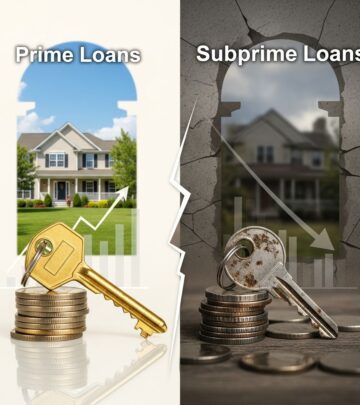
Borrowers with no credit or first-time applicants may also qualify, as lenders offset uncertainty with protective terms. Unlike prime loans for scores above 661, subprime options prioritize accessibility over optimal rates.
Operational Mechanics of Subprime Loans
Securing a subprime auto loan mirrors standard processes: lenders evaluate credit reports, income stability, and employment. Funds often go directly to dealers, with the vehicle as collateral.
Key distinctions include stricter requirements. Expect demands for proof of finances like pay stubs or bank statements. Approval hinges not just on scores but overall profile, offering flexibility for issues like bankruptcies.
Financial Costs and Terms Comparison
Subprime loans carry elevated expenses to mitigate lender risk. Interest rates can triple those of super prime borrowers (781-850), reaching 18% or more.
Additional fees encompass origination, processing, and prepayment penalties. Loan amounts trend lower, terms shorter, with mandatory down payments of 10-20%.
| Credit Tier | Avg. Loan Amount (New) | Term (Months) | APR | Monthly Payment |
|---|---|---|---|---|
| Super Prime (781-850) | $39,172 | 64 | 5.25% | $717 |
| Prime (661-780) | $42,993 | 71 | 6.87% | $742 |
| Near Prime (601-660) | $42,467 | 74 | 9.83% | $765 |
| Subprime (501-600) | $38,045 | 73 | 13.18% | $749 |
Data reflects typical new vehicle financing; used cars show even steeper subprime APRs around 18.86% on smaller amounts.
| Credit Tier | Avg. Loan Amount (Used) | Term (Months) | APR | Monthly Payment |
|---|---|---|---|---|
| Super Prime | $28,079 | 66 | 7.13% | $522 |
| Prime | $27,594 | 69 | 9.36% | $518 |
| Near Prime | $25,238 | 68 | 13.92% | $535 |
| Subprime | $21,918 | 66 | 18.86% | $536 |
Advantages for Borrowers with Credit Hurdles
- Access to Ownership: Enables car acquisition essential for commuting, vital when public transport lacks.
- Credit Building Opportunity: Timely payments can boost scores, paving way for refinancing into better rates.
- Flexible Criteria: Considers income and stability beyond scores, accommodating repossessions or gaps.
- Quick Approvals: Specialized lenders streamline for those rejected elsewhere.
Significant Drawbacks and Pitfalls
- Prohibitive Costs: High APRs inflate total payments; a $20,000 loan at 18% over 60 months exceeds $28,000 repaid.
- Repossession Threat: Collateral nature means default risks vehicle seizure, further harming credit.
- Fee Accumulation: Origination and penalties compound expenses, straining budgets.
- Declining Market Share: Share dropped to 15% in Q3 2025 as lenders tighten amid economic caution.
Steps to Secure Favorable Subprime Terms
- Check Credit Report: Review for errors via free annual reports; dispute inaccuracies to potentially raise scores.
- Prequalify Widely: Use soft inquiries for rate quotes from banks, credit unions, online lenders without score dings.
- Boost Down Payment: Larger upfront reduces loan size, lowering interest burden.
- Select Affordable Vehicles: Opt for reliable used models under $20,000 to minimize payments.
- Compare Lenders: Shop subprime specialists versus captives; negotiate fees.
Multiple hard inquiries within 14-45 days often count as one, preserving scores during shopping.
Alternatives to Traditional Subprime Borrowing
- Credit Unions: Often offer better rates for subprime members with local ties.
- Co-Signer Loans: Qualified co-signer assumes responsibility, unlocking prime-like terms.
- Buy-Here-Pay-Here Dealers: On-site financing ignores scores but at premium prices; use cautiously.
- Refinancing Path: After 6-12 months of on-time payments, refinance to cut rates.
- Public/Alternative Transport: Delay purchase, build credit via secured cards first.
Long-Term Strategies for Credit Recovery
Subprime loans serve as bridges. Pair with habits like 30% debt utilization, on-time bills. Monitor progress quarterly. Within a year, scores can rise 50-100 points, qualifying for prime financing.
Avoid cycles: Budget rigorously, prioritizing payments. Use apps for tracking. Economic trends show lenders easing selectively, but discipline remains key.
Frequently Asked Questions
What credit score qualifies for subprime auto loans?
Scores typically 501-600 or below 620, though ranges vary; deep subprime under 580 faces toughest terms.
Are subprime loans always more expensive?
Yes, with APRs 13-19% versus 5-7% for prime, plus fees, but shopping mitigates.
Can I refinance a subprime auto loan?
Absolutely, after improving credit and payment history, often halving rates.
What if I default on a subprime loan?
Expect repossession; it tanks scores 100+ points, complicating future credit.
Should I get a subprime loan with no credit history?
Possible, but consider secured cards first to establish history without vehicle risk.
Market Insights and Future Outlook
Originations dipped in 2025 as caution grew, yet demand persists for essential mobility. Borrowers succeeding focus on affordability, viewing loans as credit tools not traps.
Regulations from CFPB emphasize transparency; stay informed. Ultimately, subprime financing empowers when paired with proactive financial management.
References
- What Are Subprime Auto Loans? (Risks, Factors, and Alternatives) — Car and Driver. 2023. https://www.caranddriver.com/auto-loans/a43045785/what-are-subprime-auto-loans/
- Subprime Auto Loan: Guide & Rates — Experian. 2023. https://www.experian.com/blogs/ask-experian/subprime-auto-loan/
- Understanding Subprime Auto Loans — Dave Says Yes. 2023. https://davesaysyes.com/understanding-subprime-auto-loans/
- Understanding Subprime Car Loans: What You Need to Know — Drive Philly. 2024-08-19. https://www.drivephilly.com/blog/2024/august/19/understanding-subprime-car-loans-what-you-need-to-know.htm
- What Is a Subprime Auto Loan, and Do You Need One? — Faith’s Auto. 2023. https://www.faithsauto.com/blog/what-is-a-subprime-auto-loan-and-do-you-need-one
- Subprime Auto Loans: What Are They? — SoFi. 2023. https://www.sofi.com/learn/content/subprime-auto-loans/
- Subprime Auto Loans: Current Trends, Causes & Broader Economy — Harney Partners. 2025. https://harneypartners.com/subprime-auto-loans/
Similar Articles








Read full bio of Sneha Tete