Subordinated Debt: Definition, Examples, and Uses
Understanding subordinated debt: Junior securities with higher yields and lower priority claims.
What Is Subordinated Debt?
Subordinated debt, also known as junior debt, subordinated loans, or subordinated bonds, is a form of unsecured borrowing that ranks below senior debt obligations in the event of company liquidation or bankruptcy. Unlike senior debt, which includes loans secured by collateral and takes priority in repayment, subordinated debt holders must wait until all senior obligations are satisfied before receiving payment. This lower priority in the repayment hierarchy makes subordinated debt riskier for lenders, which is why it typically carries higher interest rates to compensate investors for the additional risk.
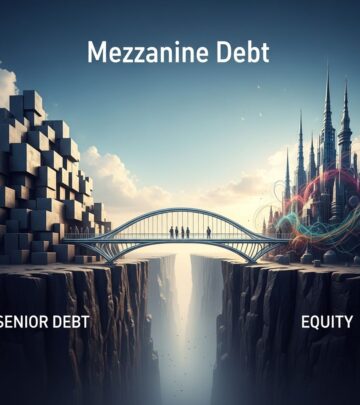
The term “subordinate” indicates that debt providers have subordinate status relative to traditional debt holders. In the capital structure of a company, subordinated debt sits between senior debt (the safest investment with lowest yields) and equity (the highest-risk investment with greatest potential returns). Understanding this positioning is crucial for investors and corporate finance professionals evaluating capital structures and risk profiles.
How Subordinated Debt Works
Subordinated debt functions within a hierarchical repayment structure known as the capital stack. When a company faces financial difficulties or bankruptcy, the court prioritizes claims in a specific order. Senior debt holders, including traditional bank loans and secured instruments, receive payment first. Only after senior debt obligations are completely satisfied do subordinated debt lenders receive any recovery on their investment.
The capital stack hierarchy typically follows this order:
- Senior Debt (Term Loans, Revolvers, First Liens)
- Subordinated Debt (High-Yield Bonds, Mezzanine Financing, PIK Notes)
- Equity (Preferred and Common Stock)
This subordination structure means subordinated debt holders accept significantly lower recovery prospects in bankruptcy scenarios. Because of this elevated risk profile, lenders demand higher yields and interest rates on subordinated instruments compared to senior debt. In stable economic conditions, the interest rate differential reflects the additional risk premium subordinated lenders require to compensate for their junior position.
Key Characteristics of Subordinated Debt
Unsecured Status: Unlike senior debt, subordinated debt is rarely secured by collateral. This means lenders have no specific claim on company assets in case of default, making recovery even more uncertain. Senior debt typically includes liens on a company’s assets, giving those lenders priority access to property, equipment, and other resources.
No Equity Dilution: A major advantage of subordinated debt is that it does not dilute existing shareholders’ ownership stakes. Unlike equity financing, subordinated debt does not grant lenders voting rights or control over company operations. This allows current shareholders to maintain their ownership percentage and governance authority.
Fixed Interest Rates: Most subordinated debt securities, particularly high-yield bonds, carry fixed interest rates rather than floating rates. This structure ensures lenders receive a predictable yield regardless of economic conditions or benchmark rate changes such as SOFR or LIBOR fluctuations.
Minimum Maturity Requirements: To qualify as Tier 2 capital for regulatory purposes, subordinated debt must have a minimum maturity of five years. Additionally, lenders cannot accelerate repayment except under extremely specific circumstances, providing borrowers with greater predictability in their capital structure.
Limited Covenants: Subordinated debt typically contains fewer restrictive financial or operating covenants compared to senior debt. This flexibility allows companies greater operational freedom in managing their business affairs while servicing subordinated obligations.
Types of Subordinated Debt Instruments
Subordinated debt manifests in various forms, each suited to different financing needs and market conditions:
High-Yield Bonds (HYBs): These debt securities carry lower credit ratings and offer higher yields to attract investors willing to accept greater risk. High-yield bonds are commonly used by companies seeking to raise capital without diluting equity ownership.
Mezzanine Financing: Often characterized as hybrid securities, mezzanine financing combines features of both debt and equity. This flexible instrument sits directly between senior debt and equity in the capital stack, providing companies with intermediate-risk capital sources.
Paid-in-Kind (PIK) Notes: These subordinated instruments allow issuers to pay interest by issuing additional notes rather than making cash payments. PIK notes are particularly valuable for companies with cash flow constraints but strong growth prospects.
Asset-Backed Securities: Often issued in tranches or portions, these securities are backed by company assets such as property or equipment. Mortgage-backed securities represent a common example where companies leverage real estate holdings to obtain financing.
Convertible Debt: This subordinated instrument allows lenders to convert their debt holdings into company equity under specified conditions. Convertible debt appeals to investors seeking potential upside participation alongside debt security.
2nd Lien Subordinated Notes: These instruments rank behind first lien senior debt but ahead of unsecured subordinated debt, occupying a middle position in the capital hierarchy.
Subordinated Debt vs. Senior Debt
| Characteristic | Senior Debt | Subordinated Debt |
|---|---|---|
| Repayment Priority | First priority in bankruptcy | Paid after all senior debt |
| Security | Usually secured by collateral | Typically unsecured |
| Interest Rate | Lower rates (lower risk) | Higher rates (higher risk) |
| Recovery Likelihood | Higher recovery probability | Lower recovery probability |
| Covenants | More restrictive terms | Fewer restrictions |
| Lender Status | Senior status with liens | Subordinate status without liens |
The primary distinction between these instruments lies in their position within the capital structure and resulting risk profiles. Senior debt lenders benefit from priority claims and collateral security, justifying lower interest rates. Subordinated debt lenders accept lower priority and typically lack collateral security, necessitating higher interest rate compensation.
Advantages of Subordinated Debt
For companies seeking capital, subordinated debt offers several compelling advantages. First, it does not dilute existing shareholders’ ownership or voting power, allowing current owners to maintain control and ownership percentages. This makes subordinated debt particularly attractive for established companies and closely-held businesses.
Second, subordinated debt provides tax-deductible interest payments for the issuer, reducing the effective cost of capital compared to equity financing. Interest expense reduces taxable income, creating valuable tax shields unavailable with equity issuances.
Third, subordinated debt offerings are typically streamlined compared to equity offerings, requiring less extensive investor due diligence. Investment bankers can place subordinated debt through private placements exempt from comprehensive securities registration requirements, accelerating the financing process.
Fourth, subordinated debt provides flexibility without onerous financial covenants. Companies enjoy greater operational freedom compared to senior debt arrangements, which often include restrictive requirements limiting distributions, acquisitions, and financial metrics.
Finally, for banks and financial institutions, subordinated debt can qualify as Tier 2 regulatory capital, strengthening capital ratios and supporting expanded lending capacity.
Risks and Considerations
Despite its advantages, subordinated debt carries substantial risks for lenders. The primary risk is lower recovery probability in bankruptcy scenarios. Because subordinated lenders receive payment only after senior debt is completely satisfied, actual recovery may be minimal or zero if company assets prove insufficient.
Subordinated debt also carries higher default risk than senior debt. Companies struggling financially will prioritize senior obligations, potentially defaulting on subordinated instruments first. The lower credit ratings typical of subordinated debt reflect this elevated default probability.
Additionally, some subordinated debt instruments include prepayment penalties or restrictions on early repayment. Lenders impose these terms to protect expected returns, compensating for the subordinated position and higher risk profile. Companies should carefully evaluate prepayment restrictions when considering subordinated financing.
Use Cases and Applications
Banks and financial institutions frequently issue subordinated debt to strengthen capital positions and fund growth initiatives. Before the 2008 financial crisis, most large U.S. banking corporations regularly issued subordinated bonds. Subsequently, private credit middle-market participants increased subordinated debt issuance significantly.
Large corporations use subordinated debt to finance acquisitions, technology investments, and expansion projects when equity financing would excessively dilute shareholders or when senior debt capacity is exhausted. Subordinated debt provides growth capital while maintaining shareholder control and minimizing ownership dilution.
Infrastructure projects frequently employ subordinated debt in capital stacks designed to attract private investment while managing risk across multiple stakeholder classes. The subordinated position accommodates government agencies and institutional investors seeking different risk-return profiles within project financing structures.
Subordinated Debt in Corporate Financing
Corporate issuers often prefer avoiding subordinated bond issuance due to higher interest rates required to compensate for increased risk. However, companies may be forced to issue subordinated debt if prior bond indentures mandate senior debt status for earlier issues, leaving subordinated status as the only available option for new financing.
Hybrid securities combining subordinated debt with preferred stock create structures like monthly income preferred stock, which pays dividends funded as interest expense by the issuer. These hybrid instruments appeal to investors seeking income characteristics of debt combined with some equity-like features.
Securitization processes frequently employ subordinated debt tranches. Asset-backed securities, collateralized mortgage obligations, and collateralized debt obligations all utilize subordinated instruments to structure debt offerings attracting diverse investor classes with varying risk appetites.
Regulatory Treatment and Capital Requirements
Regulatory authorities treat subordinated debt as Tier 2 capital for banking institutions meeting specific requirements. These requirements include minimum five-year maturity, limited acceleration rights except under extraordinary circumstances, and restrictions on issuer redemption rights during the first five years. This regulatory treatment incentivizes banks to utilize subordinated debt for capital strengthening while maintaining policy flexibility regarding debt structure.
Market Dynamics and Pricing
Subordinated debt pricing reflects prevailing economic conditions, credit spreads, and investor risk appetite. In low interest rate environments, subordinated debt becomes relatively inexpensive capital for issuers despite higher yields than senior debt. Publicly traded companies with depressed stock prices may find subordinated debt more efficient than equity issuance for raising growth capital.
Credit rating agencies assign lower ratings to subordinated instruments compared to senior debt from the same issuer, reflecting subordinated position and elevated default risk. These ratings influence marketability and investor demand for subordinated offerings.
Selecting Subordinated Debt Providers
Companies evaluating subordinated debt should carefully research potential lenders and consider their involvement throughout the financing journey. Key questions for evaluating alternative lenders include their experience with similar transactions, flexibility regarding terms and covenants, and willingness to support the company through business cycles and growth initiatives.
Working with experienced subordinated debt providers ensures companies obtain favorable terms reflecting market conditions while building long-term relationships supporting future capital needs. Alternative lenders specializing in subordinated financing often provide greater flexibility than traditional institutional investors.
Frequently Asked Questions
Q: Why do subordinated debt holders receive higher interest rates?
A: Subordinated debt holders receive higher interest rates because they accept lower priority in bankruptcy repayment. Their increased risk of not recovering their investment necessitates higher compensation. This interest rate premium directly reflects their subordinated position within the capital structure.
Q: Can subordinated debt be secured?
A: While subordinated debt is typically unsecured, some instruments may include limited security interests. However, these security interests remain subordinate to senior debt liens, providing minimal additional protection for subordinated lenders.
Q: What is the minimum maturity for subordinated debt to qualify as Tier 2 capital?
A: Subordinated debt must have a minimum maturity of five years to qualify as Tier 2 capital for regulatory purposes. Additionally, lenders must lack acceleration rights except under extremely limited circumstances.
Q: How does subordinated debt differ from equity financing?
A: Subordinated debt does not dilute existing shareholders or grant voting rights to lenders, unlike equity financing. However, subordinated debt requires mandatory interest payments and ranks above equity in bankruptcy repayment priority. Equity holders receive returns only after all debt obligations are satisfied.
Q: What companies typically issue subordinated debt?
A: Banks and financial institutions frequently issue subordinated debt to strengthen capital positions. Large corporations use subordinated debt for acquisitions and expansion when equity dilution should be minimized. Infrastructure projects also employ subordinated debt in diversified capital stacks.
Q: Are subordinated debt interest payments tax-deductible?
A: Yes, interest payments on subordinated debt are tax-deductible for the issuer, creating valuable tax shields unavailable with equity financing. This tax advantage reduces the effective cost of subordinated capital.
References
- Everything You Need To Know About Subordinated Debt — Saratoga Investment Corp. Accessed November 2025. https://saratogainvestmentcorp.com/articles/everything-you-need-to-know-about-subordinated-debt/
- Subordinated Debt — Wikipedia. Accessed November 2025. https://en.wikipedia.org/wiki/Subordinated_debt
- Subordinated Debt | Financing Definition + Characteristics — Wall Street Prep. Accessed November 2025. https://www.wallstreetprep.com/knowledge/subordinated-debt/
- Subordinated Debt: An Effective Tool for Financing Growth — K&L Gates. July 17, 2020. https://www.klgates.com/subordinated-debt-an-effective-tool-for-financing-growth-07-17-2020
- Infrastructure Lending 101: What Is Subordinated Debt and How Can It Mobilize Greater Private — Wilson Center. Accessed November 2025. https://www.wilsoncenter.org/article/infrastructure-lending-101-what-subordinated-debt-and-how-can-it-mobilize-greater-private
Similar Articles








Read full bio of Sneha Tete