Student Loan Reforms 2026
Explore the major shifts in federal student loans starting July 2026 under the One Big Beautiful Bill Act and their impact on borrowers.
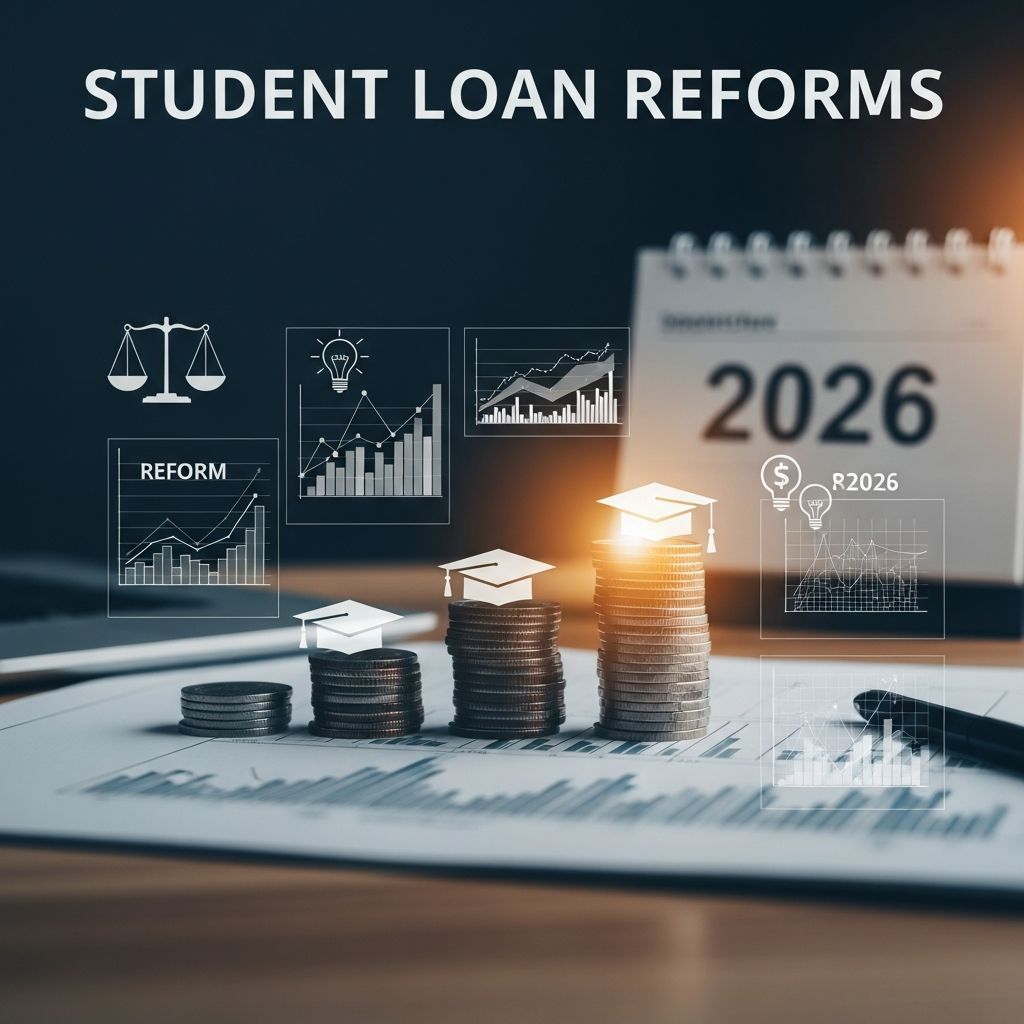
Federal student loan policies are undergoing significant transformations starting July 1, 2026, primarily driven by the One Big Beautiful Bill Act (OBBBA). These updates aim to streamline repayment, impose borrowing caps, and adjust forgiveness eligibility, affecting millions of borrowers. New loans will face restricted options, while existing ones transition gradually. This guide breaks down the essentials for students, parents, and graduates.
Overview of Key Policy Shifts
The OBBBA introduces a simplified framework to reduce complexity in federal aid. Core changes include fewer repayment plans, new loan limits for graduate and parent borrowers, and tighter rules on deferments. These measures seek to control federal spending while providing targeted relief. Implementation begins for new loans on July 1, 2026, with phase-outs for older ones by 2028.
- Repayment Simplification: Only two plans available for new borrowers.
- Borrowing Caps: Annual and lifetime limits on certain loans.
- Forgiveness Adjustments: Longer timelines and exclusions for some programs.
New Repayment Structures for Future Borrowers
Loans disbursed after July 1, 2026, offer just two choices: the Standard Repayment Plan and the Repayment Assistance Plan (RAP). This narrows options compared to today’s multiple income-driven plans like PAYE or SAVE.
| Plan Name | Payment Structure | Term Length | Forgiveness Option |
|---|---|---|---|
| Standard Repayment | Fixed monthly payments | 10-25 years based on amount | None |
| Repayment Assistance Plan (RAP) | 1-10% of AGI ($10 min. if under $10K) | Up to 30 years | Balance forgiven after 30 years |
The RAP serves as the sole income-driven option, basing payments on adjusted gross income (AGI) with a sliding scale. Borrowers earning less than $10,000 annually pay a flat $10 monthly. This extends forgiveness to 30 years, longer than prior 20-25 year tracks.
Transition for Existing Borrowers
Current loan holders retain access to legacy plans temporarily. Income-driven options phase out by July 1, 2028, defaulting to RAP unless switched earlier. A modified Income-Based Repayment (IBR) persists for those acting before the deadline, offering 25-year forgiveness.
Graduating seniors borrowing into Fall 2026 may consolidate all loans under new rules, losing prior flexibility. Parents with PLUS loans face immediate impacts, as new issuances exclude IDR eligibility.
Steps for Current Borrowers
- Evaluate switching to IBR by July 2028 to lock in 25-year forgiveness.
- Complete borrowing needs before July 1, 2026, to avoid caps.
- Monitor Federal Student Aid announcements for transition timelines.
Borrowing Limits and PLUS Loan Changes
Graduate and professional students see strict caps replacing unlimited PLUS loans. Direct Unsubsidized Loans limit graduates to $20,500 annually ($100,000 lifetime) and professionals to $50,000 annually ($200,000 lifetime). Parent PLUS loans cap at $20,000 per year per child ($65,000 lifetime), ending prior uncapped access.
Undergraduate limits stay largely intact, but part-time enrollment reduces eligibility proportionally. Existing borrowers enjoy a three-year grace on old limits or program completion.
Impacts on Forgiveness Programs
Public Service Loan Forgiveness (PSLF) excludes Parent PLUS loans for new borrowers, requiring 120 qualifying payments on IDR plans. RAP qualifies for PSLF after 30 years, potentially delaying relief for public servants.
Forgiven amounts may become taxable post-2025, as the American Rescue Plan’s exemption expires without renewal. Borrowers should plan for tax liabilities on discharged debt starting 2026.
Deferment, Forbearance, and Protections
Loans from July 1, 2027, eliminate economic hardship and unemployment deferments. Forbearance caps at nine months every two years, down from 12 months currently. These limits push borrowers toward repayment sooner during financial stress.
Additional Federal Aid Updates
Workforce Pell Grants target short-term training in high-demand fields, expanding access beyond traditional degrees. FAFSA calculations exempt family farms, small businesses, and fisheries, easing aid for rural applicants.
Strategic Planning for Different Groups
Prospective Undergrads
Focus on exhausting subsidized loans first. Anticipate RAP for income variability post-graduation.
Graduate and Professional Students
Budget within new caps; explore private loans if gaps arise, weighing risks.
Parents and Families
Shift to 529 plans or other savings pre-2026. New PLUS rules demand precise per-child planning.
Potential Challenges and Criticisms
Caps may force reliance on pricier private loans, risking higher interest. Extended RAP timelines burden low earners with lifelong payments. Legal challenges, like SAVE plan litigation, could delay rollouts.
FAQs
What happens if I borrow before July 2026?
You retain legacy repayment options, but new loans trigger unified rules.
Is RAP better than old IDR plans?
It offers lower minimums but longer forgiveness (30 years vs. 20-25).
Will forgiveness be tax-free after 2025?
Likely not; plan for taxes on forgiven principal.
Can parents still get unlimited PLUS loans?
No, new caps apply: $20K/year, $65K lifetime per child.
How do I prepare for changes?
Review loans at StudentAid.gov, consolidate strategically, and consult advisors.
Long-Term Financial Implications
These reforms promote fiscal responsibility but challenge affordability for high-cost programs. Borrowers must prioritize debt minimization, career-aligned choices, and diversified income. Track updates via official channels, as rulemaking refines details.
References
- Update on Federal Loan Changes Beginning in 2026 — The College of New Jersey Financial Aid. 2026. https://financialaid.tcnj.edu/update-on-federal-loan-changes-beginning-in-2026/
- Federal Student Loans in 2026: What the One Big Beautiful Bill Act Means for You — Citizens Bank. 2026. https://www.citizensbank.com/learning/how-the-one-big-beautiful-bill-act-affects-students.aspx
- Student Loans in 2026: What Borrowers Need to Know — NerdWallet. 2026. https://www.nerdwallet.com/student-loans/news/student-loan-changes-2026
- Federal Student Loan Debt Relief — Federal Student Aid. 2026. https://studentaid.gov/manage-loans/forgiveness-cancellation/debt-relief-info/
Similar Articles








Read full bio of medha deb