Student Loan On-Ramp Ends: 2026 Overhaul
The student loan on-ramp period concludes, ushering in sweeping 2026 reforms that reshape repayment, limits, and forgiveness for millions of borrowers.
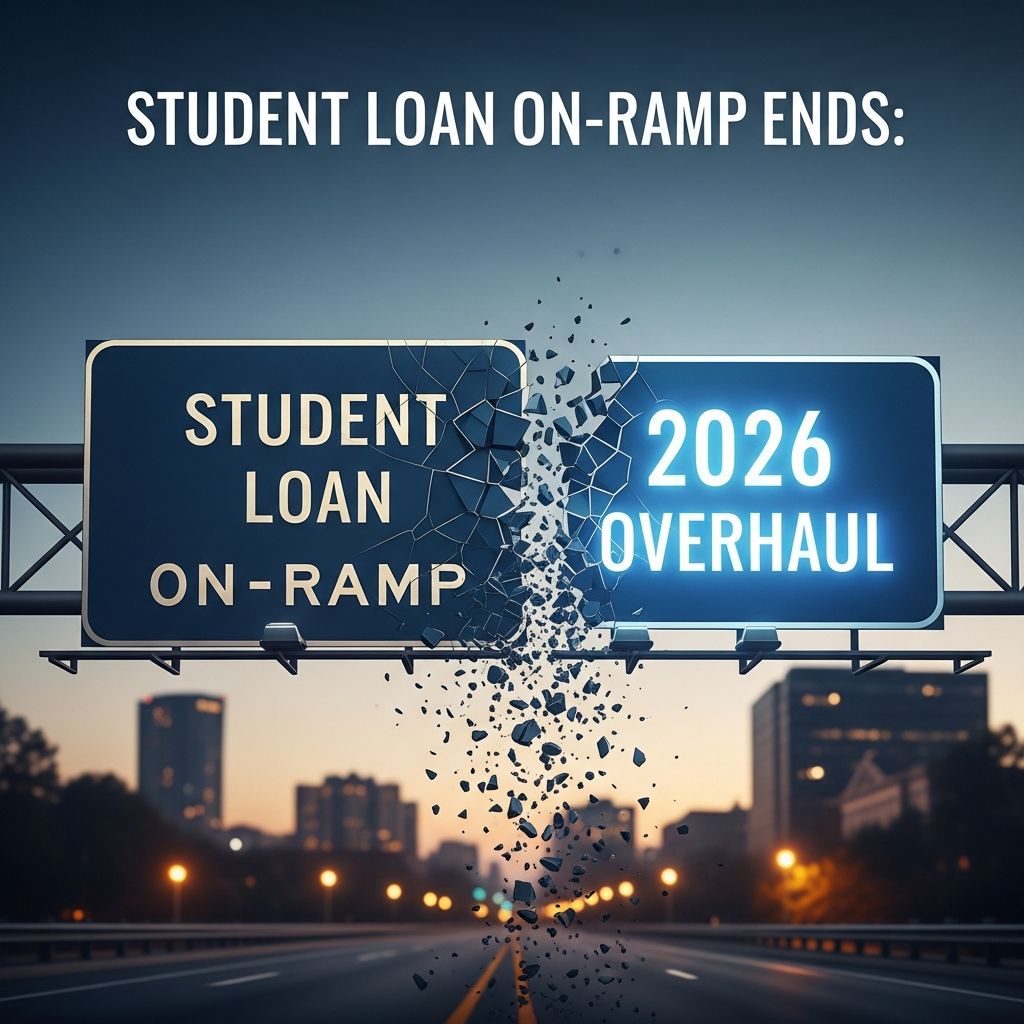
The federal student loan on-ramp period—a grace period designed to ease borrowers back into repayment without immediate delinquency—officially concludes, coinciding with transformative changes set for July 1, 2026, under the One Big Beautiful Bill Act (OBBBA). This shift marks the end of flexible delinquency protections and introduces streamlined repayment structures, tighter borrowing limits, and revised forgiveness pathways, affecting new and existing borrowers differently.
Understanding the On-Ramp Conclusion
The on-ramp, launched post-pandemic, shielded borrowers from negative credit impacts for up to 12 months by placing missed payments in an interest-free forbearance status rather than default. As this buffer expires, borrowers must prioritize repayment to safeguard their credit profiles and financial futures. Experian notes that while the administrative forbearance has ended, the 2026 reforms aim to simplify systems overwhelmed by prior complexities.
Key implications include heightened scrutiny on payment timeliness. Delinquencies reported after the on-ramp will directly harm credit scores, potentially raising borrowing costs for auto loans, mortgages, or rentals. Borrowers should immediately log into StudentAid.gov to verify balances and explore options before the new rules activate.
Major Repayment Plan Transformations Starting 2026
Post-July 1, 2026, new federal student loans offer only two repayment choices, drastically reducing options from the current array of income-driven plans (IDR). This simplification targets administrative efficiency but demands proactive planning from students and families.
The Tiered Standard Repayment Plan
This fixed-payment option adjusts terms based on total debt, ensuring payoff without income considerations. No prepayment penalties apply, allowing faster debt reduction.
| Debt Balance | Repayment Term |
|---|---|
| Up to $25,000 | 10 years |
| $25,001 – $50,000 | 15 years |
| $50,001 – $100,000 | 20 years |
| Over $100,000 | 25 years |
Higher earners benefit from quicker payoff, but those with modest incomes may struggle with elevated monthly amounts.
Repayment Assistance Plan (RAP): The Sole IDR Option
RAP bases payments on 1-10% of adjusted gross income (AGI), with a $10 minimum for incomes under $10,000 annually. Family size adjustments reduce payments by $50 per dependent child. After 30 years, remaining balances qualify for forgiveness, though it’s now taxable federally.
- Interest waiver: Any unpaid interest post-payment is forgiven, preventing balance growth.
- Principal subsidy: If payments don’t reduce principal by $50 monthly, the government covers the difference.
- No accrual during low-income periods, unlike some prior IDRs.
RAP prioritizes affordability for public servants and low-wage workers but extends timelines versus shorter forgiveness tracks like prior PSLF variants.
Impacts on PLUS and Graduate Loans
Parent PLUS and Grad PLUS loans face severe restrictions. New Parent PLUS borrowers cap at $20,000 annually and $65,000 lifetime per student, excluding them from RAP or PSLF. Graduate loans limit to $20,500 yearly with a $100,000 aggregate cap.
These changes curb parental overborrowing and professional program debt spirals, pushing reliance on private loans or scholarships. Existing PLUS holders retain current terms unless consolidating post-2026, which triggers new rules.
Timeline for Existing Borrowers
Current loans disbursed before July 1, 2026, preserve access to legacy plans temporarily.
- Until July 1, 2028: Switch to modified IBR to lock in 25-year forgiveness; SAVE, PAYE, and ICR phase out.
- Post-2028: Default to RAP; prior progress may not fully transfer.
- New or consolidated loans after 2026: Immediate Standard or RAP only.
Borrowers mixing old and new loans post-2026 must repay all under unified new plans.
Credit and Financial Planning Strategies
With on-ramp protections gone, credit bureaus like Experian will resume standard reporting: 30+ days late marks scores after 90 days. Strategies include:
- Enroll in auto-pay for 0.25% rate reductions.
- Consolidate pre-2026 to preserve options, avoiding new loan pitfalls.
- Explore employer assistance or state programs unaffected by OBBBA.
Monitor StudentAid.gov dashboards for personalized projections. Budgeting apps can simulate RAP payments using AGI estimates.
Broader Federal Aid Adjustments
OBBBA introduces Workforce Pell Grants for short-term training in high-demand fields, exempts family farms/small businesses from FAFSA assets, and streamlines aid applications. These bolster access but don’t offset repayment stringency.
Frequently Asked Questions (FAQs)
What happens if I miss payments after the on-ramp?
Delinquencies report after 90 days, damaging credit. Contact servicer for forbearance or deferment eligibility.
Can I stick with my current IDR plan past 2028?
No; transition to modified IBR or RAP by deadline to maintain forgiveness trajectory.
Are private loans affected?
No, but federal caps may increase private borrowing needs.
How does RAP differ from SAVE?
RAP offers interest waivers and principal subsidies but mandates 30-year forgiveness versus SAVE’s shorter paths (now litigated).
What about PSLF under new rules?
Limited to RAP/Standard; existing qualifiers may certify pre-transition.
Preparing for the New Landscape
Review loans quarterly, calculate RAP affordability via federal simulators, and consider part-time repayment now to shrink balances pre-2026. Families eyeing graduate paths should prioritize scholarships over PLUS amid caps. These reforms, while simplifying choices, demand fiscal vigilance amid economic uncertainties.
References
- Student Loans in 2026: What Borrowers Need to Know — NerdWallet. 2026. https://www.nerdwallet.com/student-loans/news/student-loan-changes-2026
- Update on Federal Loan Changes Beginning in 2026 — The College of New Jersey Financial Aid (via Yahoo Finance). 2026. https://financialaid.tcnj.edu/update-on-federal-loan-changes-beginning-in-2026/
- Federal Student Loans in 2026: What the One Big Beautiful Bill Means for You — Citizens Bank. 2026. https://www.citizensbank.com/learning/how-the-one-big-beautiful-bill-act-affects-students.aspx
- What students need to know about changes to federal student loans — UAspire. 2026. https://www.uaspire.org/news-events/student-changes-to-loans
- Student Loan Changes 2026: New Repayment Options, Taxable Forgiveness and More on the Way — NASFAA. 2026. https://www.nasfaa.org/news-item/37955/Student_Loan_Changes_2026_New_Repayment_Options_Taxable_Forgiveness_and_More_on_the_Way
- U.S. Department of Education Issues Proposed Rule to Make Higher Education More Affordable and Simplify Student Loan Repayment — U.S. Department of Education. 2026. http://www.ed.gov/about/news/press-release/us-department-of-education-issues-proposed-rule-make-higher-education-more-affordable-and-simplify-student-loan-repayment
Similar Articles








Read full bio of Sneha Tete