Student Loan Glossary
Master essential student loan vocabulary to navigate borrowing, repayment, and financial aid with confidence and avoid costly mistakes.
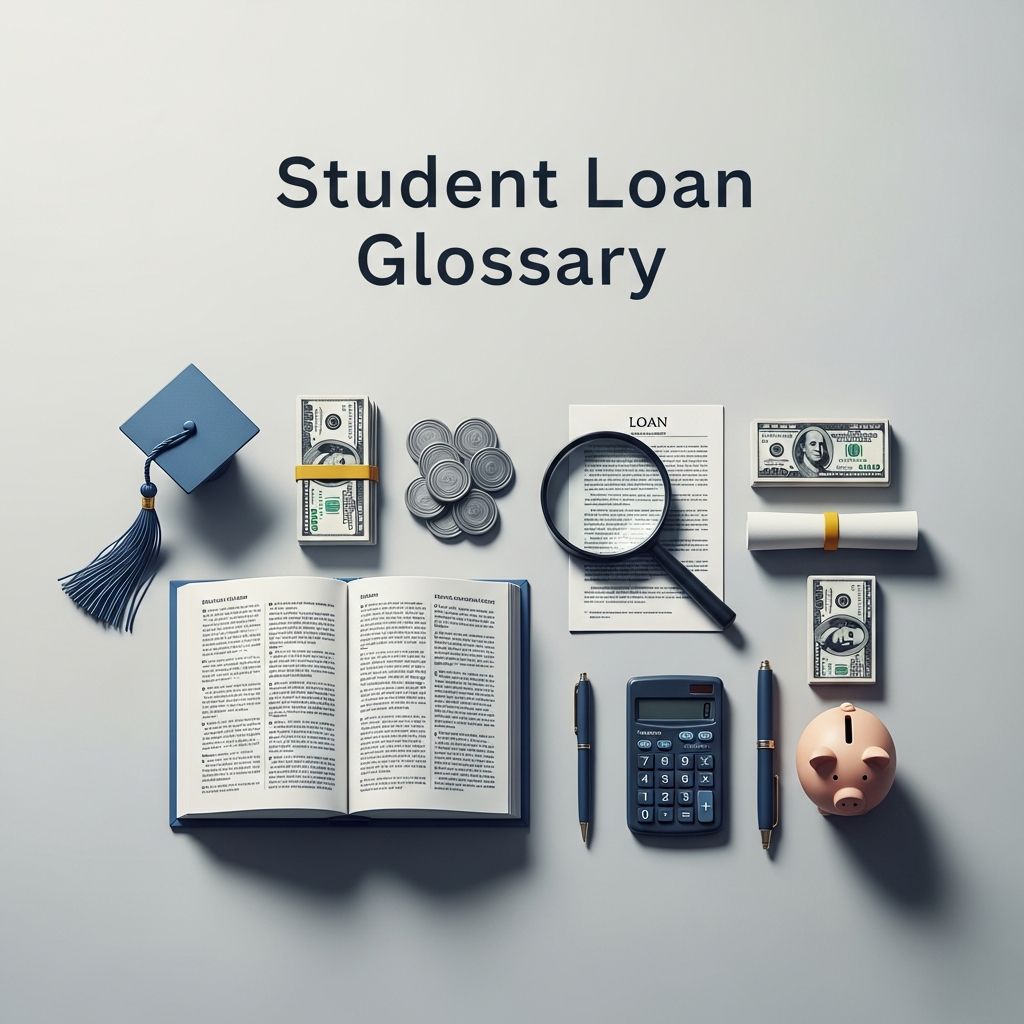
Navigating student loans requires understanding a specialized vocabulary that governs borrowing, repayment, and relief options. This guide breaks down critical terms from federal and private loans, drawing from authoritative sources to equip you with knowledge for smarter financial decisions.
Core Components of Student Loans
At the foundation of any student loan are basic elements that determine its structure and cost. Grasping these helps borrowers anticipate total expenses and plan accordingly.
- Principal: The original amount borrowed, excluding interest. This base figure grows with accrued interest over time.
- Interest Rate: The percentage charged on the principal for borrowing money. Federal loans feature fixed rates set annually by Congress, while private loans may offer fixed or variable options.
- Fixed vs. Variable Rates: Fixed rates remain constant throughout the loan term, providing payment predictability. Variable rates fluctuate with market indexes, potentially increasing costs.
These elements interact through amortization, the process of paying off the loan via scheduled payments that cover both principal and interest, gradually reducing the balance.
Federal Student Loan Categories
Federal loans, issued or guaranteed by the U.S. Department of Education, dominate student financing due to favorable terms and protections. Key types include:
| Loan Type | Description | Key Features |
|---|---|---|
| Direct Subsidized Loans (Stafford) | Available to undergraduates with financial need | Government pays interest while in school at least half-time, grace period, and deferment |
| Direct Unsubsidized Loans (Stafford) | For undergraduates and graduates, no need requirement | Borrower responsible for all interest from disbursement |
| Direct PLUS Loans | Parent PLUS for undergrad parents; Grad PLUS for graduate/professional students | Fixed rate, credit check required, no subsidies |
| Perkins Loans | Need-based for undergraduates (phased out but relevant for existing loans) | Subsidized, low fixed rate, school-administered |
Direct Loans encompass most federal aid today, offering streamlined access via FAFSA applications.
Repayment Structures and Timelines
Repayment begins after separation from school, shaped by plan choices that balance monthly affordability with total interest paid.
- Grace Period: Typically six months post-graduation or dropping below half-time enrollment before payments start, allowing transition time.
- Repayment Term: Duration to fully repay, often 10-25 years. Shorter terms mean higher payments but less interest; longer terms ease monthly burdens.
- Standard Repayment Plan: Default fixed payments over 10 years (up to 30 for consolidations), ensuring payoff without ballooning debt.
Income-Driven Repayment (IDR) Plans
IDR adjusts payments to 10-20% of discretionary income, ideal for variable earnings. Options include:
- Pay As You Earn (PAYE): 10% of discretionary income, forgiveness after 20 years.
- Income-Based Repayment (IBR): 10-15% based on older/newer loans, 20-25 year forgiveness.
- Saving on a Valuable Education (SAVE): Updated IDR with lower payments, faster forgiveness.
- Income-Contingent Repayment (ICR): 20% of discretionary income or fixed over 25 years.
- Graduated Repayment: Starts low, increases every two years, for rising-income borrowers.
Contact servicers to enroll; use tools like Loan Simulator for projections.
Relief and Management Options
Borrowers facing challenges have tools to pause or reduce payments without default.
- Deferment: Temporary postponement of payments, interest may accrue on unsubsidized loans. Available for economic hardship, military service, or school re-enrollment.
- Forbearance: Similar pause, but interest always accrues on all loans. Limited to three years aggregate.
- Loan Consolidation: Combines multiple federal loans into one with a weighted average interest rate, simplifying payments and accessing certain plans.
- Capitalization: Unpaid interest added to principal, increasing future interest charges—common post-grace or forbearance.
Private Loans and Comparisons
Private loans from banks or lenders fill gaps but lack federal perks like IDR or forgiveness.
| Aspect | Federal | Private |
|---|---|---|
| Interest Rates | Fixed, borrower-friendly | Fixed or variable, credit-based |
| Repayment Options | Multiple flexible plans | Fewer, lender-specific |
| Forgiveness/Relief | Available (e.g., PSLF) | Rare |
| Approval | Need-based, no credit check (except PLUS) | Credit score required |
Federal first, private as supplement.
Financial Aid Complements
Loans aren’t solo; integrate with non-repayable aid.
- Grant: Free money based on need or merit, no repayment.
- Cost of Attendance (COA): Annual estimate of tuition, fees, living, books—borrowing capped at COA minus other aid.
- GI Bill®: Veteran benefits covering tuition, housing, books—non-repayable.
Advanced Concepts for Savvy Borrowers
Deeper terms impact long-term strategy.
- Loan Servicer: Manages billing, payments, communications post-origination.
- Loan Period: Academic year covered by the disbursement.
- Public Service Loan Forgiveness (PSLF): Forgives remaining balance after 120 qualifying payments in public/non-profit service under IDR.
Frequently Asked Questions
What is the difference between subsidized and unsubsidized loans?
Subsidized loans have government-paid interest during school and grace; unsubsidized accrue interest immediately.
How do I choose a repayment plan?
Assess income, goals via Loan Simulator; federal offers flexibility private lacks.
Can I change my repayment plan later?
Yes, contact servicer anytime for federal loans.
What happens if I can’t pay?
Seek deferment/forbearance first; default risks wage garnishment, credit damage.
Are private loans forgivable?
Generally no; focus on federal for relief options.
Strategies for Loan Success
Minimize debt: Maximize grants/scholarships, borrow only COA needs. Post-graduation, automate payments for discounts, refinance private loans if rates drop. Monitor via Federal Student Aid dashboard. Understanding terms empowers proactive management, reducing lifetime costs.
References
- Student loans key terms — Consumer Financial Protection Bureau. 2023. https://www.consumerfinance.gov/consumer-tools/student-loans/answers/key-terms/
- Financial Aid Dictionary — Federal Student Aid (studentaid.gov). 2025-03-15. https://studentaid.gov/articles/financial-aid-dictionary/
- Your Guide to Understanding Student Loan Terms — Navy Federal Credit Union. 2024-06-10. https://www.navyfederal.org/makingcents/college-planning/understanding-student-loan-terms.html
- The Ultimate Student Loan Terminology Cheat Sheet — SoFi. 2024. https://www.sofi.com/learn/content/the-ultimate-loan-terminology-cheat-sheet/
- Breaking Down Student Loan Jargon — Sallie Mae. 2024-09-20. https://www.salliemae.com/blog/breaking-down-student-loan-jargon/
- Student Loan Terms You Should Know — StudentLoans.com. 2023-11-05. https://studentloans.com/student-loan-terms-you-should-know/
Similar Articles








Read full bio of Sneha Tete