Student Loan Forgiveness Guide: Key Rules For 2026
Explore federal programs, eligibility rules, and 2026 updates to erase your student debt burden effectively.
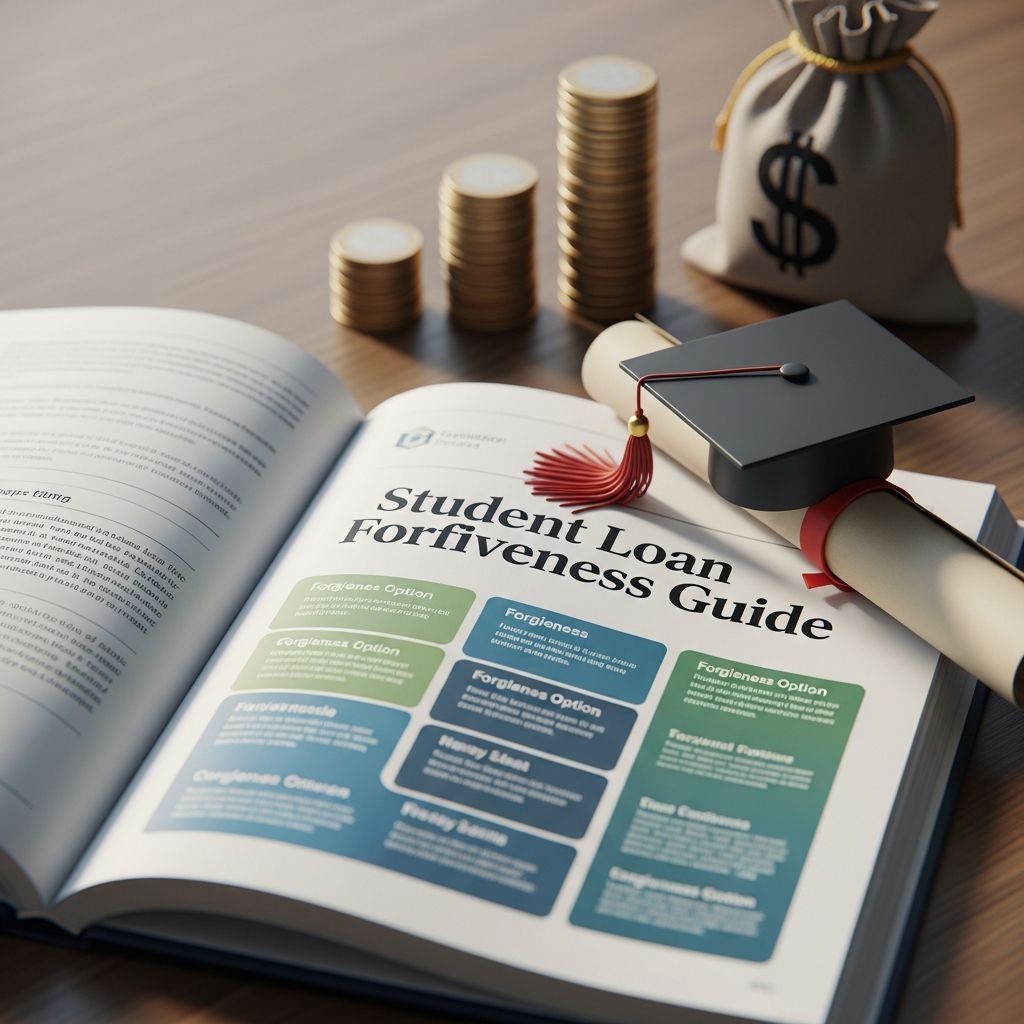
Student loan forgiveness offers a pathway for many borrowers to eliminate remaining federal debt after meeting specific criteria. These programs target public servants, educators, healthcare workers, and those on income-driven repayment plans, with over $183 billion already forgiven nationwide.
Understanding Federal Student Loan Forgiveness Basics
Federal student loans qualify for forgiveness under various programs, unlike private loans which generally do not. Eligible types include Direct Subsidized Loans, Direct Unsubsidized Loans, Direct PLUS Loans for graduates, Direct Consolidation Loans, and certain FFEL and Perkins Loans after consolidation. Forgiveness typically requires consecutive qualifying payments, employment in designated fields, or long-term repayment adherence.
Key factors include loan type, repayment plan, employment status, and payment history. Borrowers must certify employment annually for service-based programs and stay on approved plans. Private refinancing disqualifies loans from federal relief.
Major Forgiveness Programs for Public Servants
The Public Service Loan Forgiveness (PSLF) program remains a cornerstone, forgiving balances on Direct Loans after 120 qualifying payments (10 years) under an income-driven repayment plan while working full-time for qualifying employers like governments or nonprofits. The Temporary Expanded PSLF (TEPSLF) extends eligibility to other plans like Extended or Graduated for those previously ineligible.
- Full-time employment: 30+ hours/week at eligible organizations.
- Qualifying payments: On-time under IDR.
- Certification: Submit PSLF Help Tool forms annually.
Department of Justice Attorney Student Loan Repayment Program (ASLRP) provides up to $60,000 over three years for attorneys committing to DOJ service, covering Direct, Stafford, PLUS, FFEL, and Perkins Loans.
Educator-Specific Debt Relief Options
Teachers in low-income schools or shortage areas can access targeted forgiveness. The Teacher Loan Forgiveness Program erases up to $17,500 on Direct Subsidized/Unsubsidized Loans after five consecutive years in qualifying roles; special education, math, or science teachers may receive the full amount, others up to $5,000.
Perkins Loan Cancellation for teachers offers incremental relief: 15% after year 1-2, 20% after year 3-4, and 30% after year 5, up to 100%. Eligibility hinges on full-time teaching in Title I schools.
Healthcare Professionals and National Service Pathways
Health professionals serving underserved communities through the National Health Service Corps (NHSC) Loan Repayment Program can receive up to $75,000 for two years full-time (or $37,500 part-time) as physicians, nurse practitioners, midwives, or physician assistants. Qualifying loans include those for tuition and educational expenses from government or private lenders. Applications for FY 2026 close March 31.
| Profession | Service Commitment | Forgiveness Amount |
|---|---|---|
| Physicians/NPs | 2 years full-time | Up to $75,000 |
| Part-time providers | 2 years part-time | Up to $37,500 |
Income-Driven Repayment Forgiveness Pathways
IDR plans tie payments to income, leading to forgiveness after set periods. Most borrowers start here for PSLF or standalone relief.
Income-Based Repayment (IBR)
IBR forgives remaining Direct, FFEL, and Consolidated Loans after 20-25 years, depending on origination date (post-2014: 20 years). Payments are 10-15% of discretionary income.
Pay As You Earn (PAYE)
PAYE caps payments at 10% of discretionary income for 20 years on Direct Loans, but new enrollments are paused; existing borrowers transition by 2028.
Income-Contingent Repayment (ICR)
ICR sets payments at 20% of income or a fixed plan equivalent, forgiving after 25 years. It’s the option for parent PLUS loans post-consolidation.
Saving on a Valuable Education (SAVE) Plan
SAVE bases forgiveness on original principal: 10-20 years for undergrad, 10-25 for grad loans. Currently blocked by courts, affecting new enrollments.
New Repayment Assistance Plan (RAP) for 2026
Launching July 1, 2026, RAP is the primary IDR for new borrowers, with payments 1-10% of AGI (minimum $120/year). Unpaid interest cancels monthly, and balances forgive after 30 years. PAYE/ICR phase out by 2028, shifting to IBR or RAP.
Critical 2026 Policy Shifts and Tax Implications
Starting 2026, federal changes reshape borrowing: forbearance limits to nine months per two years, and student loan forgiveness may become taxable again after the 2021 exemption expires (except PSLF). PSLF regulations finalize July 1, 2026, enhancing taxpayer protections.
- IDR transitions: Pre-2026 borrowers choose IBR/PAYE/ICR until 2028.
- RAP minimums prevent zero payments.
- Tax alert: Forgiven amounts count as income unless exempted.
Step-by-Step Application Process
- Verify loan eligibility via Federal Student Aid account.
- Consolidate non-Direct Loans if needed.
- Select/enroll in IDR via studentaid.gov.
- Secure qualifying employment and certify via PSLF Help Tool.
- Track payments; apply post-qualifying period.
Common pitfalls: missed certifications, non-qualifying employers, or plan switches. Use the PSLF Help Tool for real-time tracking.
State and Employer-Sponsored Relief
Beyond federal, over 140 state programs exist, often mirroring PSLF for local governments or professions. Employer contributions via LRAPs (Loan Repayment Assistance Programs) match payments for public sector workers. Check state education departments for localized options.
Frequently Asked Questions
What loans qualify for forgiveness?
Direct Loans, FFEL (post-consolidation), Perkins, and certain PLUS Loans. Private loans do not qualify.
Is PSLF still available in 2026?
Yes, with finalized rules effective July 1, 2026.
Will forgiven loans be taxed in 2026?
Likely yes for most programs; PSLF exempt.
Can I get forgiveness without public service?
Yes, via IDR after 20-30 years.
How do I check PSLF progress?
Use the PSLF Help Tool on studentaid.gov.
Planning for Long-Term Debt Freedom
Assess your loans, career, and income to choose the best path. Recent billions in relief underscore viability, but 2026 shifts demand proactive steps like consolidation or IDR enrollment now. Consult servicers or advisors for personalized strategies.
References
- 143 Student Loan Forgiveness Programs (2026): Complete List — educationdata.org. 2026. https://educationdata.org/student-loan-forgiveness-programs
- Complete List of Student Loan Forgiveness Programs 2026 — credible.com. 2026. https://www.credible.com/refinance-student-loans/student-loan-forgiveness-programs
- Update on Federal Loan Changes Beginning in 2026 — financialaid.tcnj.edu. 2026. https://financialaid.tcnj.edu/update-on-federal-loan-changes-beginning-in-2026/
- Public Service Loan Forgiveness — studentaid.gov. 2026. https://studentaid.gov/manage-loans/forgiveness-cancellation/public-service
- U.S. Department of Education Announces Final Rule on Public Service Loan Forgiveness — ed.gov. 2026. http://www.ed.gov/about/news/press-release/us-department-of-education-announces-final-rule-public-service-loan-forgiveness-protect-american-taxpayers
- NHSC Loan Repayment Program — hrsa.gov. 2026. https://nhsc.hrsa.gov/loan-repayment/nhsc-loan-repayment-program
- Welcome to 2026: Some Student Loan Forgiveness Is Now Taxable — nasfaa.org. 2026. https://www.nasfaa.org/news-item/37947/Welcome_to_2026_Some_Student_Loan_Forgiveness_Is_Now_Taxable
Similar Articles








Read full bio of Sneha Tete