Student Loan Consolidation: 6-Step Guide To Simplify Repayment
Simplify your student debt with consolidation: combine loans, access better plans, and manage payments effectively without losing federal benefits.

Consolidating federal student loans merges multiple loans into a single Direct Consolidation Loan, simplifying repayment without application fees or upfront costs. This process helps borrowers manage debt more effectively by providing access to flexible repayment options and forgiveness programs.
Understanding Federal Student Loan Consolidation
Federal student loan consolidation combines existing federal education loans, such as Direct, FFEL, and Perkins loans, into one new loan serviced by the U.S. Department of Education. The resulting loan has a fixed interest rate calculated as the weighted average of the original loans’ rates, rounded up to the nearest one-eighth of a percent. Unlike refinancing, consolidation preserves federal benefits like income-driven repayment (IDR) plans and loan forgiveness.
No fees are charged for federal consolidation, distinguishing it from private options that may involve costs or credit checks. Borrowers can consolidate at any time for Parent PLUS loans, but student loans typically require the grace period or active repayment status, except for defaulted loans with repayment arrangements.
Benefits of Consolidating Your Loans
- Simplified Payments: One monthly payment replaces multiple ones, reducing administrative hassle.
- Access to IDR Plans: Consolidation converts FFEL or Perkins loans to Direct Loans, enabling SAVE, PAYE, or IBR eligibility.
- Default Rehabilitation: Consolidating defaulted loans removes the default status and restores eligibility for deferments or forbearances.
- PSLF Qualification: A single consolidated loan counts qualifying payments toward Public Service Loan Forgiveness.
- Extended Repayment Terms: Options up to 30 years lower monthly amounts, though total interest may rise.
Direct Consolidation Loans represent about 33% of federal student debt, reflecting their popularity for streamlining and program access.
Potential Drawbacks and Risks
While beneficial, consolidation isn’t always ideal. The new interest rate may slightly increase due to rounding, and extending terms boosts total interest paid. Consolidating loses individual loan perks, like grace periods on separate loans.
| Aspect | Pros | Cons |
|---|---|---|
| Interest Rate | Fixed weighted average | May round up slightly |
| Repayment Options | Gains IDR access | Standard 10-year default if unspecified |
| Forgiveness Progress | Preserves eligibility | New clock starts post-June 2024 |
| Loan Count | Reduces to one | Subsidized/unsubsidized separate |
Parent PLUS consolidation with child loans limits IDR to ICR, potentially raising payments. Avoid if pursuing SAVE.
Eligibility Requirements Explained
Any federal loan qualifies, including Stafford, PLUS, Perkins, and prior consolidations (with new loans added). Private loans cannot join federal consolidation. Students consolidate post-grace or in repayment; parents anytime.
- Federal Direct Loans: Already eligible for most benefits.
- FFEL/Perkins: Must consolidate for IDR/PSLF.
- Defaulted Loans: Consolidatable with six on-time payments or agreement.
Spouses consolidating jointly need mutual details like SSN and DOB.
Step-by-Step Process to Consolidate
- Access StudentAid.gov: Visit studentaid.gov/loan-consolidation/ and log in with FSA ID.
- Select Loans: Choose which federal loans to include; review balances and projected rate.
- Choose Servicer: Pick MOHELA for PSLF; others for IDR.
- Select Repayment Plan: Opt for income-based or standard; avoid delays.
- Submit and Review: Confirm details, e-sign; processing takes 6-8 weeks.
- Monitor Progress: New servicer contacts for verification.
Post-consolidation, continue payments on old loans until payoff confirmation to avoid double billing.
Repayment Plan Options After Consolidation
Consolidation unlocks plans beyond standard 10-year:
- Standard: Fixed 10 years; lowest total cost.
- Extended/Graduated: Up to 25-30 years; lower initial payments.
- IDR (SAVE, PAYE, IBR, ICR): 10-25% of discretionary income; forgiveness after 20-25 years.
Parent PLUS consolidations restrict to ICR/Standard. One Big Beautiful Bill Act allows PLUS-to-IDR consolidation by July 2028.
Special Considerations for 2026 Borrowers
With IDR Account Adjustment ending April 30, 2024, prior consolidations maximized forgiveness credit; post-June 2024 starts fresh. PSLF borrowers should consolidate by deadlines for credit. Monitor 2026 changes under One Big Beautiful Bill Act for IDR flexibilities.
Married borrowers provide spouse info for joint IDR. Defaulted loans consolidate selectively if mixed status.
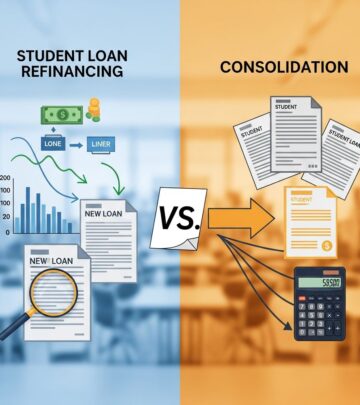
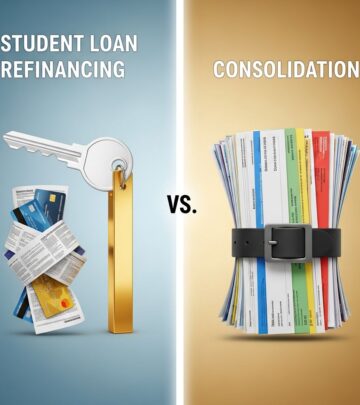
Consolidation vs. Refinancing: Key Differences
| Feature | Consolidation | Refinancing |
|---|---|---|
| Loan Type | Federal only | Private lender |
| Benefits Preserved | Yes (IDR, forgiveness) | No |
| Interest Rate | Weighted average | Potentially lower, variable/fixed |
| Credit Check | No | Yes |
| Cost | Free | Possible fees |
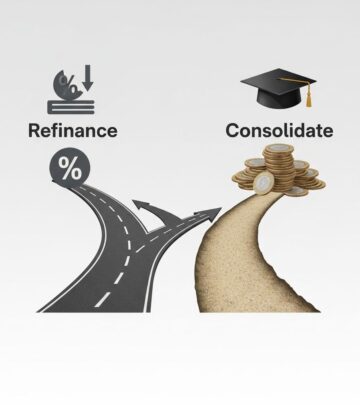
Refinancing suits high-credit borrowers ditching federal perks; consolidation for benefit retention.
Frequently Asked Questions
Does consolidation lower my interest rate?
No, it sets a fixed rate at the rounded weighted average; may slightly increase.
Can I consolidate private loans?
No, only federal loans qualify.
How long until consolidation completes?
Typically 6-8 weeks; continue old payments meantime.
Will it affect my credit score?
Paid-off loans show positively; new loan appears without inquiry.
Can parents consolidate with student loans?
No, separately; mixing limits child’s IDR options.
Next Steps for Effective Debt Management
Review loans at StudentAid.gov, calculate savings via simulators, and consult non-profit counselors. Consolidation streamlines but pair with budgeting for fastest payoff.
References
- Student Loan Consolidation – FinAid.org — FinAid. Accessed 2026. https://finaid.org/loans/consolidation/
- Federal Student Loan Consolidation: A Step-by-Step Walkthrough — YouTube (Transcript). 2023. https://www.youtube.com/watch?v=loaMcKjl4ig
- Your Guide to Consolidation & the IDR Account Adjustment — EDCAP NY. 2024. https://www.edcapny.org/resources-for-borrowers/consolidation-guide/
- Guide to Student Loan Consolidation — Laurel Road. 2025. https://www.laurelroad.com/student-loan-repayment/guide-to-student-loan-consolidation/
- Student Loan Consolidation vs Refinancing — Sallie Mae. 2025. https://www.salliemae.com/blog/refinance-student-loans/
- One Big Beautiful Bill Act Updates — Federal Student Aid (studentaid.gov). 2026. https://studentaid.gov/announcements-events/big-updates
Similar Articles








Read full bio of medha deb