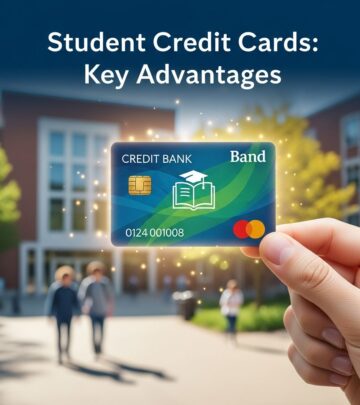
Student Credit Cards Vs Regular Cards: Key Differences
Discover how student credit cards differ from standard ones and why they're ideal for building credit responsibly during college.

Student credit cards provide college students with an accessible entry into credit management, featuring easier qualification criteria and perks suited to young adults, unlike regular cards that demand established credit histories and higher incomes.
Why Student Cards Stand Out for College Learners
Designed specifically for those in higher education, student credit cards bridge the gap for individuals with minimal financial track records. They encourage responsible habits by offering tools to track spending and build credit early, setting the foundation for future financial successes like securing apartments or auto loans.
These cards typically require enrollment verification at a college or university, bypassing the strict credit score thresholds of standard cards. This makes them a practical first step, helping users graduate to premium options as their profiles strengthen.
Easier Access: Qualification Simplified
- Minimal Credit History Needed: Unlike regular cards, student versions often approve applicants without prior scores, focusing instead on student status and basic income proof.
- Lenient Income Rules: Part-time jobs or allowances suffice, contrasting with regular cards’ emphasis on full-time earnings.
- Co-Signer Options: Some allow parents to boost approval odds by linking to their credit.
This accessibility empowers students to start building credit immediately, reporting payments to major bureaus for a positive history.
Credit Limits Tailored for Safety
Student cards impose conservative limits, often starting at $500 to $1,500, to curb overspending. Regular cards, by comparison, extend $5,000 or more to qualified users. Lower caps on student products promote discipline, reducing debt risks during tight budgets.
| Feature | Student Cards | Regular Cards |
|---|---|---|
| Average Starting Limit | $500–$1,500 | $5,000+ |
| Adjustment Potential | Increases with responsible use | Higher based on score/income |
| Purpose | Encourage budgeting | Flexible spending |
Rewards Geared Toward Student Lifestyles
Student cards shine with bonuses on everyday expenses like dining, groceries, gas, streaming, and travel. For instance, certain options yield 3-8% back on entertainment or food, far matching student priorities. Regular cards might prioritize travel or broad categories but require stronger profiles.
- Examples include 5% on streaming and groceries, 8% on entertainment bookings.
- No annual fees common, plus intro bonuses like $50 for initial spends.
- Foreign transaction waivers aid study abroad plans.
Interest Rates and Costs: What to Watch
Higher APRs on student cards reflect issuer risks, often 15-25%, versus 12-20% for prime regular cardholders. Seek low intro APRs or credit union alternatives for better rates. Annual fees are rare on student products, preserving affordability.
Grace periods allow interest-free payments if balances clear monthly, a universal feature but vital for beginners to master.
Protections and Perks for Peace of Mind
Credit cards outperform debit in security: unauthorized charges reverse easily, unlike bank drains. Student cards add fraud alerts, ID theft monitoring, and app-based locks. Extended warranties and purchase protections extend value on dorm buys or tech gadgets.
- $0 fraud liability standard.
- Free credit score access tracks progress.
- Travel insurances for short trips.
Building Credit: Long-Term Advantages
Timely payments on student cards boost scores, unlocking lower loan rates later. Good credit cuts mortgage costs and eases job applications. Responsible use—paying full, staying under 30% utilization—accelerates this growth.
Transitioning from student to regular cards happens naturally with score improvements, accessing superior rewards.
Smart Strategies for Student Card Success
Set a Strict Budget
Align card use with income, paying balances fully monthly to dodge interest. Apps track habits, preventing lifestyle creep.
Maximize Rewards Wisely
Target bonus categories, redeem for cash or travel, and hit sign-up thresholds without overspending.
Monitor and Adjust
Review statements weekly, request limit hikes after six months of on-time payments, and avoid cash advances.
Student vs. Authorized User: Which Path?
Adding as an authorized user on a parent’s card builds credit via their history without personal liability. However, student cards foster independence and direct reporting control. Combine both initially if needed.
| Option | Pros | Cons |
|---|---|---|
| Student Card | Own history, rewards | Lower limits, higher APR |
| Authorized User | No liability, instant boost | Depends on primary user |
Common Pitfalls and How to Avoid Them
- Carrying Balances: Leads to compounding interest; pay off always.
- Late Payments: Hurt scores; set autopay.
- Over-Limiting: High utilization tanks scores; request increases judiciously.
- Impulse Buys: Treat card as debit equivalent.
Top Picks for Student Cards
Popular choices include those with flat 1.5% cash back, no fees, and student-focused rewards. Always verify current terms.
Frequently Asked Questions
What qualifies me for a student credit card?
Enrollment in college, university, or equivalent, plus basic income verification. No credit score often required.
Can I get a student card without a job?
Yes, via allowances or co-signers; focus on low-limit options.
Do student cards report to credit bureaus?
Yes, positively impacting scores with on-time payments.
How do I upgrade from a student card?
After 12-18 months of good use, apply for regular cards using built history.
Are rewards worth it on student cards?
Absolutely, especially in dining/gas categories, if paid off monthly.
Final Thoughts on Choosing Wisely
Student credit cards offer a balanced entry to finance, blending ease, rewards, and education. Prioritize no-fee, high-reward options from reputable issuers, using them to cultivate habits that yield lifelong benefits. Research fits your lifestyle for optimal results.
References
- What Is A Student Credit Card? — Bankrate. 2024-01-15. https://www.bankrate.com/credit-cards/building-credit/what-is-student-credit-card/
- Should You Get a Student Credit Card? — BestColleges. 2023-08-20. https://www.bestcolleges.com/blog/should-you-get-a-student-credit-card/
- Top Credit Card Features Every College Student Should Look For — Student Choice. 2024-02-10. https://www.studentchoice.org/top-credit-card-features-every-college-student-should-look-for/
- Student Credit Cards — Mastercard. 2025-11-05. https://www.mastercard.com/us/en/personal/find-a-card/credit-card/categories/students.html
- What is a Student Credit Card—And How to Apply for One — Sallie Mae. 2024-06-12. https://www.salliemae.com/blog/what-is-a-student-credit-card/
Similar Articles








Read full bio of Sneha Tete