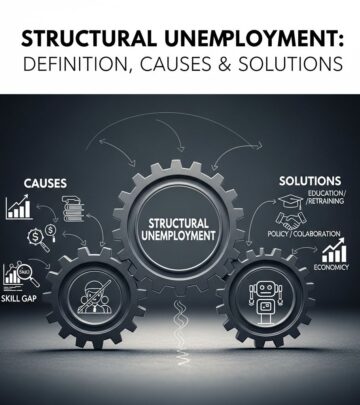
Structural Unemployment: Definition, Causes, and Solutions
Understanding structural unemployment: causes, economic impact, and policy solutions for workforce mismatches.
Understanding Structural Unemployment
Structural unemployment is a significant and persistent form of joblessness that occurs when there is a fundamental mismatch between the skills workers possess and the skills employers demand in the job market. Unlike temporary forms of unemployment, structural unemployment arises from deep, long-lasting changes in the economy’s fundamental structure, making it one of the most challenging employment issues policymakers face. This type of unemployment can persist even during periods of economic growth and expansion, as the problem is not simply a lack of jobs overall, but rather a disconnect between available positions and qualified workers to fill them.
Structural unemployment differs from other unemployment categories. While frictional unemployment represents the natural job-switching that occurs in healthy labor markets, and cyclical unemployment fluctuates with economic cycles, structural unemployment reflects permanent shifts in economic organization. It represents an involuntary joblessness where workers willing and able to work cannot find suitable employment because their skills no longer match market demands or because they are geographically separated from available opportunities.
Primary Causes of Structural Unemployment
Technological Advancements
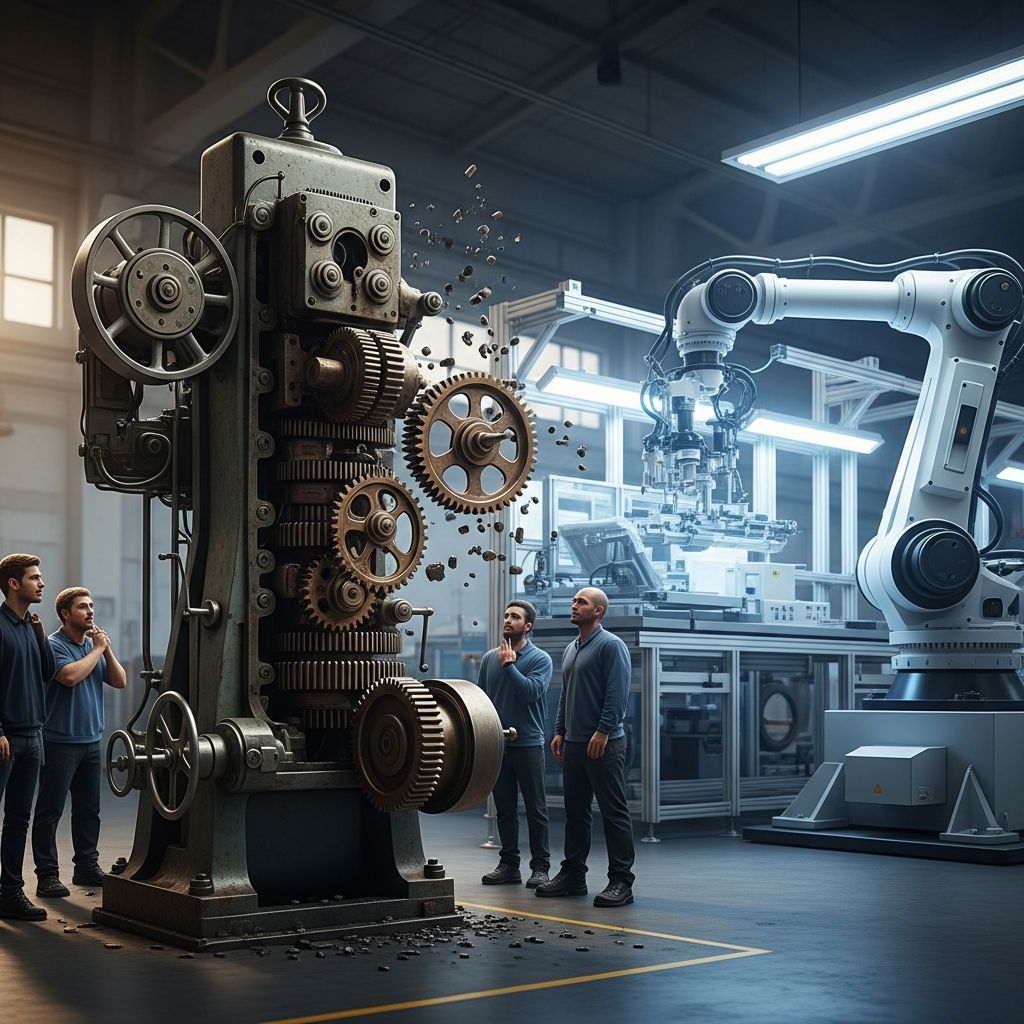
Technological change stands as one of the most powerful drivers of structural unemployment in modern economies. When new technologies emerge, they fundamentally alter how work is performed and which skills are valuable. Automation in manufacturing, self-checkout systems in retail, and digital platforms replacing traditional services exemplify this phenomenon. These technologies often increase productivity dramatically, allowing companies to produce the same output with fewer workers. For instance, a grocery store chain replacing human cashiers with self-checkout stations creates immediate structural unemployment for workers whose primary skill—operating a cash register—is no longer needed.
The impact extends beyond simple job elimination. As industries modernize, entire job categories may disappear while new ones emerge, creating a temporal gap where workers must retrain. Manufacturing workers, agricultural laborers, and those in trade industries face particularly acute challenges as machinery and automation advance. Workers in these sectors often lack the technical skills required for emerging positions, and retraining takes time and resources they may not have access to.
Globalization and Increased Competition
Globalization has fundamentally reshaped labor markets by enabling companies to relocate operations to countries with lower labor costs. When manufacturing facilities move from developed nations to developing countries offering cheaper labor, workers in the originating countries face sudden job loss. These displaced workers often possess skills specific to their former industries and geographic locations, making transition difficult.
The competitive pressure created by globalization extends beyond simple relocation. Companies facing competition from lower-cost producers worldwide must either innovate, relocate, or restructure. Workers in affected industries cannot simply move to find similar jobs in their regions because the comparative advantage has shifted globally. This creates pockets of structural unemployment concentrated in communities historically dependent on now-departed industries.
Company Relocations and Geographic Mismatches
When businesses relocate to other states or countries, they leave behind workers who may lack either the skills or the ability to follow. Geographic immobility, whether due to financial constraints, family ties, or housing market conditions, severely worsens structural unemployment’s effects. Workers may be unwilling or unable to relocate to regions where their skills remain in demand, perpetuating unemployment in their home communities.
This geographic dimension is particularly challenging during real estate crises. Homeowners unable to sell properties due to local economic collapse or housing bubbles cannot afford to relocate for employment, trapping them in high-unemployment regions. Additionally, workers prioritizing family relationships, spousal employment, or community ties rationally choose to remain even when jobs exist elsewhere, accepting structural unemployment as the trade-off.
Inadequate Training and Education Programs
When employers fail to invest in worker development and retraining, structural unemployment intensifies. Companies providing minimal opportunities for skill advancement leave employees vulnerable when industry conditions change. A railway system that rapidly replaced paper ticket booths with self-service machines while offering workers no retraining opportunities exemplifies this problem. Employees suddenly found their skills obsolete with no pathway to alternative positions within the company.
On a broader scale, educational systems sometimes fail to align curricula with market demands. Workers may pursue fields of study that do not produce marketable job skills, or they may lack access to affordable education and training programs needed for career transitions. The absence of robust workforce development infrastructure perpetuates skill gaps and structural unemployment.
Government Policy Changes
Government policies and regulatory changes can trigger structural unemployment by altering the economic environment in which workers operate. Policy decisions affecting labor markets, environmental regulations, international trade agreements, or industry-specific mandates can render certain jobs obsolete or make business operations unviable in particular regions.
Some economists argue that minimum wage policies contribute to structural unemployment by pricing low-skilled workers out of the market. When government-imposed minimum wages exceed certain workers’ marginal revenue product, employers legally cannot hire them, creating involuntary unemployment among those whose productivity does not justify the mandated wage. However, structural unemployment exists in economies without minimum wages, indicating multiple factors contribute to the phenomenon.
Skills Discrimination and Social Factors
Beyond economic factors, structural unemployment can result from discrimination including ableism and cultural factors such as race and sexual orientation. Employers may reject qualified workers for reasons unrelated to actual job skills or geographic location, creating artificial structural unemployment. These social barriers prevent capable workers from accessing available employment opportunities.
Economic Impact and Consequences
Structural unemployment carries significant economic consequences. It increases the natural unemployment rate—the baseline level of unemployment an economy experiences even at full employment. When structural unemployment rises, policymakers face a frustrating dilemma: stimulating aggregate demand cannot resolve the problem because the issue is not insufficient jobs but rather misalignment between jobs and workers.
The persistence of structural unemployment can create vicious cycles. Long-term unemployment causes workers’ skills to atrophy, their job-searching abilities to deteriorate, and their engagement with the labor market to decline. Debt accumulation during extended joblessness can lead to homelessness and poverty, making eventual reintegration into employment even more difficult. This phenomenon, known as hysteresis or path dependence, suggests that periods of high structural unemployment can create lasting damage to the workforce even after economic conditions improve.
Specific industries experience disproportionate structural unemployment. Manufacturing, agriculture, and trade sectors face constant technological disruption and competitive pressures that displace workers faster than alternatives can be developed. These concentrated effects create regional unemployment hotspots where entire communities struggle economically.
Addressing Structural Unemployment: Policy Solutions
Workforce Development and Retraining Programs
Effective structural unemployment solutions require proactive workforce development. Comprehensive retraining programs help workers transition to emerging industries by providing education in new technical skills. These programs work best when they identify future labor market demands and align training accordingly, preventing workers from retraining into skills that will soon be obsolete.
Education and Skill Development Investment
Robust educational systems that align with labor market demands help prevent structural unemployment before it begins. Curricula should emphasize adaptability and lifelong learning, equipping workers with foundational skills applicable across industries. Community colleges and vocational programs play crucial roles in providing accessible, affordable training for skill transitions.
Geographic Mobility Support
Policies facilitating geographic mobility can help match workers with jobs. Relocation assistance programs, housing subsidies for workers moving to job-rich regions, and remote work policies that eliminate geographic constraints all address the geographic mismatch component of structural unemployment.
Employer Engagement and Corporate Responsibility
When companies anticipate industry changes, advance notice and collaborative retraining efforts can minimize structural unemployment. Employers investing in employee development create smoother transitions when technological change arrives. Public-private partnerships that align business needs with workforce development prove particularly effective.
Social Safety Nets and Support Systems
While addressing root causes matters most, social safety nets prevent the humanitarian costs of structural unemployment from creating irreversible damage. Unemployment insurance, healthcare access, and income support prevent workers from falling into poverty during necessary retraining periods.
Why Structural Unemployment Remains Challenging
Overcoming structural unemployment proves difficult because it requires either migration or retraining—both substantial undertakings involving significant time, money, and personal disruption. The scale and nature of economic changes that cause structural unemployment often exceed policymakers’ direct control. Globalization, technological advancement, and market competition operate across national boundaries and institutional frameworks.
Additionally, structural unemployment can coexist with economic growth, frustrating policymakers expecting it to disappear during prosperous times. Even thriving economies with expanding overall employment may simultaneously experience structural unemployment in particular sectors and regions. This disconnect between aggregate economic performance and localized unemployment challenges traditional policy approaches.
Frequently Asked Questions
Q: How does structural unemployment differ from cyclical unemployment?
A: Cyclical unemployment fluctuates with business cycles, rising during recessions and falling during expansions. Structural unemployment reflects permanent economic changes and persists regardless of the economic cycle. Cyclical unemployment typically resolves when the economy recovers; structural unemployment requires retraining, education, or relocation to resolve.
Q: Can structural unemployment exist during economic growth?
A: Yes, structural unemployment can persist even during strong economic growth. While the overall job market expands, mismatches between available jobs and worker skills continue, creating unemployment in specific sectors and regions simultaneously with job creation elsewhere in the economy.
Q: What industries face the highest structural unemployment risk?
A: Manufacturing, agriculture, and trade industries experience the highest structural unemployment risk due to rapid technological change, automation, and competition from global markets. These sectors continuously face disruptions that eliminate traditional jobs faster than retraining can occur.
Q: Is structural unemployment permanent?
A: Structural unemployment is long-term but not necessarily permanent. Comprehensive retraining, education investment, and policy support can help workers transition to new industries and occupations. However, without intervention, structural unemployment can persist for years or decades, affecting entire generations of workers.
Q: How does geographic immobility contribute to structural unemployment?
A: Geographic immobility occurs when workers cannot or choose not to relocate to regions where jobs matching their skills exist. Reasons include inability to afford relocation, housing market constraints, family considerations, or unwillingness to leave established communities. This immobility prevents workers from accessing employment opportunities, perpetuating unemployment in their current locations.
Q: What role do government policies play in structural unemployment?
A: Government policies influence structural unemployment through minimum wage laws, trade regulations, environmental standards, and workforce development funding. Some policies may inadvertently increase structural unemployment, while others address it through retraining programs and education support. Policymakers must balance economic flexibility with worker protection.
References
- Structural Unemployment — Corporate Finance Institute. 2024. https://corporatefinanceinstitute.com/resources/economics/structural-unemployment/
- Structural Unemployment: Definition and Examples — Indeed Career Guide. 2024. https://www.indeed.com/career-advice/career-development/structurally-unemployed
- What Is Structural Unemployment and What Causes It? — Coursera Articles. 2024. https://www.coursera.org/articles/structural-unemployment
- Structural unemployment — Wikipedia. 2025. https://en.wikipedia.org/wiki/Structural_unemployment
- Structural Unemployment: Definition, Causes, and Economic Impact — U.S. Legal Forms. 2024. https://legal-resources.uslegalforms.com/s/structural-unemployment
Similar Articles








Read full bio of medha deb