Strike Price: Definition, Examples, and How It Works
Master strike prices in options trading: Learn how they work and impact your investment strategy.

A strike price, also known as an exercise price, is a fundamental concept in options trading that represents the predetermined price at which an underlying asset can be bought or sold. Understanding strike prices is essential for anyone involved in derivatives trading, as they directly impact the profitability and risk profile of options contracts. The strike price serves as the reference point that determines whether an option is profitable to exercise at any given time during the option’s life.
What Is a Strike Price?
The strike price is the fixed price per share at which the holder of an option has the right to purchase (in the case of a call option) or sell (in the case of a put option) the underlying security. This price is established when the option contract is created and remains constant throughout the life of the option, regardless of how the market price of the underlying asset fluctuates. The strike price is a critical component of any options contract, appearing on the contract specifications along with the expiration date and the type of option.
For example, if you purchase a call option on Apple stock with a strike price of $150 and an expiration date three months away, you have the right—but not the obligation—to purchase 100 shares of Apple at $150 per share at any time before the option expires. This right remains valid even if Apple’s stock price rises to $200 or falls to $100 during the option’s life.
Understanding Strike Prices in Options Contracts
Strike prices work differently depending on whether you hold a call option or a put option:
Call Options and Strike Prices
With call options, the strike price represents the price at which you can purchase the underlying asset. Call option buyers profit when the market price of the underlying asset rises above the strike price. The higher the underlying asset’s price climbs above the strike price, the more valuable the call option becomes. At expiration, the profit from a call option equals the difference between the market price and the strike price, minus the premium paid for the option.
Put Options and Strike Prices
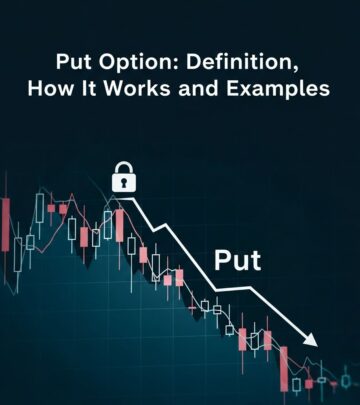
With put options, the strike price represents the price at which you can sell the underlying asset. Put option buyers profit when the market price of the underlying asset falls below the strike price. The lower the underlying asset’s price drops below the strike price, the more valuable the put option becomes. At expiration, the profit from a put option equals the difference between the strike price and the market price, minus the premium paid for the option.
Strike Price vs. Market Price
It’s important to distinguish between the strike price and the current market price of the underlying asset. The strike price is fixed and predetermined, while the market price fluctuates constantly based on supply and demand in the market. The relationship between these two prices determines the intrinsic value of an option and whether it is in-the-money (ITM), at-the-money (ATM), or out-of-the-money (OTM).
In-the-Money, At-the-Money, and Out-of-the-Money Options
Options traders frequently use three classifications to describe the relationship between the strike price and the current market price:
- In-the-Money (ITM): For call options, this means the market price is above the strike price, giving the option intrinsic value. For put options, ITM means the market price is below the strike price. ITM options have a higher probability of being exercised and typically command higher premiums.
- At-the-Money (ATM): This occurs when the market price equals or is very close to the strike price. ATM options have no intrinsic value, consisting entirely of time value. These options are often used for specific trading strategies.
- Out-of-the-Money (OTM): For call options, this means the market price is below the strike price. For put options, OTM means the market price is above the strike price. OTM options have no intrinsic value and consist only of time value. They are typically cheaper but have lower probabilities of being exercised.
Strike Price Examples
Let’s examine practical examples to illustrate how strike prices work in different scenarios:
Call Option Example
Suppose you purchase a call option on Tesla stock with the following specifications:
- Underlying asset: Tesla (TSLA) stock
- Strike price: $200
- Current market price: $185
- Premium paid: $5 per share ($500 total for one contract)
- Expiration date: Three months
In this scenario, the call option is currently out-of-the-money because the market price ($185) is below the strike price ($200). The option holder paid $500 for the right to purchase 100 shares at $200. For the option to be profitable at expiration, Tesla’s stock price must rise above $205 (strike price plus premium paid). If Tesla’s stock rises to $210 at expiration, the intrinsic value would be $10 per share ($210 – $200), but after accounting for the $5 premium paid, the net profit would be $5 per share or $500 total.
Put Option Example
Consider a put option on Microsoft stock with these specifications:
- Underlying asset: Microsoft (MSFT) stock
- Strike price: $300
- Current market price: $315
- Premium paid: $4 per share ($400 total for one contract)
- Expiration date: Two months
This put option is currently out-of-the-money because the market price ($315) is above the strike price ($300). The option holder paid $400 for the right to sell 100 shares at $300. For profitability at expiration, Microsoft’s stock price must fall below $296 (strike price minus premium paid). If Microsoft’s stock falls to $290 at expiration, the intrinsic value would be $10 per share ($300 – $290), resulting in a net profit of $6 per share or $600 total after accounting for the premium.
How Strike Prices Affect Option Premiums
The strike price significantly influences the premium that buyers pay for an option contract. Generally, in-the-money options command higher premiums than out-of-the-money options because they already possess intrinsic value. For call options, lower strike prices result in higher premiums due to greater intrinsic value. For put options, higher strike prices result in higher premiums. Additionally, strike prices closer to the current market price tend to have higher premiums than those farther away.
Strike Price Selection Strategies
Different trading strategies employ various strike price selections based on the trader’s market outlook and risk tolerance:
- Near-the-Money Strikes: Traders seeking a balance between cost and probability of profit often select strike prices close to the current market price. These options have moderate premiums and reasonable chances of reaching profitability.
- Deep In-the-Money Strikes: Conservative traders might select deep ITM strike prices, paying higher premiums but gaining greater certainty of exercise and profit.
- Far Out-of-the-Money Strikes: Aggressive traders seeking high returns on limited capital might purchase far OTM strike prices, paying minimal premiums but accepting lower probabilities of profitability.
- Multiple Strike Prices: Spread strategies involve simultaneously buying and selling options at different strike prices to define risk and potential reward.
Strike Price and Expiration Date Relationship
The relationship between the strike price and the expiration date creates complex trading dynamics. Options with longer times to expiration typically have higher premiums due to increased time value, regardless of the strike price selected. As expiration approaches, time value diminishes, and the option’s value increasingly depends on its relationship to the strike price. This relationship is crucial for understanding option pricing models and making informed trading decisions.
Strike Price in Different Markets
Strike prices are standardized across different markets and underlyings but may vary in their specific values. Stock options typically have strike prices in $1 or $2.50 increments, while more expensive underlying assets might have larger increments. Index options, currency options, and commodity options have their own strike price conventions based on the nature of the underlying asset and market conventions.
Impact of Stock Splits and Dividends
Corporate actions like stock splits and dividend payments can affect strike prices and options contracts. When a stock splits, the strike price is adjusted proportionally to maintain the same coverage. For example, a 2-for-1 stock split would reduce the strike price by half and double the number of shares covered. Dividend payments generally do not directly affect strike prices but do impact option valuations and the decisions of option holders regarding exercise.
American vs. European Options and Strike Price
The strike price functions identically in both American and European options, but the exercise timing differs. American options can be exercised at any point up to the expiration date, while European options can only be exercised at expiration. This difference affects the strategies traders employ around the strike price but does not change the fundamental definition or purpose of the strike price itself.
Frequently Asked Questions
Q: What happens if I don’t exercise an option before expiration?
A: If an option is not exercised before expiration, it expires worthless if it’s out-of-the-money. Most brokers automatically exercise in-the-money options at expiration, though you can request otherwise. After expiration, the option ceases to exist.
Q: Can the strike price change during the option’s life?
A: No, the strike price remains fixed throughout the option’s life. However, adjustments may occur due to corporate actions like stock splits or special dividends to maintain contract fairness.
Q: How do I choose the right strike price for my trading strategy?
A: Your choice depends on your market outlook, risk tolerance, and financial objectives. Consider factors like your breakeven price, probability of profit, and maximum risk and reward potential.
Q: Is there a relationship between strike price and volatility?
A: While the strike price itself doesn’t change, implied volatility affects option premiums across all strike prices. Higher volatility generally increases option premiums regardless of strike selection.
Q: What’s the difference between strike price and spot price?
A: The strike price is fixed when the option is created, while the spot price is the current market price of the underlying asset. These prices diverge constantly throughout the option’s life.
Q: Can I trade options with fractional strike prices?
A: Strike prices are standardized and don’t typically include fractions. Exchange rules determine the specific strike price intervals allowed for different underlying assets.
References
- Options Disclosure Document — The Options Clearing Corporation. 2024. https://www.theocc.com/about/publications/character-risks
- Understanding Stock Options — U.S. Securities and Exchange Commission (SEC). 2024. https://www.sec.gov/investor/pubs/options.pdf
- The Fundamentals of Futures and Options Markets — Hull, John C. Pearson Education. 2017. ISBN: 978-0134083246
- Derivatives Markets and Analysis — Financial Industry Regulatory Authority (FINRA). 2024. https://www.finra.org/investors/learn-to-invest/types-investments/options
- Black-Scholes Option Pricing Model — Investopedia Editorial Team. 2024. https://www.investopedia.com/terms/b/blackscholes.asp
Similar Articles








Read full bio of Sneha Tete