Debt Consolidation: Comprehensive Guide To Streamline Debts
Master the fundamentals of combining debts for financial clarity and savings.

Managing multiple outstanding balances across various creditors can create significant financial complexity. When you’re juggling several loan payments, credit card bills, and other obligations, the administrative burden alone can overwhelm your monthly budget. Debt consolidation offers a practical solution by merging these separate obligations into a single, unified payment structure. This approach not only simplifies your financial management but often provides an opportunity to reduce the overall interest you pay.
Understanding the Core Concept of Debt Consolidation
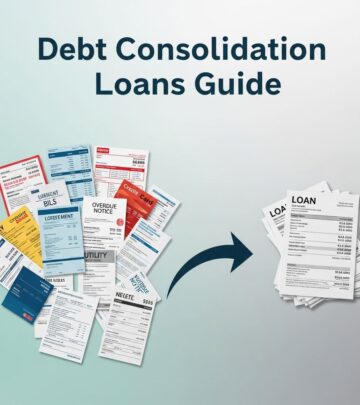
At its foundation, debt consolidation is the process of combining multiple debts from different sources into one streamlined payment arrangement. Rather than making separate payments to various creditors each month, you establish a single loan or credit arrangement that addresses all your outstanding balances simultaneously. The consolidated loan provides funds to eliminate your existing debts in full, leaving you with just one monthly obligation to manage.
This strategy works because many people carry multiple debts with varying interest rates, payment schedules, and creditor requirements. By consolidating, you transform this complicated web of obligations into a more manageable structure. The key advantage emerges when your consolidated loan carries a lower interest rate than the average of your existing debts, enabling you to save substantially on interest payments over time.
Assessing Your Current Financial Situation
Before pursuing consolidation, you need a clear understanding of your complete debt picture. Start by documenting every outstanding obligation you hold. This inventory should include:
- Current balance on each debt
- Annual percentage rate (APR) for each account
- Monthly minimum payment amounts
- Original lender or creditor name
- Remaining term or payoff timeline
Once you’ve compiled this information, calculate your average interest rate across all debts. This figure becomes crucial because consolidation only makes financial sense if you can secure a lower rate. Most consolidation loans range from 7% to 36% APR, depending on creditworthiness and market conditions.
Beyond the numbers, evaluate your spending patterns and payment history. Lenders assess your reliability by examining whether you consistently make payments on time. If you’ve struggled with missed or late payments, creditors may view consolidation applications skeptically. Additionally, examine whether your spending habits contribute to your debt accumulation. If you tend to overspend or make impulsive purchases, consolidation alone won’t resolve underlying financial behaviors.
Exploring Your Consolidation Alternatives
Different consolidation approaches suit different financial circumstances. Understanding your options allows you to select the strategy most aligned with your situation.
Personal Loan Consolidation
A personal loan represents the most straightforward consolidation method. When approved, the lender provides a lump sum that you use to pay off your existing debts entirely. You then repay this new loan through fixed monthly installments over a predetermined period, typically ranging from two to seven years.
Personal loans can be either secured (backed by collateral like a home) or unsecured (relying solely on your creditworthiness). Unsecured personal loans are more common and don’t require putting assets at risk, though they typically carry higher interest rates than secured options. The application process is straightforward and can be completed online in many cases, with approval decisions arriving within days or even hours for some lenders.
Balance Transfer Credit Cards
If your debt primarily consists of credit card balances, a balance transfer offer might provide an alternative solution. Many credit card companies offer promotional periods with zero percent or significantly reduced interest rates for transferred balances. This approach consolidates multiple credit card debts onto a single card, simplifying your payment obligations.
However, balance transfers typically include limitations. The promotional zero-percent rate lasts only during an introductory period—often 6 to 21 months—after which standard APR rates apply. Additionally, most balance transfer offers include transfer fees (typically 1-5% of the transferred amount), which you should factor into your financial calculations.
Home Equity Loans and Lines of Credit
If you own a home with accumulated equity, you might access consolidation through a home equity loan or home equity line of credit (HELOC). These secured options typically offer lower interest rates than unsecured personal loans because they’re backed by your property. However, this advantage comes with significant risk: failure to repay could result in foreclosure.
Calculating Your Potential Savings
The financial benefit of consolidation depends on several variables working in your favor. Consider this practical example: suppose you have three credit cards totaling $8,000 in debt with varying interest rates averaging 20% APR. Making only minimum payments across these cards might result in over $12,000 paid in total interest.
If you consolidate this $8,000 into a personal loan with a 12% APR and a 5-year term, your monthly payment decreases while your total interest paid drops significantly. A shorter repayment term, such as two years, could save you even more on interest, though it requires a larger monthly payment. The exact savings depend on:
- Your new loan’s interest rate
- The consolidation loan’s term length
- Any origination fees charged by the lender
- Your ability to avoid accumulating new debt
To evaluate your specific situation, use online calculators that compare your current debt structure with various consolidation scenarios.
The Application and Approval Journey
Once you’ve selected a consolidation strategy, the next phase involves formal application. Most lenders allow you to pre-qualify before committing to a full application. Pre-qualification involves providing basic information and undergoing a soft credit check—an inquiry that doesn’t impact your credit score. This preliminary step shows potential loan offers without obligation.
When you’re ready to proceed formally, your full application will request personal and financial details including your name, Social Security number, address, employment information, and desired loan amount and term. The lender will conduct a hard credit pull, which temporarily affects your credit score. Most online lenders provide decisions within days, with some offering same-day approval.
You’ll likely need to provide documentation supporting your application, such as:
- Proof of identity (driver’s license or passport)
- Address verification (utility bill or lease agreement)
- Employment confirmation (recent pay stub)
- Income documentation (tax returns)
- Existing debt statements from creditors you plan to consolidate
Managing the Payoff and Funding Process
After approval, your lender typically funds the loan within one week, though many now offer same-day or next-day funding options. You have two pathways for paying off your original debts:
Direct creditor payment: Some lenders handle debt repayment on your behalf, sending funds directly to your creditors. This convenience may even qualify you for a rate discount with certain lenders. However, direct payment can take several weeks to process, so monitor your original creditor accounts carefully to ensure no payments are missed during the transition.
Self-directed payment: Alternatively, you manage the payoff yourself, using the consolidated loan funds to pay creditors directly. Once funds arrive in your account, distribute them immediately and verify that each creditor’s account reaches a zero balance.
Sustaining Financial Health Post-Consolidation
Successfully consolidating your debt marks a milestone, but maintaining your progress requires discipline. Your consolidated loan represents a fresh financial opportunity—one easily derailed by returning to the spending habits that created your initial debt burden.
Make your consolidated loan payment a budget priority, ensuring funds are available before other discretionary expenses. Missing even one payment can trigger costly late fees and damage your credit score. Consider setting up automatic payments through your bank to eliminate the risk of accidental missed payments.
Equally important is resisting the temptation to accumulate new debt on the accounts you just paid off. Many people consolidate credit card debt only to find themselves carrying balances again within months. Treat newly paid-off credit cards as tools for building credit history rather than spending vehicles, keeping balances minimal and paying them off monthly.
When Consolidation Might Not Be Optimal
Consolidation isn’t universally beneficial. If your current debts carry very low interest rates (below 5%), consolidation might not generate meaningful savings. Similarly, if you’re near the end of your repayment timeline on existing debts, consolidation could extend your obligation and increase total interest paid despite a lower rate.
Additionally, consolidation isn’t appropriate if you’re unwilling to address underlying spending patterns. Without behavioral change, you’ll simply repeat the debt accumulation cycle on your consolidated loan.
Alternative Approaches Worth Considering
Before committing to formal consolidation, explore whether your creditors might cooperate with alternative arrangements. Contact your current creditors directly to inquire about rate reductions, lower minimum payments, fee waivers, or adjusted due dates. Some creditors willingly modify terms to prevent default, offering solutions that don’t require formal consolidation loans.
You might also create a comprehensive budget identifying whether spending adjustments could enable you to pay off existing debts without consolidation. Sometimes simple discipline in cutting discretionary expenses accelerates debt payoff faster than consolidation itself.
Building Your Consolidation Strategy
Successfully consolidating debt requires thoughtful planning aligned with your unique circumstances. Begin by establishing a holistic view of your complete financial picture, including all assets and obligations. This comprehensive perspective helps you understand how consolidation fits within your broader financial goals.
Research multiple lenders—banks, credit unions, and reputable online consolidators—comparing rates, terms, fees, and customer reviews. Don’t assume the first offer is your best option. Legitimate lenders allow multiple applications within a short window (typically 14-45 days) without additional credit score damage, enabling meaningful rate comparison.
Calculate the true cost of consolidation by including origination fees, prepayment penalties (if applicable), and the impact of your chosen term length. A lower rate means little if hidden fees eliminate your savings.
Frequently Asked Questions About Debt Consolidation
- Does consolidation damage my credit score?
- Hard credit inquiries and new account openings initially lower your score slightly. However, this impact typically diminishes within months as you establish a positive payment history on your consolidated loan. Long-term, consolidation often improves credit by reducing your credit utilization ratio (the percentage of available credit you’re using).
- Can I consolidate every type of debt?
- Most unsecured debts—credit cards, personal loans, medical bills—consolidate easily. Federal student loans have specific consolidation programs through the Department of Education. Secured debts like mortgages and auto loans operate under different rules and typically don’t consolidate with other debt types.
- What if I have poor credit?
- Consolidation becomes more challenging with low credit scores, as lenders view you as higher risk. You might face higher interest rates or require a secured loan option. Consider credit repair steps before applying, or explore credit union options that sometimes serve members with lower scores.
- How long does consolidation take?
- From application to funding typically takes 3-14 days, depending on the lender and your documentation readiness. The complete payoff timeline extends years, matching your chosen loan term.
References
- How Do Debt Consolidation Loans Work? — NerdWallet. 2025. https://www.nerdwallet.com/personal-loans/learn/how-do-debt-consolidation-loans-work
- How Debt Consolidation Loans Work — Bankrate. 2025. https://www.bankrate.com/loans/personal-loans/how-debt-consolidation-loans-work/
- How does debt consolidation work? — U.S. Bank. 2025. https://www.usbank.com/loans-credit-lines/debt-consolidation.html
- Ultimate Guide to Consolidating Your Debt — Money Management International. 2025. https://www.moneymanagement.org/budget-guides/consolidate-your-debt
- Should you consider debt consolidation? Here’s how it works — UMB Financial Services. 2025. https://blog.umb.com/personal-banking-guide-how-debt-consolidation-works/
- What do I need to know about consolidating my credit card debt? — Consumer Financial Protection Bureau. 2025. https://www.consumerfinance.gov/ask-cfpb/what-do-i-need-to-know-if-im-thinking-about-consolidating-my-credit-card-debt-en-1861/
Similar Articles








Read full bio of medha deb