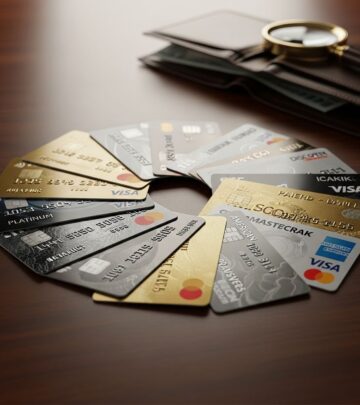
Streamline Your Wallet: Cards to Cut First
Discover smart strategies to reduce credit card clutter without harming your credit score or losing key benefits.

Having multiple credit cards can feel overwhelming, leading to confusion over payments, forgotten rewards, and unnecessary fees. Deciding which ones to close requires careful consideration of how each impacts your credit score, finances, and spending habits. This guide explores practical steps to trim your collection strategically, ensuring you retain the best perks while minimizing risks like higher utilization rates or shorter credit history.
Understanding the Hidden Costs of Credit Card Overload
A cluttered wallet often means duplicated efforts in tracking due dates, managing balances, and maximizing rewards. On average, Americans hold about four cards, but many accumulate more through sign-up bonuses or category-specific offers.1 Excess cards can lead to overlooked annual fees draining your budget or impulsive spending on underused accounts.
Beyond finances, too many cards complicate your credit profile. Closing them improperly raises your credit utilization—the ratio of debt to available credit—which comprises 30% of your FICO score.2 For instance, if you owe $1,000 across cards with $5,000 total limits (20% utilization), canceling a $2,000-limit card jumps it to 33% on $3,000 limits, potentially dinging your score.2
Yet, keeping unused cards open preserves available credit and account age, both key score factors. Closed accounts in good standing linger on reports for 10 years, aiding history length (15% of FICO).2 The challenge: balance simplification against score protection.
Key Factors Influencing Your Decision to Close Cards
Before acting, evaluate each card’s role. Payment history (35% of FICO) benefits from on-time use, so prioritize cards with perfect records.2 Newer accounts have less impact when closed, unlike oldest ones shortening average age.3
- Utilization Impact: Higher limits dilute debt ratios; low-limit or zero-balance cards are safer to cut if utilization stays under 30%.2
- Account Age: Preserve longest-held cards for history depth.3
- Credit Mix: A blend of revolving (cards) and installment debt boosts scores; don’t eliminate all cards.1
- Fees and Rates: High costs justify closure despite temporary dips.4
Use free tools from credit bureaus to monitor these metrics pre-closure.
Prime Candidates for Cancellation: Spot Them Early
Not all cards deserve equal loyalty. Target these for elimination:
| Card Type | Why Cancel | Potential Score Hit | Alternatives |
|---|---|---|---|
| High Annual Fee, Low Use | Fees outweigh perks; e.g., $95+ unused lounge access. | Low if downgraded first. | Switch to no-fee version.3 |
| Recent Sign-Ups (<1 Year) | Minimal history contribution; avoid reward clawbacks post-1 year.7 | Negligible. | None needed. |
| High-Interest, No Rewards | Tempts debt cycles; close to curb spending.6 | Moderate if balances exist. | Pay off first, then close. |
| Duplicate Rewards | Overlaps categories like 2% cash back on all. | Low; keep highest limit. | Consolidate spending. |
| Dormant (No Use >12 Months) | Risks issuer closure; hurts utilization if limits drop. | Manageable with light use. | Make small purchase quarterly.3 |
Product changes—downgrading to fee-free siblings—preserve history while cutting costs, available from issuers like American Express.3
Strategies to Close Without Credit Damage
Minimize fallout with these steps:
- Pay Balances to Zero: Eliminates utilization spikes.5
- Contact Issuer: Request downgrade or retention offers; explain consolidation.3
- Time Closures: Avoid before mortgages; space out over months.1
- Keep One Per Issuer: Maintains relationships for future limits.6
- Monitor Post-Closure: Scores rebound in 1-3 months if habits stay solid.2
Example: With $7,000 debt on $25,000 limits (28% utilization), closing a $12,000 unused card spikes to 54% on $13,000. Offset by paying down debt first.5
Long-Term Benefits of a Leaner Credit Portfolio
Simplifying yields clarity: fewer temptations, easier budgeting, and targeted rewards. Redirect saved fees—say $200/year—to high-yield savings or debt payoff. A streamlined setup (3-5 cards) covers travel, cash back, and everyday needs without overload.
Financial discipline improves: Track one app, not five. Emergency buffers remain via kept cards, but controlled spending prevents cycles. Over time, strong habits rebuild any score dips, often stronger.6
Real-World Scenarios: When to Act or Hold
Scenario 1: Fee Fighter. $550 annual fee card unused? Downgrade or cancel; impact minimal on good-standing close.4
Scenario 2: Debt Dodger. High-APR card fueling overspending? Close post-payoff for peace, accepting short-term hit.6
Scenario 3: Rewards Maximizer. Overlapping bonuses? Keep top earner, cut rest to focus spend.7
Hold If: Low-fee, high-limit, adds utilization buffer, or unique perks like extended warranties.1
Frequently Asked Questions
Does closing a credit card always lower my score?
No, effects vary. New cards or those with zero balances have little impact; high-utilization scenarios hurt more.2
How long does a closed card affect my score?
Positive history stays 10 years; full removal after 7-10 years. Scores stabilize quickly.2
Can I reopen a canceled card?
Possible but treated as new application, with hard inquiry and history reset.5
Should I close before applying for a loan?
Avoid; recent closures signal risk to lenders.1
What if the issuer closes my unused card?
Monitor statements; light use prevents this while preserving benefits.3
Building a Future-Proof Card Strategy
Audit annually: List cards by limit, age, fees, rewards. Aim for diversity—1%+ everyday, 3-5% travel, 0% intro APR. Automate small charges on keepers to avoid dormancy. As goals shift (e.g., debt payoff to travel), adjust without rash cuts.
Ultimately, fewer cards foster intentional finance. Prioritize utility over quantity for lasting gains.
References
- Friend or Foe: Is It Smart to Cancel a Credit Card? — Mountain America Credit Union. 2023. https://www.macu.com/must-reads/credit/friend-or-foe-is-it-smart-to-cancel-a-credit-card
- Should You Cancel Your Unused Credit Cards or Keep Them? — Experian. 2024-03-15. https://www.experian.com/blogs/ask-experian/is-it-better-to-cancel-unused-credit-cards-or-keep-them/
- Should I Cancel Unused Credit Cards? — American Express. 2024. https://www.americanexpress.com/en-us/credit-cards/credit-intel/should-i-cancel-unused-credit-cards/
- Does Closing a Credit Card Hurt Your Credit? — Citi. 2024. https://www.citi.com/credit-cards/understanding-credit-cards/does-closing-a-credit-card-hurt-your-credit
- Is Closing a Credit Card Bad? — Bankrate. 2025-01-10. https://www.bankrate.com/credit-cards/advice/is-closing-a-credit-card-good-or-bad/
Similar Articles








Read full bio of medha deb