Stratified Random Sampling: Definition, Method & Examples
Master stratified random sampling: Learn how to divide populations into strata for more accurate statistical research.
What Is Stratified Random Sampling?
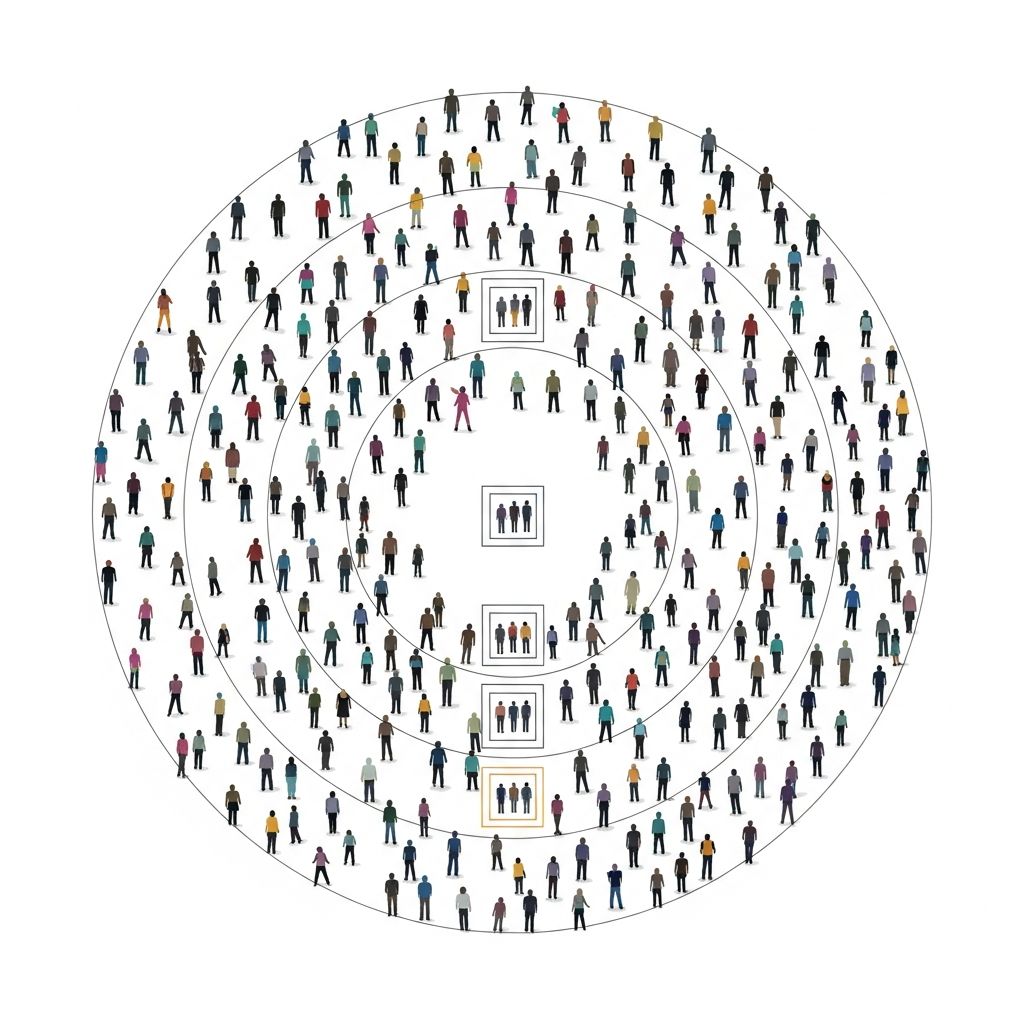
Stratified random sampling is a statistical technique where researchers divide a population into smaller subgroups called strata before selecting samples. Each stratum shares specific characteristics that distinguish it from other groups, such as age, gender, income level, education, race, or religion. This method ensures that the final sample accurately represents the diversity of the overall population while maintaining statistical rigor.
The process of dividing a population into these distinct groups is called stratification. A fundamental requirement of stratified sampling is that each stratum must be mutually exclusive, meaning every member of the population can belong to only one group. Additionally, all strata combined must account for the entire population with no gaps or overlaps.
Stratified random sampling belongs to the broader category of probability sampling methods, where every member of the population has a known, non-zero chance of being selected. This distinguishes it from non-probability sampling techniques and enhances the reliability of research findings.
How Stratified Random Sampling Works
Understanding the mechanics of stratified random sampling requires familiarity with its systematic approach to sample selection. The process involves several well-defined steps that researchers must follow carefully to ensure validity.
Step-by-Step Process
The implementation of stratified random sampling follows a structured methodology:
1. Define the Population and Stratification Variables — Researchers begin by clearly identifying the population they wish to study and selecting the characteristics that will serve as stratification variables. These variables should be relevant to the research question and correlate with the variables being measured.
2. Divide the Population into Strata — Once stratification variables are identified, the population is divided into distinct, non-overlapping groups. Each individual in the population must fit into exactly one stratum, and collectively, the strata must represent the entire population. For example, when studying consumer preferences by income level, researchers might create strata for low-income, middle-income, and high-income households.
3. Determine Sample Sizes for Each Stratum — Researchers must decide how many individuals to select from each stratum. This is where the concept of proportionate versus disproportionate sampling becomes relevant. In proportionate sampling, the number of individuals selected from each stratum mirrors the proportion of that stratum in the total population. If a stratum represents 25% of the population, then 25% of the final sample should come from that stratum.
4. Randomly Select from Each Stratum — Using random selection methods, researchers choose individuals from each stratum according to the predetermined sample sizes. This random selection within each stratum preserves the probability-based nature of the sampling method.
5. Combine into Final Sample — The randomly selected individuals from all strata are combined to create the final research sample, which maintains the population’s diversity while ensuring manageable sample sizes for analysis.
Proportionate vs. Disproportionate Sampling
An important distinction in stratified random sampling involves how researchers allocate sample sizes across strata. These two approaches serve different research objectives and constraints.
Proportionate Sampling maintains the exact demographic proportions of the population in the sample. If the larger population contains 40% history majors and 60% English majors, the final sample should reflect these same percentages. This approach is commonly used when researchers want the sample to be highly representative of the population’s actual composition.
Disproportionate Sampling deliberately oversamples certain strata, particularly underrepresented groups. This technique is employed when researchers want sufficient data from minority populations to conduct meaningful subgroup analyses. For instance, if a population is 95% one demographic and 5% another, disproportionate sampling might select equal numbers from both groups to enable detailed comparisons.
Advantages of Stratified Random Sampling
Stratified random sampling offers numerous benefits that make it an attractive choice for researchers across various disciplines.
Enhanced Accuracy and Statistical Power
When members of subpopulations are relatively homogeneous within their strata compared to the overall population’s heterogeneity, stratified sampling produces more precise estimates than simple random sampling. This increased precision translates to greater statistical power, allowing researchers to detect smaller effects and make more confident inferences about the population.
Efficiency and Manageability
By organizing large populations into smaller, manageable groups with similar characteristics, researchers significantly reduce data collection time and complexity. This organizational structure makes large-scale research projects more feasible and less overwhelming for research teams.
Cost-Effectiveness
Stratified sampling reduces research expenses by dividing large populations into smaller, homogeneous groups. Rather than attempting to survey every individual in a massive population, researchers can efficiently sample from organized strata, lowering costs associated with data collection, analysis, and administration.
Guaranteed Representation
By ensuring that each stratum is represented in the sample, stratified random sampling guarantees that minority or niche populations are included in the research. This prevents the complete exclusion of important subgroups that might occur with simple random sampling on large populations.
Limitations of Stratified Random Sampling
Despite its advantages, stratified random sampling presents several challenges that researchers must consider.
Population Complexity
If a population contains too many internal differences or if researchers lack sufficient information about the population’s structure, effective stratification becomes difficult or impossible. Populations with high heterogeneity across multiple dimensions may resist clear categorization into meaningful strata.
Planning and Administrative Burden
Successful stratified sampling requires substantial upfront planning and detailed population information. Researchers must ensure that every population member fits into exactly one stratum and that all strata collectively encompass the entire population. This level of precision and organization demands more effort than simpler random sampling approaches.
Sampling Error Risk
If the sample does not accurately represent the population as a whole, sampling errors can occur. When this happens, researchers must potentially restart the entire sampling process, wasting time and resources. Improper stratum definition or flawed random selection procedures can compromise the validity of results.
Stratum Definition Challenges
Determining optimal strata requires that survey variables have relatively small variation within each stratum compared to variation across the entire population. If stratification variables are poorly chosen or incompletely understood, the resulting strata may not deliver the expected analytical benefits.
Stratified Random Sampling vs. Other Sampling Methods
Understanding how stratified random sampling compares to alternative approaches helps researchers select the most appropriate method for their specific research context.
Stratified Sampling vs. Cluster Sampling
Both stratified and cluster sampling involve dividing populations into smaller groups and then selecting samples. However, they differ fundamentally in their grouping logic and selection process.
In stratified sampling, researchers deliberately create groups based on relevant characteristics like age, religion, ethnicity, or income level. Researchers then randomly choose members from these deliberately constructed strata to form the sample. Each stratum typically contains heterogeneous members, but members within the same stratum share specific defining characteristics.
Cluster sampling, conversely, uses naturally existing divisions within populations, such as city blocks, school districts, or geographic regions. Rather than selecting individuals from all clusters, researchers randomly select entire clusters and then study all or most members within those selected clusters. This approach is less resource-intensive when populations are geographically dispersed but may sacrifice representativeness if clusters themselves are heterogeneous.
Stratified Sampling vs. Quota Sampling
Stratified sampling and quota sampling appear similar on the surface, as both involve dividing populations into mutually exclusive subgroups and selecting predetermined numbers of individuals from each subgroup. However, a crucial distinction separates these methods.
Stratified random sampling is a probability-based method where individuals within each stratum are randomly selected. This randomization ensures that every member of each stratum has an equal chance of being included, reducing selection bias.
Quota sampling, by contrast, is a non-probability sampling method. Researchers select specific individuals to meet predetermined quotas rather than randomly choosing them. A researcher might select the first 50 people meeting the age criteria for a quota, introducing potential bias based on the selection procedure. While quota sampling is faster and more convenient, it lacks the statistical rigor of stratified random sampling.
Common Applications of Stratified Random Sampling
Stratified random sampling finds application across numerous research contexts and industries.
Election Polling and Political Research — Pollsters frequently use stratified sampling to predict election outcomes, dividing voters by demographics like age, education, geography, and political affiliation before selecting representative samples.
Public Health and Demographics — Health researchers employ stratified sampling when studying population health outcomes, life expectancy trends, and disease prevalence across demographic groups.
Economic and Income Research — Economists and sociologists use stratified sampling to investigate income distribution, employment patterns, and economic well-being across different job categories and socioeconomic levels.
Time and Budget-Constrained Studies — Stratified sampling is ideal when research timelines are tight or budgets are limited, as it is typically faster and more cost-effective than many alternative sampling methods.
Heterogeneous Populations — When studying populations with significant internal variation or diversity, stratification helps organize the population into manageable, homogeneous subgroups for more focused analysis.
Limited Population Access — When researchers cannot access an entire population, stratified sampling allows them to work with available subpopulations while maintaining representativeness.
Key Considerations for Implementation
Successfully implementing stratified random sampling requires attention to several important factors. Researchers should generally aim to use between 5 and 10 strata, though this number may vary depending on population size and research objectives. The population size and available resources ultimately limit the maximum number of practical strata. Additionally, ensuring that each stratum contains a reasonable number of observations prevents statistical issues that arise when strata contain very few individuals.
The homogeneity assumption requires that individuals within each stratum be sufficiently similar regarding the variables of interest. When this assumption is violated, the efficiency advantages of stratified sampling diminish. Survey practitioners should thoughtfully define strata such that measurement variables show small variation within strata but substantial variation across strata.
Frequently Asked Questions
Q: When should I use stratified random sampling instead of simple random sampling?
A: Stratified random sampling is preferable when your population contains distinct subgroups that differ meaningfully on variables relevant to your research. It is especially valuable when ensuring representation of minority populations is important, when sample homogeneity within groups is high, or when time and budget constraints require efficiency.
Q: How many strata should I create?
A: Researchers typically create between 5 and 10 strata, though this depends on population size, available resources, and research objectives. Too many strata can create groups with too few members, while too few strata may fail to capture important population diversity.
Q: Can I use stratified sampling if I don’t know the exact population size?
A: Yes, stratified sampling can be applied when exact population size is unknown, as long as you can identify the stratification variables and have access to representative members of each stratum. However, knowing approximate population proportions strengthens the ability to implement proportionate sampling.
Q: What is the difference between stratification and quota sampling?
A: Stratification uses random selection within strata (probability-based), while quota sampling uses non-random selection to meet predetermined quotas (non-probability-based). This makes stratified sampling statistically more rigorous.
Q: How do I decide between proportionate and disproportionate sampling?
A: Use proportionate sampling when your primary goal is overall population representativeness. Use disproportionate sampling when you need detailed analysis of underrepresented groups or when certain strata have different variability on your key variables.
References
- Stratified Random Sampling: Definition, Method & Examples — Simply Psychology. 2024. https://www.simplypsychology.org/stratified-random-sampling.html
- Stratified Random Sampling — SAGE Encyclopedia of Educational Research, Measurement, and Evaluation. SAGE Publications. https://methods.sagepub.com/ency/edvol/sage-encyclopedia-of-educational-research-measurement-evaluation/chpt/stratified-random-sampling
- How Stratified Random Sampling Works — Investopedia. Nickolas, S. & Drury, A. 2021-05-19. https://www.investopedia.com/ask/answers/032615/what-are-some-examples-stratified-random-sampling.asp
- Study on a Stratified Sampling Investigation Method for Resident Travel and the Sampling Rate — Shi, F. Discrete Dynamics in Nature and Society. 2015. DOI: 10.1155/2015/
Similar Articles








Read full bio of medha deb