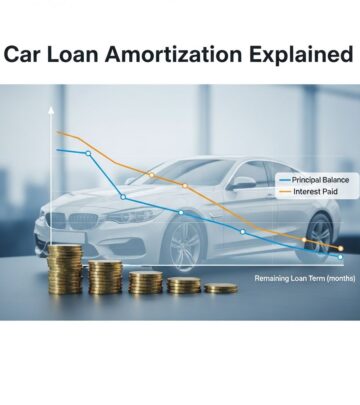
Strategies to Minimize Car Loan Interest Costs
Discover proven methods to slash interest expenses on your auto financing and accelerate debt payoff for greater savings.
Auto loans represent a major financial commitment for many buyers, with interest charges often adding thousands to the total cost over time. By adopting targeted approaches, borrowers can substantially decrease these expenses, preserve cash flow, and build equity quicker. This guide outlines practical steps grounded in financial best practices to help you pay less interest without sacrificing vehicle quality or affordability.
Understanding How Car Loan Interest Works
Car loans typically use simple interest, calculated daily on the outstanding principal balance. The longer the loan term and the higher the principal, the more interest accrues. Factors like credit score, loan amount, and term length directly influence your annual percentage rate (APR), which can range from under 3% for top-tier credit to over 10% for average profiles. Recognizing this structure empowers you to target high-impact areas for savings.
Key elements driving interest costs include:
- Principal balance: The financed amount after down payment and trade-ins.
- Interest rate: Determined by creditworthiness and market conditions.
- Loan term: Shorter durations limit accumulation periods.
- Payment frequency: More frequent payments reduce principal faster.
Shop Around for Competitive Rates
Interest rates vary significantly across lenders, including banks, credit unions, online platforms, and dealerships. Failing to compare can cost hundreds annually. Start by obtaining pre-approvals from multiple sources before visiting a dealer—this establishes your baseline and strengthens negotiation power.
Credit unions often provide lower rates due to their member-focused model, while online lenders emphasize speed and transparency. Dealer promotions might match or beat these, but always verify the fine print for fees or rate hikes post-promotion.
| Lender Type | Average APR Range (2025) | Pros | Cons |
|---|---|---|---|
| Banks | 4.5%-7.5% | Established reliability | Slower processing |
| Credit Unions | 3.8%-6.2% | Lower rates for members | Membership required |
| Online Lenders | 4.2%-8.0% | Quick approvals | Less personal service |
| Dealerships | 3.9%-9.5% | Convenience, incentives | Potential markups |
Pro tip: Use rate comparison tools from reputable aggregators to benchmark offers side-by-side, focusing on APR rather than advertised rates which may exclude fees.
Boost Your Down Payment Size
A larger upfront payment shrinks the principal, directly cutting interest calculations from day one. Lenders view lower loan-to-value ratios as less risky, often unlocking better rates. Aim for at least 20% of the vehicle’s price to avoid private mortgage insurance equivalents and signal financial stability.
For a $35,000 car, compare these scenarios at 5% APR:
| Down Payment | Loan Amount | 60-Month Term Monthly Payment | Total Interest |
|---|---|---|---|
| $0 | $35,000 | $660 | $5,600 |
| $7,000 (20%) | $28,000 | $528 | $4,480 |
| $10,500 (30%) | $24,500 | $462 | $3,920 |
As shown, ramping up from zero to 30% down slashes interest by nearly 30%, with manageable monthly adjustments.
Opt for Shorter Repayment Periods
Extending terms eases monthly burdens but inflates total interest due to prolonged accrual. Lenders reserve prime rates for 36-48 month loans, perceiving them as lower default risks. If your budget allows $50-$100 more monthly, shorten to 48 months or less for compounded savings.
Example comparison for $25,000 loan at 4.5% APR:
| Term | Monthly Payment | Total Interest | Savings vs. 72 Months |
|---|---|---|---|
| 72 months | $397 | $5,584 | – |
| 60 months | $469 | $3,140 | $2,444 |
| 48 months | $579 | $2,792 | $2,792 |
Shorter terms not only minimize interest but build ownership faster, ideal for resale or upgrades.
Implement Extra Principal Payments
Directing surplus funds to principal accelerates payoff and curtails interest. Confirm with your servicer that extras apply to principal without penalties—most auto loans permit this freely. Strategies include:
- Round up payments: Turn $450 into $500 monthly.
- Biweekly schedule: Pay half monthly every two weeks, yielding 13 full payments yearly.
- Lump sums: Apply bonuses or tax refunds annually.
Biweekly on a $20,000 loan at 5% APR over 60 months shaves ~6 months and $600 in interest, as payments hit principal sooner amid daily compounding.
Maximize Trade-In Value and Skip Add-Ons
Trading an old vehicle offsets principal needs. Get independent appraisals to negotiate fairly—dealers profit on trade-ins, incentivizing better financing terms. Decline financed extras like gap insurance or warranties; source them separately or self-fund via savings accounts earning interest.
Common add-ons inflating loans:
- Extended warranties: $1,500-$3,000
- Gap coverage: $500-$800
- Paint protection: $300-$600
Negotiate cash prices for these post-purchase to evade interest drag.
Capitalize on Seasonal Deals and Incentives
Manufacturers dangle 0%-2% APR promotions during model-year ends, holidays, or inventory clearances. These require strong credit but can eliminate interest entirely short-term. Pair with rebates for amplified savings. Monitor OEM sites and dealer calendars; patience often yields 1-2% rate drops.
Refinance When Conditions Align
If rates fall, credit improves, or equity builds, refinance to lower APR or shorten terms. Lenders assess current vehicle value, mileage, and your profile. Avoid extending terms unnecessarily to prevent interest creep. Potential savings: Dropping from 7% to 4.5% on $15,000 remaining balance over 36 months saves ~$900.
Steps for refinancing:
- Check credit and equity (loan < 125% vehicle value).
- Compare 3-5 lender quotes.
- Calculate break-even vs. fees (typically $200-$500).
- Close within 30 days to minimize gaps.
Boost Credit Before Financing
Superior scores (720+) command 1-3% lower rates. Pay down revolving debt, correct errors, and limit inquiries 6 months pre-application. Even 50-point gains translate to hundreds saved yearly.
Frequently Asked Questions
Can I pay off my car loan early without fees?
Most states ban prepayment penalties on auto loans; verify your contract.
Is 0% financing realistic?
Yes, for qualified buyers during promotions, but terms are shorter (24-36 months).
How much down payment is ideal?
20% minimum to cut interest and secure best rates.
Does refinancing hurt credit?
Temporary dip from inquiries, but on-time payments rebuild quickly.
Are biweekly payments always better?
Yes, if no fees, as they front-load principal reduction.
Final Thoughts on Long-Term Savings
Combining these tactics—rate shopping, down payments, short terms, extras, and refinancing—can halve interest costs. Track progress with amortization calculators and adjust as income grows. Financial discipline today unlocks tomorrow’s flexibility.
References
- 7 Ways to Pay Less Interest on a Car Loan — Experian. 2023-10-15. https://www.experian.com/blogs/ask-experian/how-to-pay-less-interest-on-car-loan/
- How to Avoid Paying Car Loan Interest — Preston Ford of Keller. 2024-05-20. https://www.prestonfordofkeller.com/blogs/3380/how-to-avoid-paying-car-loan-interest/
- 6 Ways to Lower Your Car Payment — Bankrate. 2025-01-10. https://www.bankrate.com/loans/auto-loans/lower-your-car-payment/
- Saving on Interest: Tips for Paying Off Your Auto Loan Early — NJFCU. 2024-08-05. https://njfcu.org/saving-on-interest-tips-for-paying-off-your-auto-loan-early/
- Treasury, IRS Provide Guidance on the New Deduction for Car Loan Interest — Internal Revenue Service (.gov). 2025-11-15. https://www.irs.gov/newsroom/treasury-irs-provide-guidance-on-the-new-deduction-for-car-loan-interest-under-the-one-big-beautiful-bill
Similar Articles








Read full bio of medha deb