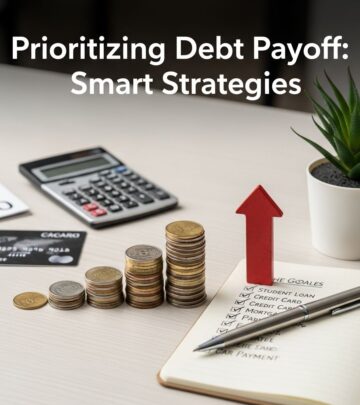
Strategies to Eliminate Debt Effectively
Discover proven methods from financial experts to pay off debt faster, reduce interest costs, and achieve lasting financial freedom in 2025 and beyond.

Debt can feel overwhelming, but with a structured approach, anyone can reduce balances, lower interest payments, and move toward financial independence. This comprehensive guide draws on proven techniques recommended by financial institutions and government agencies to help you create a personalized debt payoff plan.
Assess Your Financial Situation First
Before diving into repayment strategies, gain a complete understanding of your debts and cash flow. List all outstanding balances, including credit cards, personal loans, auto loans, and mortgages, noting interest rates, minimum payments, and due dates. Compare your total monthly income against expenses to identify surplus funds for accelerated payments.
This initial evaluation reveals spending patterns and areas for immediate cuts, such as dining out or subscriptions. Tools like spreadsheets or free budgeting apps simplify tracking, ensuring you cover essentials while directing extras toward debt.
Build a Solid Budget as Your Foundation
A realistic budget is the cornerstone of debt reduction. Categorize expenses into fixed (rent, utilities) and variable (groceries, entertainment), then set limits based on actual habits. Track spending weekly to stay accountable and adjust as needed.
- Calculate net income after taxes.
- Subtract essential expenses to find disposable income.
- Allocate at least 10-20% of surplus to debt beyond minimums.
- Review and tweak monthly for life changes.
Budgeting not only frees up cash but prevents new debt accumulation. For instance, reducing discretionary spending by $200 monthly could shave years off repayment timelines.
Choose Between Debt Snowball and Avalanche Methods
Two popular repayment strategies—the debt snowball and debt avalanche—offer different paths to zero balances, depending on your motivation style.
Debt Snowball: Build Momentum with Quick Wins
The snowball method focuses on smallest balances first, ignoring interest rates initially. Pay minimums on all debts, then apply extra funds to the tiniest one. Once cleared, roll that payment into the next smallest, creating accelerating progress.
This psychological boost from rapid victories keeps motivation high, ideal for those needing tangible results. Example: With $500 extra monthly, pay off a $1,000 card in two months, then tackle larger ones with growing payments.
Debt Avalanche: Minimize Interest Costs
Conversely, the avalanche targets highest-interest debts first. List debts by APR descending, pay minimums elsewhere, and concentrate extras on the priciest. After payoff, proceed to the next.
Mathematically superior for savings, it reduces total interest, especially with cards at 20%+ APR. For high balances, this prevents compounding costs from ballooning.
| Method | Priority | Best For | Potential Drawback |
|---|---|---|---|
| Snowball | Smallest balance | Motivation via quick wins | Higher total interest |
| Avalanche | Highest interest | Cost savings | Slower initial progress |
Explore Debt Consolidation Options
Combining multiple debts into one lowers rates and simplifies payments. Common forms include personal loans, balance transfers, and home equity options.
- Personal Loans: Unsecured fixed-rate loans from banks or online lenders, often 6-36 months terms.
- Balance Transfer Cards: 0% intro APR for 12-21 months, but watch transfer fees (3-5%).
- Home Equity Loans: Lower rates using home value, but foreclosure risk if defaulted.
Qualify based on credit score; good standing unlocks best rates. Avoid if it encourages overspending—commit to no new charges.
Boost Income and Cut Expenses Aggressively
Accelerate payoff by increasing inflows and slashing outflows. Side gigs like freelancing or ridesharing add $500+ monthly. Negotiate bills, switch providers, or sell unused items for one-time boosts.
Pay more than minimums on cards—doubling cuts payoff time dramatically due to interest formulas. Automate transfers to avoid temptation.
Establish an Emergency Fund Parallel
Avoid relapse by saving 3-6 months’ expenses in a high-yield account. Start small—$1,000 goal—then build while paying debt. This buffer prevents high-interest borrowing for surprises.
Seek Professional Help When Needed
For overwhelming debt, nonprofit credit counseling via NFCC agencies offers debt management plans (DMPs). They negotiate lower rates with creditors, consolidating into one payment without loans.
Steer clear of for-profit debt settlement firms promising quick fixes—they harm credit and incur taxes on forgiven amounts.
Set Achievable Milestones and Track Progress
Define SMART goals: Specific, Measurable, Achievable, Relevant, Time-bound. E.g., “Cut $5,000 credit card debt in 10 months.” Celebrate milestones to sustain effort.
Monthly reviews adjust for income shifts or windfalls, like tax refunds applied directly to principal.
FAQs
Which method is better: snowball or avalanche?
It depends on personality. Snowball for motivation, avalanche for savings.
Does debt consolidation hurt credit?
Temporarily, from inquiries, but on-time payments improve scores long-term.
How long to become debt-free?
Varies; $10,000 at 20% APR with $500/month extra takes ~22 months via avalanche.
Can I pay off debt while saving?
Yes, prioritize small emergency fund first, then parallel both.
What if I miss payments?
Contact creditors early for hardship plans; avoid further damage.
Long-Term Habits for Debt-Free Living
Post-payoff, maintain victory with 50/30/20 budgeting (needs/wants/savings), emergency funds, and retirement contributions. Use credit sparingly, paying in full monthly.
Financial freedom follows discipline—many report reduced stress and increased wealth-building post-debt.
References
- 7 Common Debt Reduction Strategies: What to Know — Western & Southern Financial Group. 2024. https://www.westernsouthern.com/personal-finance/debt-reduction-strategies
- Debt Management Strategies for Financial Freedom in 2025 — Amerant Bank. 2024. https://www.amerantbank.com/ofinterest/debt-management-strategies-for-financial-freedom-2025/
- Pay Off Debt With These 4 Proven Strategies — Glen Ellyn Bank & Trust. 2023-05-01. https://www.glenellynbank.com/articles/2023/05/pay-off-debt-with-these-4-proven-strategies.html
- Three Steps to Managing and Getting Out of Debt — California Department of Financial Protection and Innovation (DFPI). 2024. https://dfpi.ca.gov/news/insights/three-steps-to-managing-and-getting-out-of-debt/
- How to reduce your debt — Consumer Financial Protection Bureau (CFPB). 2024. https://www.consumerfinance.gov/about-us/blog/how-reduce-your-debt/
- Strategies to Help You Pay Off Debt — Equifax. 2024. https://www.equifax.com/personal/education/debt-management/articles/-/learn/paying-off-debt-strategies/
- How To Get Out of Debt — Federal Trade Commission (FTC). 2024. https://consumer.ftc.gov/articles/how-get-out-debt
Similar Articles








Read full bio of Sneha Tete