Strategies to Contest an Eviction Notice
Discover proven steps and legal defenses to challenge eviction effectively and protect your housing stability amid rising rental disputes.
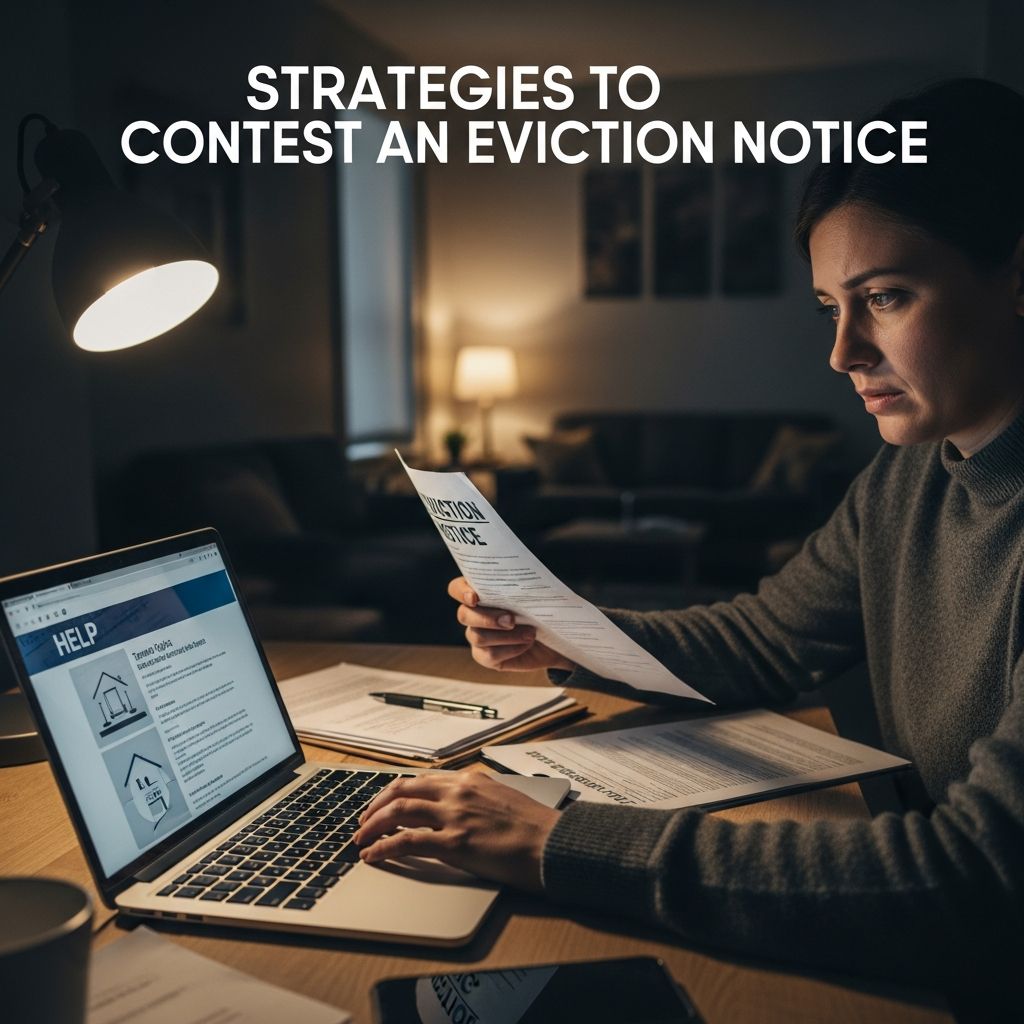
Receiving an eviction notice can feel overwhelming, but tenants have multiple avenues to respond and potentially halt the process. Landlords must adhere to strict legal protocols before removing a tenant, providing opportunities to negotiate, seek assistance, or mount a defense in court. This guide outlines practical steps, common defenses, and resources to help you protect your tenancy rights.
Understanding Your Eviction Notice
The first step in any eviction challenge is carefully reviewing the notice you receive. Eviction processes vary by state, but generally, landlords must provide written notice specifying the reason—such as nonpayment of rent or lease violations—before filing a lawsuit. In Missouri, for instance, nonpayment requires a demand for rent, while lease breaches demand at least 10 days’ notice.
Examine the notice for accuracy: Does it state the correct amount owed? Was it delivered properly? Errors here can invalidate the action. Keep records of all communications, including delivery dates and methods, as proof of improper service can delay proceedings.
- Verify the reason cited matches your situation.
- Check notice period compliance with state law.
- Note any demands for payment or cure of violations.
Immediate Actions to Take Upon Notice
Act swiftly to avoid escalation. Contact your landlord promptly to discuss the issue—many disputes resolve through negotiation without court involvement. Offer a payment plan for arrears or propose remedies for violations. Document all discussions in writing via email or certified mail.
Simultaneously, explore financial aid. Programs like emergency rental assistance can cover back rent, utilities, or moving costs, even post-pandemic. Local housing counselors guide you to available funds and explain state-specific protections that may pause evictions.
| Action | Timeline | Potential Outcome |
|---|---|---|
| Contact landlord | Within 24-48 hours | Negotiated resolution |
| Apply for aid | Immediately | Rent coverage, delay |
| Consult legal aid | ASAP | Free representation |
Common Legal Defenses Against Eviction
Tenants aren’t powerless in court; several defenses can lead to dismissal or delays. Procedural errors top the list: Landlords must follow exact steps, or the case fails. For nonpayment, prove payment made post-demand but pre-filing with receipts.
Another strong defense: habitability issues. If the unit has uninhabitable conditions—like no heat or major repairs—you may withhold rent lawfully or use it as offset. Discrimination under the Fair Housing Act or state laws provides absolute protection; evictions based on protected traits (race, disability, family status) are illegal.
Self-help evictions—lock changes or utility shutoffs—are prohibited; sue for damages if attempted. Servicemembers gain 90-day pauses via the Servicemembers Civil Relief Act.
Navigating the Court Process
If negotiation fails, prepare for court. Landlords file affidavits or complaints, summoning you to a hearing. File a written answer detailing defenses, aid applications, and landlord shortcomings. Courts may delay for pending assistance.
Missouri’s process mandates court orders only—no sheriff action without judgment. Use tools like the Eviction Defense Document Engine (EDDE) for free court forms. Attend hearings; absence risks default eviction.
- Gather evidence: receipts, photos, correspondence.
- Request mediation if offered.
- Seek continuances for aid processing.
Accessing Free Legal and Housing Support
Low-income tenants qualify for aid from organizations like Missouri Legal Services or Legal Services of Southern Missouri. Call hotlines like EHOC’s at 314-534-5800 for eviction defense. HUD’s Eviction Protection Grants fund expanded legal help.
Mid-Missouri Legal Services combats illegal self-help tactics. Missouri Tenant Help streamlines defenses. Attorney General resources outline tenant duties and rights.
Negotiation and Mediation Tactics
Court isn’t inevitable; mediation resolves many cases. Community services offer free sessions. Propose cash-for-keys: pay a lump sum to vacate voluntarily, avoiding eviction records. For violations, commit to compliance in writing.
Highlight mutual benefits: quick resolution saves landlord time and fees. If aid covers rent, share approval letters to rebuild trust.
Preparing Evidence for Your Defense
Strong cases rely on documentation. Organize chronologically:
- Rent payment proofs (bank statements, receipts).
- Repair requests and landlord responses.
- Notice copies with service proof.
- Witness statements or photos of conditions.
Use apps or folders for digital backups. At hearings, present clearly; judges favor organized tenants.
State-Specific Protections in Missouri
Missouri law requires court-ordered evictions exclusively. Post-judgment, tenants get 10 days before sheriff enforcement. No additional occupants without permission; garbage disposal and care duties apply. Violations trigger complaints with summons.
What Happens After a Court Ruling
If you lose, appeal promptly or seek stays. Comply to avoid sheriff removal, damaging records. Winning clears your name; use victories to negotiate future tenancies.
Preventing Future Evictions
Build buffers: save for emergencies, communicate issues early, know rights via resources like MOTenantHelp.org. Budget tools track rent; credit repair aids qualification for better housing.
Frequently Asked Questions (FAQs)
Can I fight an eviction without a lawyer?
Yes, using self-help tools like EDDE for forms. Legal aid enhances chances.
How long does an eviction take?
Notice to hearing: days to weeks; post-judgment: 10 days in Missouri.
Is paying rent after notice enough?
If before filing, often yes—with receipt.
What if my landlord locks me out?
Illegal; call police, sue for damages.
Where to find rental assistance?
Local programs via counselors; some cover moves.
Long-Term Housing Stability Tips
Beyond immediate fights, foster stability: join tenant unions, audit leases pre-signing, maintain records. Programs like those from Regional Response Team offer ongoing prevention.
(Word count: 1678)
References
- Tenant Defenses to Evictions in Missouri — Nolo. Accessed 2026. https://www.nolo.com/legal-encyclopedia/tenant-defenses-evictions-missouri.html
- What to do if you’re facing eviction — Consumer Financial Protection Bureau. Accessed 2026. https://www.consumerfinance.gov/housing/housing-insecurity/help-for-renters/what-to-do-if-youre-facing-eviction/
- Eviction Prevention — Regional Response Team. Accessed 2026. https://regionalresponseteam.org/community-campaigns/eviction-prevention/
- Missouri Tenant Help: Home — MOTenantHelp.org. Accessed 2026. https://motenanthelp.org
- Housing — Legal Services of Southern Missouri. Accessed 2026. https://www.lsosm.org/lssm-services/housing/
- Missouri Legal Services — LSmo.org. Accessed 2026. https://www.lsmo.org
- Eviction Protection Grant Program — HUD User. Accessed 2026. https://www.huduser.gov/portal/eviction-protection-grant.html
Similar Articles








Read full bio of medha deb