Strategies for Erasing Late Payments from Credit Reports
Discover proven methods to challenge and potentially eliminate late payment notations from your credit history to boost your financial profile effectively.
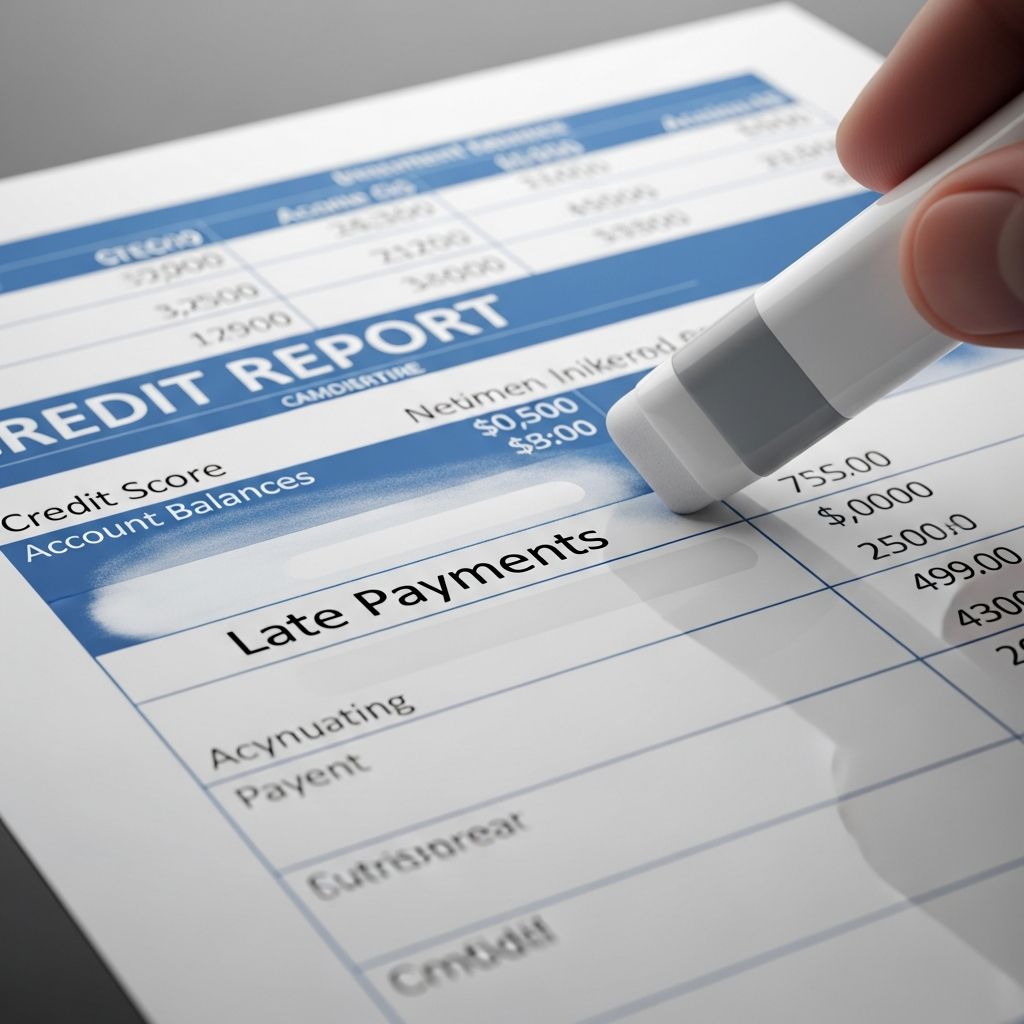
Late payments can significantly harm your credit scores and limit access to favorable loan terms, but targeted actions can lead to their removal if inaccuracies exist or through negotiated goodwill. This guide outlines practical steps, timelines, and preventive measures grounded in established credit reporting practices.
Understanding the Impact of Late Payments on Your Financial Profile
Derogatory marks like late payments signal risk to lenders, often dropping credit scores by substantial margins depending on your overall history. These notations typically arise when payments exceed 30 days past due, as creditors report to major bureaus only after this threshold. While one isolated incident might cause a temporary dip, multiple or recent lates amplify the damage, influencing everything from mortgage approvals to utility deposits.
The weight of these marks diminishes over time; for instance, a late payment from two years ago affects scores less than one from six months prior. Building positive payment history post-late can offset effects, but removal accelerates recovery.
Key Timelines for Late Payment Reporting
Federal regulations under the Fair Credit Reporting Act (FCRA) dictate that accurate late payments remain on reports for up to seven years from the original delinquency date. If you bring the account current before closure, the account itself may persist up to 10 years, but the late notation drops off after seven.
| Scenario | Reporting Duration | Notes |
|---|---|---|
| Payment late by 30+ days | Up to 7 years | From first delinquency date |
| Account closed in good standing | Up to 10 years for account | Late mark still 7 years |
| Paid within 30 days | Not reported | Avoids credit impact |
| Fraudulent account late | Removable via dispute | Immediate investigation |
These periods ensure transparency while protecting consumer rights to challenge errors.
Step-by-Step Guide to Reviewing Your Credit Reports
Begin by obtaining free weekly reports from AnnualCreditReport.com, covering Equifax, Experian, and TransUnion. Scrutinize each for late notations, noting account details, dates, and balances. Discrepancies across bureaus are common due to varying reporting cycles, but not always errors.
- Download reports from all three bureaus to compare entries.
- Cross-reference with personal records like bank statements and payment confirmations.
- Flag any mismatch in payment dates or statuses as potential disputes.
- Document everything, including screenshots and transaction IDs.
This foundational review uncovers inaccuracies ripe for challenge, often revealing clerical errors by creditors.
Filing Effective Disputes for Inaccurate Late Payments
If evidence shows the late was reported wrongly—such as on-time payment not credited—initiate disputes promptly. Under FCRA, bureaus must investigate within 30 days.
Submit online, by mail, or phone to the bureau and creditor. Include your name, account details, error explanation, and supporting docs like cleared checks or emails. Bureaus forward to creditors for verification; unverified items must be deleted.
- Prepare documentation: Bank records proving timely payment.
- Submit to bureau: Use certified mail for tracking.
- Notify creditor directly: Many resolve faster internally.
- Monitor response: Expect updates within 30-45 days; recheck reports.
Success rates rise with clear evidence; inaccurate lates comprise a notable portion of removable items.
Negotiating Goodwill Adjustments for Legitimate Lates
Accurate late payments cannot be forcibly removed, but creditors may grant goodwill deletions as a courtesy, especially for loyal customers with otherwise stellar histories. This involves polite requests highlighting one-off circumstances like job loss or medical emergencies.
Craft a concise goodwill letter: Introduce yourself, reference the account, explain the situation briefly, affirm future loyalty, and request removal. Email or mail to the creditor’s executive office for higher approval odds. Results vary; persistence with follow-ups helps.
Elements of a Strong Goodwill Letter
- Polite, non-confrontational tone.
- Specific late incident details.
- Proof of on-time payments before/after.
- Commitment to continued business.
While not guaranteed, this humanizes your case and succeeds in many instances for first-time lates.
Advanced Tactics: Pay-for-Delete and Fraud Disputes
For collections tied to old lates, some agencies offer pay-for-delete, where payment prompts removal. However, major bureaus frown on this for accurate info, preferring disputes. Fraud-related lates, like identity theft, warrant immediate disputes with police reports and FTC affidavits for swift excision.
Avoid paying collectors without written deletion agreements, as verbal promises hold no weight.
Rebuilding Credit After Late Payment Challenges
Post-removal or while waiting, focus on positives: Pay all bills early, reduce utilization below 30%, and diversify credit mix. Scores rebound faster with consistent good behavior; monitor via free tools.
Authorized user status on strong accounts or secured cards aid recovery without risk.
Preventing Future Late Payments
Proactive habits avert issues: Enroll in autopay for minimums, set calendar alerts, and communicate hardships pre-due date. Grace periods up to 30 days often prevent reporting.
- Autopay minimum dues.
- Buffer payments 3-5 days early.
- Track via apps like Mint or bank portals.
- Build emergency funds for 3-6 months expenses.
Frequently Asked Questions
Can I remove a late payment older than 7 years?
No, they auto-expire; focus on recent ones via disputes or goodwill.
How long does a dispute take?
Up to 30 days, extendable to 45 with creditor input.
Will removing one late fix my score instantly?
Improvements vary; multiple factors influence scores.
Do all creditors honor goodwill requests?
No, but banks with long relationships often do.
What’s the fastest way to check my reports?
AnnualCreditReport.com for free weekly access.
Mastering these strategies empowers financial control, turning credit setbacks into opportunities for stronger profiles.
References
- How to Remove Late Payments From a Credit Report — Climb Credit. 2023. https://climbcredit.com/resources/finance-loans/how-to-remove-late-payment-from-credit-report/
- Strategies To Remove Late Payments From Your Credit Report — New York Credit Lawyers. 2024-01-15. https://newyorkcreditlawyers.com/strategies-to-remove-late-payments-from-your-credit-report/
- How To Remove Late Payments — Credit Karma. 2025-02-10. https://www.creditkarma.com/credit/i/how-to-remove-late-payments
- How to Remove Late Payments From Your Credit Report — Experian. 2025. https://www.experian.com/blogs/ask-experian/how-can-i-remove-late-payments-from-my-credit-report/
- Can You Remove Late Payments from Your Credit Reports? — Equifax. 2024-11-20. https://www.equifax.com/personal/education/credit/report/articles/-/learn/remove-late-payments-credit-report/
- Disputing Errors on Your Credit Reports — Federal Trade Commission (FTC). 2023-06-01. https://consumer.ftc.gov/articles/disputing-errors-your-credit-reports
- Goodwill Letters to Creditors: Do They Work? — Bankrate. 2025-03-15. https://www.bankrate.com/personal-finance/credit/goodwill-letters-get-late-payments-removed-credit-report/
Similar Articles








Read full bio of Sneha Tete