Strategic Timing for Consumer Staples Investments
Understand market cycles and economic indicators to optimize your consumer staples portfolio decisions.
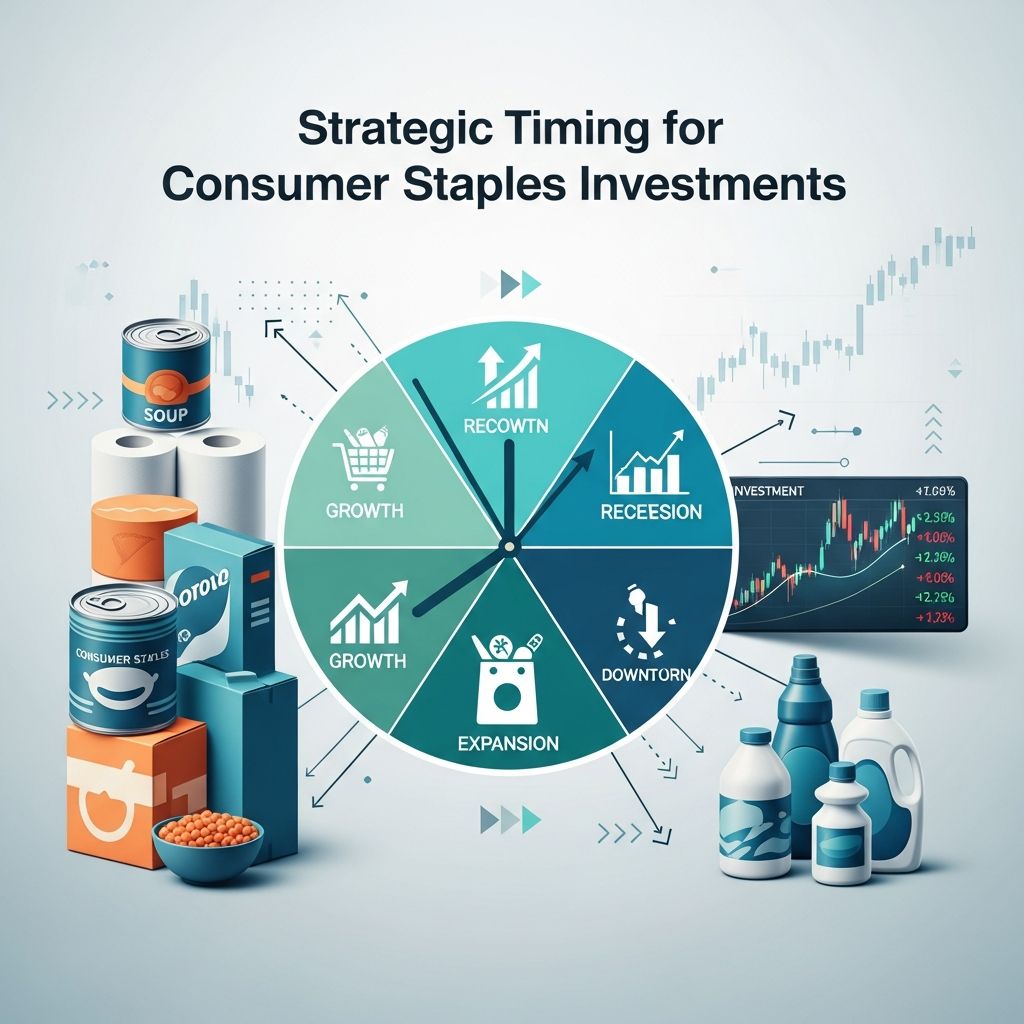
Consumer staples represent a fundamental pillar of defensive investing, yet understanding the optimal moments to add these securities to your portfolio requires nuanced analysis of market conditions, economic cycles, and sector-specific dynamics. While consumer staples stocks have historically underperformed growth-oriented sectors during certain periods, savvy investors recognize that strategic entry points can substantially enhance long-term returns and portfolio stability.
Understanding Consumer Staples as a Defensive Asset Class
The consumer staples sector comprises manufacturers, distributors, and retailers of essential goods that people purchase regardless of economic conditions. These include packaged foods, beverages, tobacco products, household cleaners, personal care items, and similar necessities. The defensive nature of this sector stems from consumer behavior patterns that remain remarkably consistent across economic cycles.
What distinguishes consumer staples from discretionary consumer goods is the inelastic demand for these products. Whether an economy experiences robust growth or enters a recession, individuals and households continue purchasing groceries, toiletries, and household essentials at relatively stable volumes. This demand resilience has historically made consumer staples stocks attractive to conservative investors seeking stability and consistent dividend income.
The sector includes three primary subsegments: food, beverage and tobacco producers; household and personal products manufacturers; and distribution and retail channels that bring these goods to consumers. Each subsegment responds differently to various economic conditions, creating opportunities for targeted investment strategies.
Recognizing Market Cycle Turning Points
One critical moment for consumer staples investment arrives when growth-oriented sectors have experienced significant appreciation and valuation multiples have become stretched. During periods when investors heavily favor high-growth technology and artificial intelligence stocks, consumer staples typically lag in relative performance. This underperformance, while psychologically challenging for investors, often creates compelling value opportunities.
The optimal investment timing frequently emerges after extended periods of sector underperformance when valuation disparities between consumer staples and broader market indices reach notable extremes. When institutional investors have rotated capital away from defensive stocks toward momentum-driven narratives, price-to-earnings ratios for consumer staples companies often compress to attractive levels relative to historical averages and forward earnings growth expectations.
Market cycles typically follow predictable patterns, though the duration and magnitude of each phase vary considerably. During the early stages of economic recovery following a downturn, consumer staples often underperform as investors shift toward economically sensitive sectors anticipated to benefit from accelerating growth. Conversely, as economic momentum slows and recession concerns increase, defensive sectors including consumer staples tend to outperform as capital flows toward lower-volatility investments.
Economic Indicators and Investment Signals
Several macroeconomic indicators provide valuable guidance for timing consumer staples investments. Interest rate trajectories represent perhaps the most significant factor, as declining rates typically reduce the discount rates applied to dividend-paying stocks, enhancing their valuation appeal. When central banks signal easing monetary policies or reduce interest rates, consumer staples equities often experience meaningful appreciation due to their stable cash flows and dividend yields becoming relatively more attractive.
Inflation dynamics also significantly influence consumer staples investment timing. While consumer staples companies ideally possess pricing power to offset elevated input costs, in highly inflationary environments these businesses often struggle with margin compression if consumers resist price increases. Conversely, as inflation moderates toward central bank targets, profit margins typically stabilize, creating more favorable conditions for investment.
Consumer spending trends provide additional insight into sector attractiveness. When data indicates broadening consumer spending patterns moving away from narrow value concentration toward more balanced purchasing behavior, consumer staples companies particularly benefit. Similarly, when income growth accelerates among middle and lower-income households—through fiscal stimulus, wage gains, or policy changes—consumer staples demand typically strengthens.
Sector-specific headwinds and tailwinds warrant careful monitoring as well. Temporary pressures affecting specific consumer staples subsegments often create mispriced investment opportunities. For instance, when emerging health and wellness trends temporarily depress demand for certain food and beverage categories, companies with strong fundamental business models may trade at substantial discounts to intrinsic value.
Valuation Metrics and Relative Value Assessment
Identifying favorable investment timing requires rigorous valuation analysis comparing consumer staples stocks to alternative investments and historical norms. Price-to-earnings ratios, dividend yields, price-to-book multiples, and free cash flow yields all provide valuable perspective on relative attractiveness. When consumer staples valuations compress significantly relative to broader market indices, particularly after extended periods of underperformance, mean reversion potential increases substantially.
Comparing forward-looking valuations to historical averages reveals whether current prices reflect justified discount or represent excessive pessimism. If consumer staples companies trade at valuations below their five-year and ten-year averages despite stable or improving business fundamentals, this often signals attractive entry points. Significant valuation dispersion across the sector creates opportunities to identify mispriced securities offering superior risk-adjusted return potential.
Dividend yield analysis proves particularly relevant for consumer staples investors. These mature, cash-generative businesses typically return substantial capital to shareholders through dividends. When market conditions cause dividend yields to rise significantly above historical averages, the income generation potential of consumer staples portfolios improves, enhancing overall return profiles.
Sector-Specific Opportunities and Challenges
Within consumer staples, different subsegments experience varying cycles and respond differently to economic conditions. The alcoholic beverages subsector, for example, may experience periodic headwinds from shifting consumer preferences or demographic changes. However, companies with strong brand recognition and international diversification often possess resilience and recovery potential that creates attractive opportunities for patient investors.
The food and beverage segment faces its own cyclical pressures. Temporary demand disruptions from emerging wellness trends or dietary shifts, while concerning short-term, often reverse as mainstream adoption of new behaviors plateaus. Companies offering diverse product portfolios that appeal across consumer segments typically navigate these challenges more effectively than single-category specialists.
Household and personal products manufacturers benefit from consistent, recurring demand patterns that remain remarkably stable across economic cycles. This subsegment often provides the most reliable defensive characteristics, though can benefit less dramatically from economic upswings compared to more economically sensitive alternatives.
Distribution and retail subsectors respond more sensitively to consumer behavior shifts and competitive dynamics. Large-scale retailers and e-commerce platforms increasingly dominate distribution, creating challenges for smaller traditional channels. Understanding competitive positioning and market share dynamics proves essential for identifying viable investment opportunities within this subsegment.
Building a Tactical Investment Strategy
Effective consumer staples investment strategies blend tactical timing with long-term positioning. Investors should consider allocating to consumer staples progressively during periods of significant relative undervaluation rather than deploying capital in a single transaction. This staged approach reduces timing risk while allowing investors to accumulate quality assets at favorable valuations.
Portfolio construction within consumer staples should reflect diversification across subsegments and geographic exposures. Combining stable domestic consumer staples with companies offering international growth opportunities creates balanced exposure capturing both defensive characteristics and growth potential. Additionally, quality metrics including brand strength, market share sustainability, and management execution capability should guide security selection within the sector.
Dollar-cost averaging into consumer staples positions during extended periods of underperformance provides psychological and mathematical advantages. This approach removes the pressure of perfectly timing entry points while accumulating shares at a blended average cost. For investors implementing this strategy, monthly or quarterly purchases during periods of sector weakness can significantly enhance long-term returns.
Risk Considerations and Headwinds
Even attractive-looking consumer staples investment opportunities carry specific risks warranting careful consideration. Tariff implementations and trade policy changes can compress margins if companies lack sufficient pricing power to offset elevated input costs. Inflationary pressures may erode profit margins if consumer resistance prevents full price pass-through. Currency fluctuations affect multinational consumer staples companies with significant international revenue.
Emerging consumer health and wellness trends sometimes persist longer than anticipated, creating unexpected structural headwinds. Competitive intensity, particularly in retail distribution, continues intensifying as e-commerce platforms consolidate market share. Regulatory changes affecting product labeling, ingredients, or marketing practices may create unforeseen challenges.
Cyclical economic downturns, while typically proving less severe for consumer staples than for discretionary sectors, still impact profitability and stock prices. Prolonged bear markets can extend negative performance periods, testing investor conviction in sector positioning. Understanding these risks enables more informed investment decisions and realistic return expectations.
Forward-Looking Outlook
Looking ahead, consumer staples investment timing appears increasingly favorable following extended periods of sector underperformance and valuation compression. Lower interest rate environments, improving consumer spending dynamics, and easing sector-specific headwinds create a more supportive backdrop for investor capital flows. Companies with strong market positions, established brands, and proven pricing power appear well-positioned to benefit from normalized investment interest and multiple expansion.
The evolution toward more balanced consumer spending patterns, moving away from concentrated value-focused purchases, should broaden profitability across consumer staples companies. Additionally, as investors recognize the portfolio diversification benefits and return generation potential of consumer staples alongside renewed attention to fundamental valuations, sector attractiveness should increase materially.
Frequently Asked Questions
When should I invest in consumer staples stocks?
Consumer staples investments appear most attractive when valuations compress significantly relative to historical averages following extended periods of sector underperformance. Additionally, declining interest rates, improving consumer spending dynamics, and easing sector-specific headwinds create favorable conditions for investment.
How do I identify undervalued consumer staples stocks?
Compare current price-to-earnings ratios, dividend yields, and price-to-book multiples to five and ten-year historical averages. Look for companies with stable business fundamentals trading at meaningful discounts, particularly those facing temporary headwinds unrelated to underlying business quality.
What role should consumer staples play in my portfolio?
Consumer staples typically comprise 10-15% of balanced portfolios, providing defensive characteristics and dividend income. The specific allocation depends on individual risk tolerance, time horizon, and overall portfolio construction objectives.
How do interest rates affect consumer staples investments?
Declining interest rates increase the relative attractiveness of dividend-paying consumer staples stocks by improving their valuation multiples and enhancing income yields relative to fixed-income alternatives.
Should I focus on dividend yield or capital appreciation in consumer staples?
Quality consumer staples investments typically deliver both components. While dividend yields provide steady income, mean reversion and multiple expansion following periods of undervaluation often generate meaningful capital appreciation alongside dividend returns.
References
- Monthly Stock Sector Outlook (2026) — Charles Schwab. 2026. https://www.schwab.com/learn/story/stock-sector-outlook
- Consumer Staples Industry: 2026 AEO / GEO Benchmarks — Conductor. 2026. https://www.conductor.com/academy/consumer-staples-aeo-geo-benchmarks/
- Consumer staples sector — Fidelity Institutional. 2026. https://institutional.fidelity.com/advisors/insights/spotlights/equity-sector-performance-outlook/consumer-staples-sector
Similar Articles








Read full bio of Sneha Tete