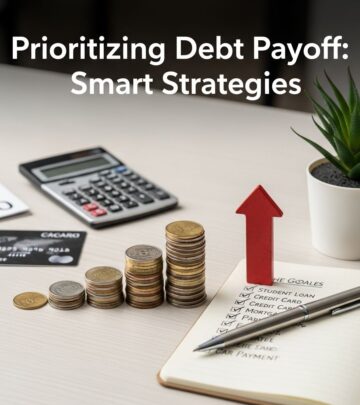
Strategic Debt Elimination: The High-Interest Priority Method
Master the technique of targeting expensive debt first to minimize interest costs

Managing multiple debts can feel overwhelming, especially when you’re juggling different payment schedules, interest rates, and balances. However, there exists a proven financial strategy designed to help you eliminate debt more efficiently while minimizing the total amount of interest you’ll pay over time. This approach focuses on identifying which debts cost you the most money and prioritizing those first, creating a systematic path toward becoming debt-free.
Understanding the High-Interest Priority Approach
The high-interest priority method represents a mathematically optimized approach to debt repayment. Rather than spreading payments evenly across all debts or focusing on smaller balances, this strategy directs your extra payment power toward the debt carrying the highest interest rate. This tactical approach is particularly effective because it directly addresses the most expensive aspect of your borrowing: the accumulating interest charges that grow daily on unpaid balances.
When you carry debt, financial institutions charge you interest—a percentage of what you owe that gets added regularly to your balance. This interest compounds, meaning you’re eventually paying interest on top of interest. By eliminating high-rate debts first, you stop this expensive cycle before it spirals further out of control.
The Core Mechanics of This Repayment Strategy
Implementing this method requires organization and commitment, but the process itself is straightforward. Here’s how to structure your approach:
- Create a comprehensive list of all your outstanding debts, excluding mortgage obligations
- Identify the interest rate or annual percentage rate (APR) for each debt
- Arrange your debts in descending order, placing the highest interest rate at the top
- Calculate your current minimum payment obligations across all accounts
- Determine how much extra money you can allocate toward debt repayment each month
- Direct all minimum payments to your non-targeted debts while applying your extra funds to the highest-rate obligation
- Once the top debt is eliminated, roll your previous extra payment amount into the next-highest rate debt
- Continue this process methodically until all debts are resolved
Real-World Application: A Practical Example
Consider Sarah, who manages three separate debts with varying interest rates and balances. Her financial situation includes a medical bill for $1,500 carrying no interest, a credit card balance of $2,500 at 22.9% interest, and another credit card balance of $5,000 at 15.9% interest.
Using the high-interest priority method, Sarah lists her debts from highest to lowest interest rate. The 22.9% credit card becomes her primary focus. While maintaining minimum payments on both the medical bill and the 15.9% credit card, Sarah directs all extra available funds toward eliminating the 22.9% balance first. This decision makes financial sense because every dollar spent on that debt eliminates the most expensive borrowing costs she’s carrying.
Once Sarah pays off the $2,500 at 22.9%, she redirects that entire payment amount—plus any extra funds—toward the 15.9% credit card. Finally, she addresses the medical bill, which carries no interest charge. Through this systematic approach, Sarah minimizes the total interest paid across all three accounts.
Comparing Payment Strategies: Interest Cost Impact
The difference between debt repayment strategies becomes dramatically apparent when you examine actual numbers. Research comparing different approaches shows significant variations in total interest paid:
| Repayment Approach | Payment Structure | Total Interest Paid | Key Characteristic |
|---|---|---|---|
| Minimum Payments Only | 1-4% of each balance monthly | Approximately $9,000+ | Slowest path to debt freedom |
| High-Interest Priority Method | $400 toward highest rate first | Approximately $2,400 | Maximum interest savings |
| Balance-Size Priority Method | $400 toward smallest balance first | Approximately $1,500 | Psychological momentum focus |
This comparison illustrates that using the high-interest priority method can save you nearly $6,600 compared to making only minimum payments. While the balance-size approach saves slightly more interest in this scenario, the high-interest method provides superior mathematical outcomes in most situations, especially when your debts span a wide range of interest rates.
Why Interest Rate Ordering Matters
Understanding the mathematics behind interest is essential to appreciating why this strategy works. Credit cards and personal loans calculate interest based on your outstanding balance. The higher your interest rate and the larger your balance, the more interest accumulates each day.
Consider two debts: one at 5% interest and another at 22% interest. On a $5,000 balance at 5%, you pay approximately $25 per month in interest. That same $5,000 at 22% generates roughly $92 in monthly interest charges. By targeting the 22% debt first, you eliminate that expensive interest drain before it compounds further. The mathematical advantage compounds over time as you progress through your debt list.
Building Your Personalized Debt Elimination Plan
Success with this method requires personalization based on your financial situation. Start by documenting every debt you carry. For each obligation, note the outstanding balance, current interest rate, minimum monthly payment, and payment due date. A spreadsheet or specialized debt payoff application can help organize this information clearly.
Next, honestly assess your monthly budget to determine how much extra money you can dedicate to debt repayment beyond minimum payments. Even an additional $50 monthly can significantly accelerate your timeline and reduce total interest paid. This extra amount becomes your “debt elimination fund”—the aggressive payment that targets your highest-rate obligation.
Remember that interest rates may change, particularly for variable-rate debts. Review your debt list quarterly to ensure your ordering remains accurate. If a debt’s interest rate drops significantly, you might need to adjust your priorities accordingly.
The Psychological Dimension of Debt Payoff
While the high-interest priority method offers superior mathematical outcomes, it requires patience and discipline. The highest-rate debt might also be the largest balance, meaning you won’t experience the quick victory that comes from eliminating smaller debts first. This psychological factor leads some people to prefer alternative strategies, even when the math favors the high-interest approach.
To maintain motivation, celebrate milestone achievements. When you eliminate your first high-rate debt, acknowledge this significant accomplishment. Visualize how the money you’ll save on interest can fund future goals. Some people find that tracking their progress through a visual chart or app helps maintain momentum through the longer journey of eliminating the initial debt.
Accelerating Your Results Through Income Growth
The amount of extra money you dedicate to debt elimination directly impacts how quickly you’ll achieve financial freedom. While you execute your repayment plan, look for opportunities to increase this extra payment amount. Even modest income increases—from bonuses, side income, or raises—can be directed entirely toward your highest-rate debt, dramatically shortening your payoff timeline.
Additionally, review your monthly expenses to identify discretionary spending you can temporarily reduce. Redirecting these funds toward debt elimination represents a short-term sacrifice for significant long-term financial gain.
Handling Variable Interest Rates
Some debts carry variable interest rates that fluctuate based on market conditions or your creditworthiness. When using the high-interest priority method with variable-rate debts, base your initial ordering on the current rate. However, establish a quarterly review schedule to reorder your debts if interest rates shift significantly. This flexibility ensures your strategy remains mathematically optimized throughout your payoff journey.
Frequently Asked Questions
How long does it typically take to become debt-free using this method?
The timeline varies based on your total debt, interest rates, and extra payment amount. Someone with $15,000 in debt and $400 monthly extra payments might achieve debt freedom in 3-5 years, while higher debt levels or smaller extra payments extend this period. The key is that you’ll pay less total interest than with alternative approaches.
Should I include my mortgage in this strategy?
No, mortgages are typically excluded from this method. Focus on unsecured debts like credit cards, personal loans, medical bills, and student loans. Mortgages usually carry lower interest rates and different payoff timelines, making them less suitable for this aggressive strategy.
What if I have multiple debts at the same interest rate?
When debts share the same interest rate, prioritize by balance size. Paying off the larger balance first still follows the mathematical principle of eliminating expensive debt, and it creates faster momentum toward total debt elimination.
Can I switch methods if the high-interest approach feels discouraging?
While switching methods isn’t ideal, maintaining consistent payments matters more than perfect strategy adherence. However, before abandoning the high-interest priority method, try psychological adjustments like celebrating milestones or visualizing long-term savings.
How do I prevent new debt while executing this plan?
Freeze or significantly limit new credit card charges. Each new charge resets your payoff timeline. Consider using cash or debit for discretionary purchases to prevent accumulating additional high-interest debt.
Conclusion: Your Path to Financial Freedom
The high-interest priority method represents a mathematically sound, proven strategy for eliminating debt efficiently. By systematically targeting the most expensive debts first, you minimize total interest paid and potentially achieve financial freedom years earlier than with alternative approaches. While it requires patience and disciplined budgeting, the financial rewards—potentially saving thousands of dollars—make this strategy worthy of serious consideration. Start today by listing your debts, calculating your extra payment capacity, and committing to this systematic approach toward becoming debt-free.
References
- What is the Debt Avalanche Method? — NerdWallet. Accessed February 2026. https://www.nerdwallet.com/finance/learn/what-is-a-debt-avalanche
- The Debt Avalanche Method: How it Works and When to Use It — Experian. Accessed February 2026. https://www.experian.com/blogs/ask-experian/what-is-the-avalanche-method/
- The Avalanche Debt Repayment Method — Northwest Bank Financial Wellness Center. Accessed February 2026. https://financialwellnesscenter.northwest.bank/credit-and-debt/debt/article/the-avalanche-debt-repayment-method
- What is the Debt Avalanche Method? — Citi.com. Accessed February 2026. https://www.citi.com/credit-cards/debt-management/debt-avalanche-method
- Debt Repayment: Snowball vs. Avalanche Methods — Superior Credit Union. Accessed February 2026. https://www.superiorcu.org/blog/debtsnowball
- What to know about the debt snowball vs avalanche method — Wells Fargo. Accessed February 2026. https://www.wellsfargo.com/goals-credit/smarter-credit/manage-your-debt/snowball-vs-avalanche-paydown/
- Debt snowball method vs. debt avalanche method: Which is right for you? — Fidelity. Accessed February 2026. https://www.fidelity.com/learning-center/personal-finance/avalanche-snowball-debt
Similar Articles








Read full bio of medha deb