Strategic Bidding: When to Offer Above List Price
Master the art of real estate bidding to secure your dream home without overpaying in competitive markets.
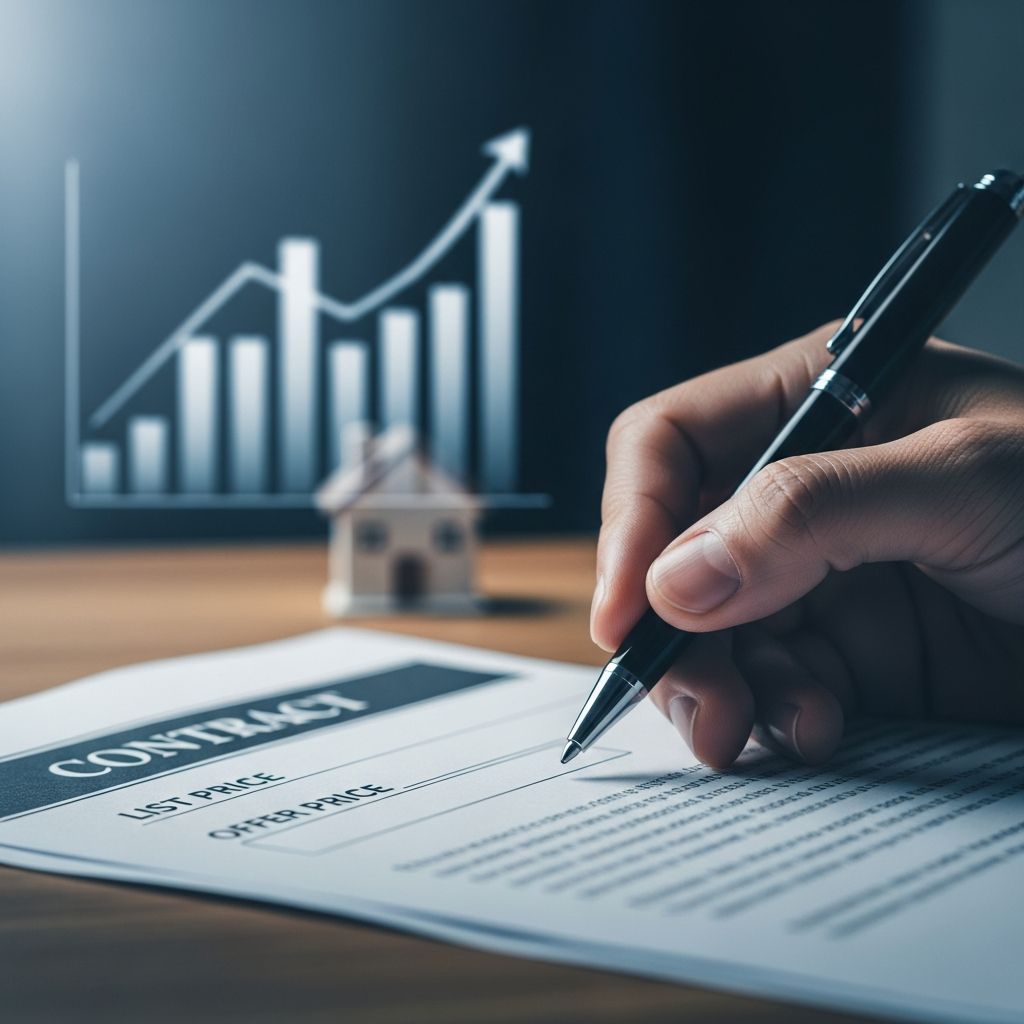
In today’s dynamic housing market, knowing when and how much to bid above the listed price can mean the difference between securing your desired property and missing out entirely. Buyers often face tough decisions in competitive scenarios where multiple offers drive prices higher. This guide delves into data-driven approaches to craft effective bids, balancing aggressiveness with financial prudence.
Understanding Market Dynamics for Informed Bidding
Real estate markets fluctuate based on local supply, demand, interest rates, and economic conditions. In seller’s markets, properties receive multiple bids quickly, pushing final sale prices above asking. Conversely, buyer’s markets offer negotiation room below list price. To bid strategically, start by analyzing key indicators.
- Days on Market (DOM): Homes lingering over 30 days often signal seller flexibility, allowing bids at or below asking.
- Price per Square Foot: Compare the listing to recent sales in the neighborhood for value assessment.
- Inventory Levels: Low inventory (under 3 months’ supply) indicates competition, potentially requiring overbids.
Conduct a Comparative Market Analysis (CMA) using recent sold comps within 0.5 miles, similar size, and age. Tools from real estate platforms or agents provide this data, revealing if the asking price aligns with reality.
Key Indicators That Signal the Need for Overbidding
Not every property warrants paying premium. Identify scenarios where overbidding makes sense to avoid regret.
| Market Signal | Typical Overbid Range | Rationale |
|---|---|---|
| Multiple Offer Situations | 2-7% above asking | Bidding wars common; escalation clauses minimize risk. |
| New Listings in Hot Neighborhoods | 3-5% above | High demand drives quick sales above list. |
| Low DOM & Price Reductions Absent | 1-4% above | Sellers hold firm, rewarding strong offers. |
| Extended Market Time | 0-2% below | Negotiation leverage favors buyers. |
In competitive areas, top agents report average overbids of 3-5% on desirable homes, saving clients $3,000-$10,000 via precise escalation tactics compared to blind high bids.
Mastering Escalation Clauses for Controlled Overbidding
An escalation clause automates bidding higher only when necessary, protecting against overpaying. Structure it with these elements for maximum effectiveness:
- Base Offer: Set at a competitive yet comfortable level, like 1-2% above asking if no competition.
- Increment Amount: Use precise figures (e.g., $2,500 or $3,750) to demonstrate sophistication.
- Maximum Cap: Your absolute limit based on appraisal and budget—never exceed.
- Proof Requirement: Demand written evidence of competing offers to trigger escalation.
- Expiration: Tie to a short response deadline for urgency.
Example: Base offer $500,000 on $495,000 list, escalate $1,000 over any higher bona fide offer up to $525,000. This wins the home at the minimum viable price.
Building a Winning Total Offer Package
Price isn’t everything—sellers evaluate the full package. Strengthen your bid holistically:
- Pre-Approval Letter: From a reputable lender, showing financing strength.
- Earnest Money Deposit: 2-3% of price signals seriousness.
- Contingencies: Minimize non-essentials (e.g., waive appraisal if confident in value).
- Closing Timeline: Match seller’s preferred date, often quicker is better.
- Personal Letter: Highlight why the home fits your family, building emotional connection.
In multiple-offer scenarios, a clean offer with fewer contingencies often trumps higher price alone. Request seller cover closing costs or repairs post-inspection to offset overbid.
Negotiation Tactics Before Resorting to Overbids
Exhaust alternatives to paying above asking:
Leverage Inspections for Post-Offer Adjustments
After acceptance, a professional inspection uncovers issues justifying 1-5% reductions. Common findings include roof wear, HVAC faults, or plumbing problems. Negotiate credits or price drops accordingly.
Strategic Low Initial Offers in Soft Markets
In buyer’s markets, anchor low with CMA-backed rationale. Agents note 3-5% below asking yields savings of $7,500+ on overpriced listings. Counter unacceptable offers incrementally to keep dialogue open.
Walk-Away Power
Demonstrate alternatives via agent communication. A credible backup property pressures sellers to concede.
Risks of Overbidding and Mitigation Strategies
Overbidding risks appraisal shortfalls, where lender loans only to appraised value, forcing cash gap coverage. Mitigate by:
- Researching comps thoroughly pre-offer.
- Including appraisal gap coverage in escalation clauses.
- Securing jumbo financing if needed.
Long-term, overpaying inflates property taxes and resale challenges. Aim for 95-105% of appraised value. Emotional attachment clouds judgment—always consult your agent.
Role of Real Estate Professionals in Bidding Success
Experienced agents add 5-10% value through market insight, CMA preparation, and negotiation prowess. They craft escalation clauses, manage counters, and interpret seller motivations. For first-time buyers, their guidance prevents costly errors.
Current Market Trends Influencing Bid Strategies (2026)
As of 2026, persistent low inventory in urban areas sustains overbidding needs, with median overbids at 4% per recent reports. Rising rates temper frenzy, creating pockets for below-asking deals. Monitor Federal Reserve actions and local data for shifts.
Frequently Asked Questions
Is it common to offer over asking price?
Yes, in 40% of sales in competitive markets, buyers pay 1-10% above to compete.
How do I know my maximum bid?
Calculate based on 28-36% debt-to-income ratio post-mortgage, plus 6 months’ reserves.
What if my overbid doesn’t appraise?
Renegotiate, cover the difference in cash, or walk away if contingency allows.
Should I waive inspection for stronger offer?
Only if comps confirm condition; risks average $10,000+ in hidden repairs.
How long do negotiations take?
1-7 days typically; multiple offers resolve fastest.
Final Thoughts on Smart Home Bidding
Success lies in preparation: research markets, leverage pros, and use tools like escalations judiciously. Balance desire with discipline to build wealth through real estate.
References
- How to Negotiate Home Price: 6 Proven Strategies From Top-Performing Agents — Effective Agents. 2024. https://www.effectiveagents.com/resources/how-to-negotiate-home-price-6-proven-strategies-from-top-performing-agents
- How Buyers Can Negotiate House Price — Rocket Mortgage. 2025-03-15. https://www.rocketmortgage.com/learn/how-to-negotiate-house-price
- Strategies for Negotiating Price on Your First Home — Opportunity Finance Network. 2024-08-20. https://oppfund.org/strategies-for-negotiating-price-on-your-first-home/
- 9 Negotiation Strategies for Homebuyers — Trulia. 2023-11-10. https://www.trulia.com/blog/9-homebuyer-negotiation-strategies-that-win-negotiation-stalemates/
- Real Estate Negotiation Principles for Buyers & Sellers — Bay Area Market Reports (Compass). 2025. https://www.bayareamarketreports.com/trend/basic-real-estate-negotiation-principles
Similar Articles








Read full bio of Sneha Tete