Store Credit Cards: Benefits and Risks
Explore the advantages of exclusive shopping perks against the pitfalls of high costs and credit impacts in store credit cards.
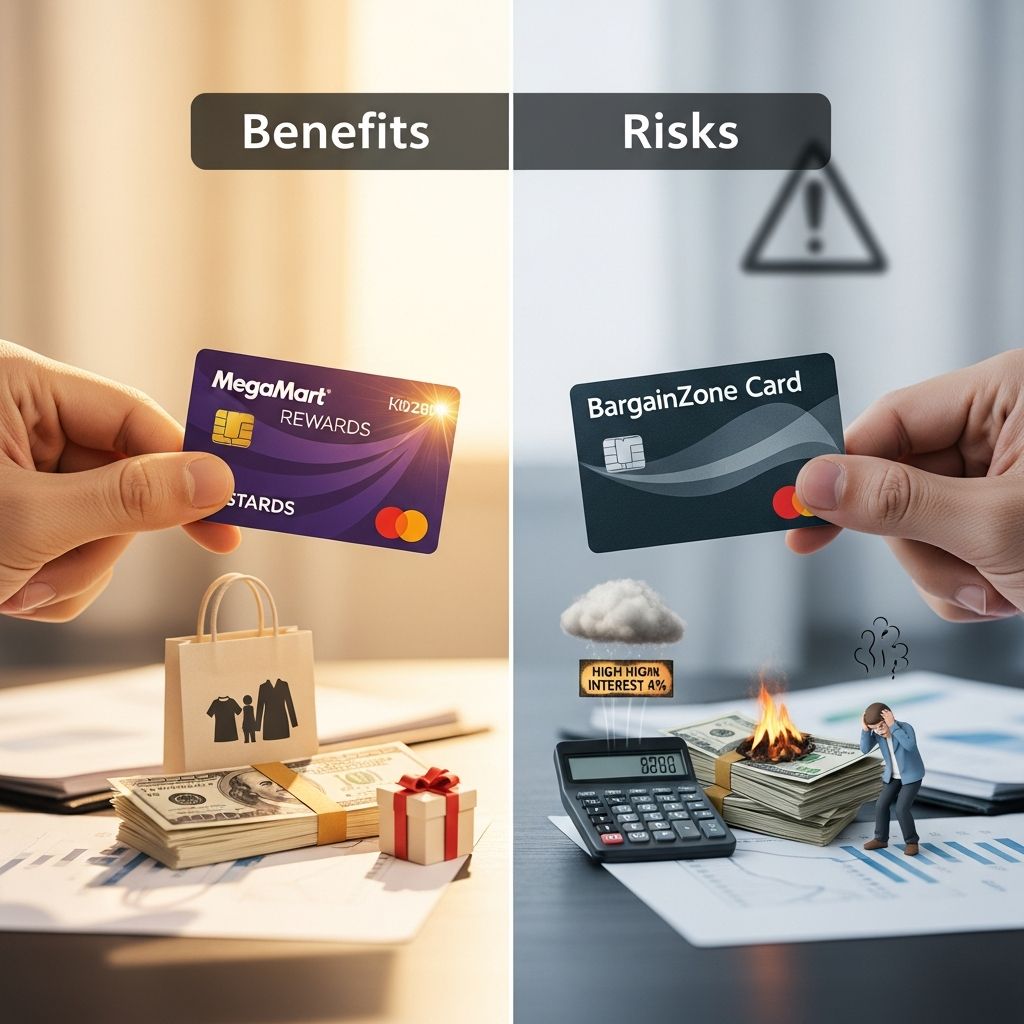
Retail credit cards, often offered at checkout for popular stores, promise instant savings and loyalty rewards. These cards can enhance shopping experiences with tailored benefits, yet they carry significant financial drawbacks that demand careful consideration. This article delves into their key advantages, potential downsides, strategic usage tips, and alternatives to help you decide if one fits your financial profile.
Key Advantages of Retail Credit Cards
Store-specific cards shine in delivering value for frequent shoppers at affiliated retailers. Their appeal lies in immediate and ongoing perks that general cards rarely match.
- Exclusive Discounts and Promotions: Cardholders frequently access deeper sales, like 10-20% off first purchases or seasonal events reserved for members. These can substantially reduce costs on apparel, electronics, or home goods.
- Loyalty Rewards Programs: Earn points, cash back, or store credit on every purchase, often at elevated rates within the brand ecosystem. For example, rewards might translate to free items after reaching thresholds.
- Special Financing Options: Promotional periods allow deferred payments without interest, ideal for large buys like appliances, provided full repayment occurs on time.
- Enhanced Perks like Free Shipping: Priority delivery, extended returns, or VIP event access add convenience and value beyond mere discounts.
How They Support Credit Development
One of the strongest appeals for beginners or those repairing credit is accessibility. Approval odds are higher due to lenient criteria compared to premium rewards cards.1 Responsible use—timely payments and low balances—builds a positive history reported to major bureaus.
- Establishes payment reliability, the largest FICO score factor at 35%.5
- Diversifies credit mix, aiding long-term scores if managed alongside other accounts.
- Lower limits naturally curb overspending, fostering disciplined habits.
Success stories abound: users with thin files secure approval, then leverage on-time payments to qualify for better cards later.2
Major Drawbacks to Watch For
While perks entice, the structure of these cards often prioritizes retailer profits over consumer savings, leading to costly surprises.
Steep Interest Rates
Average APRs on store cards hover around 28-30%, far exceeding general-purpose cards at about 18-22%.24 Carrying even a modest balance accrues hefty fees quickly. For instance, a $1,000 purchase at 29% APR adds over $290 in annual interest if unpaid.
Low Credit Limits Amplify Utilization Risks
Typical limits start at $300-$1,000, making it easy to max out.2 High utilization (over 30% of limit) dings scores, as it signals risk to lenders. A $500 spend on a $1,000 limit hits 50% utilization, potentially dropping scores by 50+ points temporarily.
Deferred Interest Pitfalls
“No interest if paid in full” promotions sound ideal but often retroactively charge interest from purchase date if not cleared by deadline.23 High rates apply to the entire original amount, turning a $2,000 TV into a $2,500+ obligation overnight.
Limited Acceptance and Added Fees
Use is restricted to one retailer or affiliates, reducing versatility. Late fees ($30-40), over-limit charges, and penalty APR hikes compound issues.7
Comparative Analysis: Store Cards vs. General Credit Cards
To evaluate worth, compare against versatile options. The table below highlights differences based on industry data.
| Feature | Store Credit Cards | General Credit Cards |
|---|---|---|
| Average APR | 28-30%+4 | 18-22%2 |
| Credit Limit | $300-$1,500 | $5,000+ |
| Acceptance | Store-specific | Everywhere Visa/MC/Amex |
| Rewards | High in-store (5-10% back) | Broad categories (1-5% cashback) |
| Approval Odds | High for fair credit | Stricter for good credit |
Store cards excel in niche rewards but lag in flexibility and cost control.
Smart Strategies for Using Store Cards Effectively
Maximize upsides while dodging traps with these practices:
- Pay in Full Monthly: Avoid interest entirely; treat as debit.
- Target Promotions Wisely: Use financing only for planned, affordable purchases with repayment schedules.
- Monitor Utilization: Keep balances under 10-30%; pay mid-cycle if needed.
- Limit Applications: Multiple inquiries harm scores; space out requests.
- Request Limit Increases: After 6+ months of perfect payments, boost limits to improve ratios.
Track via free tools from bureaus to stay ahead.1
Real-World Impact on Your Credit Profile
New accounts shorten average age (15% of score), but positive activity offsets this.5 High utilization or delinquencies, however, trigger lasting damage. Data shows responsible users see score gains within months, while others face declines.5
When to Skip Store Cards Altogether
Avoid if you carry balances, shop sporadically at the store, or prefer travel/dining rewards. They’re suboptimal for debt-prone individuals due to temptation and costs.13
Top Alternatives for Savvy Shoppers
- Cash-Back Cards: 2-5% on all purchases without store limits.
- 0% Intro APR Cards: True interest-free periods without retroactive charges.
- Co-Branded Rewards Cards: Wider acceptance with store bonuses.
- Debit or Prepaid: No debt risk for disciplined budgets.
Frequently Asked Questions (FAQs)
Are store credit cards easy to get approved for?
Yes, especially with fair or no credit, thanks to lower limits and retailer incentives.15
Can store cards improve my credit score?
Absolutely, with on-time payments and low utilization; they report like standard cards.5
What happens if I miss a deferred interest deadline?
Interest accrues retroactively from purchase at high rates, often 25-30%.24
Do store cards help with large purchases?
Promos can, but only if you can pay off fully; otherwise, costs escalate.3
Should I close a store card after getting rewards?
No, it impacts credit age and mix; keep active with small, paid charges.
Final Thoughts on Making the Right Choice
Store credit cards suit disciplined shoppers loyal to specific retailers, offering perks that amplify savings. However, their high costs and limitations make them risky for many. Assess your habits: if you pay balances religiously and value the perks, they can enhance finances. Otherwise, opt for broader cards. Always read terms thoroughly before signing up.
References
- Pros and Cons of Store Credit Cards — SmartAsset. 2024. https://smartasset.com/credit-cards/pros-and-cons-of-store-credit-cards
- Pros and Cons of Store Credit Cards — Experian. 2022-08. https://www.experian.com/blogs/ask-experian/pros-and-cons-of-store-credit-cards/
- Before You Say Yes: Pros & Cons of Store Credit Cards — Harvard FCU. 2023. https://harvardfcu.org/blog/before-you-say-yes-pros-cons-of-store-credit-cards/
- Are Retail Credit Cards Worth It? — Bankrate. 2024. https://www.bankrate.com/credit-cards/rewards/are-store-credit-cards-worth-it/
- How Store Credit Cards Affect Your Credit Score — American Express. 2023. https://www.americanexpress.com/en-us/credit-cards/credit-intel/how-store-credit-cards-affect-your-credit-score/
Similar Articles








Read full bio of Sneha Tete