Stop Order vs Stop-Limit Order: Key Differences
Master the critical differences between stop and stop-limit orders for smarter trading decisions.
When managing investment portfolios and executing trades in the stock market, understanding different order types is fundamental to successful trading. Two of the most commonly used order types for risk management are stop orders and stop-limit orders. While these order types sound similar and serve related purposes, they function quite differently and can produce dramatically different outcomes in real trading scenarios. This comprehensive guide explores the distinctions between stop orders and stop-limit orders, helping traders and investors make informed decisions about which order type best suits their trading objectives.
What Is a Stop Order?
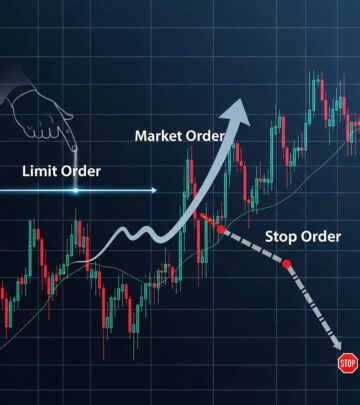
A stop order, also known as a stop-loss order, is an instruction to buy or sell a security once it reaches a specific price point called the “stop price.” The stop order remains inactive until the market price reaches the designated stop price, at which point it automatically converts into a market order. This market order then executes immediately at the prevailing market price, which may differ from the original stop price.
Stop orders are primarily used to manage risk and protect investments from significant losses. For example, if an investor purchases a stock at $50 per share and wants to limit potential losses, they might place a sell stop order at $45. If the stock price declines to $45 or below, the order automatically triggers and sells the shares at whatever price the market is offering at that moment.
How Stop Orders Work
The mechanics of a stop order are straightforward. When you place a stop order, you specify the stop price—the threshold at which you want your order to activate. The order sits dormant in the market until the stock price reaches or falls through that predetermined price point. Once triggered, the stop order becomes a market order and executes at the best available price in the market at that time. This immediate execution is the defining characteristic of stop orders.
There are two primary variations of stop orders: sell stop orders and buy stop orders. Sell stop orders are placed below the current market price and are used to protect profits or limit losses on existing long positions. Buy stop orders are placed above the current market price and are typically used to capture potential profits or enter a position once price momentum becomes apparent.
What Is a Stop-Limit Order?
A stop-limit order combines the features of both a stop order and a limit order. It specifies two critical prices: the stop price (which triggers the order) and the limit price (which defines the acceptable execution price). When the stock price reaches the stop price, the stop-limit order converts into a limit order rather than a market order. This limit order will only execute at the specified limit price or better, providing the trader with price control but not guaranteeing execution.
Using the earlier example, an investor might place a sell stop-limit order with a stop price of $45 and a limit price of $44. If the stock drops to $45, the order activates, but it will only sell if the price is $44 or higher. If the stock gaps down to $42 without trading at $44, the order remains unfilled.
How Stop-Limit Orders Work
Stop-limit orders operate in two distinct phases. First, the stop price acts as a trigger mechanism, similar to a standard stop order. When the security reaches the stop price, the order transitions to the second phase and becomes an active limit order. The limit price then determines whether and at what price the order will execute. The key distinction is that execution is not guaranteed; the order will only fill at the limit price or better.
Stop-limit orders offer traders more control over the execution price but introduce the risk that the order may not execute at all if the market price jumps past the limit price too quickly. This is particularly problematic in volatile markets or during gaps in trading.
Key Differences Between Stop Orders and Stop-Limit Orders
| Feature | Stop Order | Stop-Limit Order |
|---|---|---|
| Execution Type After Trigger | Becomes a market order | Becomes a limit order |
| Price Guarantee | Execution guaranteed, price not guaranteed | Price guaranteed, execution not guaranteed |
| Execution Speed | Immediate after trigger | Only at limit price or better |
| Price Control | No control over execution price | Specified limit price provides control |
| Primary Use | Guaranteed risk protection | Price-controlled exits |
| Gap Risk | Executes regardless of gaps | May not execute if gap occurs |
Execution Guarantees
The most critical difference between these order types relates to execution guarantees. Stop orders guarantee that your order will execute once the stop price is reached, but they do not guarantee the price at which execution occurs. In fast-moving markets, the execution price can deviate significantly from your intended stop price, sometimes resulting in unexpectedly large losses.
Stop-limit orders, conversely, guarantee a maximum or minimum price (depending on whether you’re selling or buying) but do not guarantee that your order will execute. If the market price moves away from your limit price too quickly, your order may remain unfilled, leaving your position exposed to further losses or missed gains.
Advantages and Disadvantages
Stop Order Advantages
Stop orders provide reliable risk protection by guaranteeing execution at the market price when triggered. This certainty is valuable for investors who prioritize closing positions above other considerations. Stop orders are also simpler to understand and implement, requiring only a single stop price specification. They function effectively in trending markets where price movements are orderly and predictable.
Stop Order Disadvantages
The primary disadvantage of stop orders is the lack of price control. During market volatility, slippage—the difference between expected and actual execution price—can be substantial. In gap situations, where a stock opens significantly lower than the previous close, your stop order may execute far below the intended stop price. Additionally, stop orders can be triggered by temporary price movements, executing your position precisely when you might prefer to hold during normal market fluctuations.
Stop-Limit Order Advantages
Stop-limit orders provide precise price control, allowing traders to specify the maximum loss they’re willing to accept or the minimum profit they require. This appeals to disciplined traders who have clear price targets. The combination of a trigger mechanism and price constraints offers flexibility in various market conditions and is particularly useful for traders who want to avoid slippage during volatile trading sessions.
Stop-Limit Order Disadvantages
The main disadvantage of stop-limit orders is the possibility of non-execution. If the market price gaps past your limit price, the order simply will not fill, leaving your position unprotected. This is particularly dangerous in declining markets where you intended the order to provide protection. Stop-limit orders are also more complex to set up correctly, requiring careful consideration of both stop and limit prices. Traders must understand that these two prices can differ significantly from each other.
Practical Examples and Scenarios
Sell Stop Order Example
Imagine you purchased a stock at $50 per share and want to limit losses to $5 per share. You would place a sell stop order at $45. If the stock declines to $45, your stop order automatically becomes a market order and sells your shares at the current market price—which might be $45, $44, or even lower depending on market conditions and trading volume.
Sell Stop-Limit Order Example
Using the same scenario, you could place a sell stop-limit order with a stop price of $45 and a limit price of $44. When the stock reaches $45, the order triggers and becomes a limit order that will only sell if the price is at $44 or above. If the stock gaps down to $42 without ever trading at $44, your order remains unfilled, and you still own the shares despite your intention to exit.
Market Gap Scenario
Consider a stock trading at $60 at market close. Overnight, negative news causes the stock to open at $52 the next morning. A sell stop order at $55 would likely execute around the $52 opening price, realizing a larger loss than anticipated. A sell stop-limit order with a stop price of $55 and limit price of $54 would trigger at the open but might not fill if the stock never trades at $54 during the gap down opening.
Choosing Between Stop and Stop-Limit Orders
Selecting the appropriate order type depends on several factors including your risk tolerance, market conditions, and specific trading objectives. Stop orders are generally more suitable when you prioritize closing a position above all else and want to guarantee execution, regardless of price. They work well in relatively stable markets and for traders who are willing to accept some price slippage in exchange for certainty.
Stop-limit orders are preferable when you have a specific price target in mind and want to avoid large slippage. They suit traders who are patient and willing to potentially miss execution if prices move too quickly. Stop-limit orders are particularly useful for more volatile securities or when trading during market open or close periods.
Many professional traders use a combination of both order types depending on the specific situation. They might use stop orders for core portfolio risk management and stop-limit orders for more tactical trades where price control is paramount.
Important Considerations and Risks
Price Gaps and Market Volatility
Both order types are susceptible to issues during market gaps and high volatility. Stop orders may execute far from the intended price, while stop-limit orders may not execute at all. During earnings announcements, economic news releases, or market-wide corrections, these risks intensify significantly.
Setting Appropriate Prices
For stop-limit orders, the relationship between stop and limit prices is crucial. The limit price should be set at a level where execution is reasonably possible while still providing meaningful protection or profit capture. Setting the limit price too far from the stop price defeats the purpose of the stop-limit order.
Order Cancellation and Management
Both stop orders and stop-limit orders can be cancelled at any time before execution. Many brokers also impose time limits on how long these orders remain active, with good-til-canceled (GTC) orders typically limited to 30, 60, or 90 days depending on the brokerage firm.
Frequently Asked Questions
Q: What happens if a stock gaps down past my stop price?
A: For stop orders, the order will execute at the market price after the gap, which could be significantly below your stop price. For stop-limit orders, if the stock gaps past your limit price, the order may not execute at all.
Q: Can I set the limit price higher than the stop price on a sell order?
A: Yes, this is common. For example, you might set a stop price at $45 and a limit price at $46 on a sell order, which means the order triggers at $45 but will only sell if the price goes back up to $46 or higher.
Q: Which order type is better for protecting profits?
A: Stop orders guarantee execution and are typically better for guaranteed protection. Stop-limit orders work well if you want to protect profits while avoiding slippage, though you accept some execution risk.
Q: How do buy stop orders differ from sell stop orders?
A: Buy stop orders are placed above the current market price and trigger upward movements, while sell stop orders are placed below the current price and trigger downward movements. The same stop vs. stop-limit distinction applies to both.
Q: What if my stop-limit order is triggered but never executes?
A: The order remains active as a limit order and continues to sit in the market. You can cancel it at any time, or it will remain until it executes, expires, or you cancel it according to your broker’s GTC time limits.
Q: Are stop-limit orders more expensive than stop orders?
A: Most brokers charge the same commission for both order types. The difference is in execution certainty and price control, not cost.
References
- Order Types: Limit, Market & Stop Orders Explained — tastylive. 2025. https://www.tastylive.com/concepts-strategies/order-types
- 3 Order Types: Market, Limit, and Stop Orders — Charles Schwab. 2025. https://www.schwab.com/learn/story/3-order-types-market-limit-and-stop-orders
- Stock & ETF Orders: Limit, Market, Stop, & Stop-Limit — Vanguard. 2025. https://investor.vanguard.com/investor-resources-education/online-trading/stock-order-types
- Investor Bulletin: Stop, Stop-Limit, and Trailing Stop Orders — U.S. Securities and Exchange Commission. 2025. https://www.investor.gov/introduction-investing/general-resources/news-alerts/alerts-bulletins/investor-bulletins-15
- Order Types — Financial Industry Regulatory Authority (FINRA). 2025. https://www.finra.org/investors/investing/investment-products/stocks/order-types
Similar Articles








Read full bio of medha deb