Stop Order: Definition, Types, and Trading Strategy
Master stop orders: Learn how to use this essential risk-management tool for trading stocks and securities.

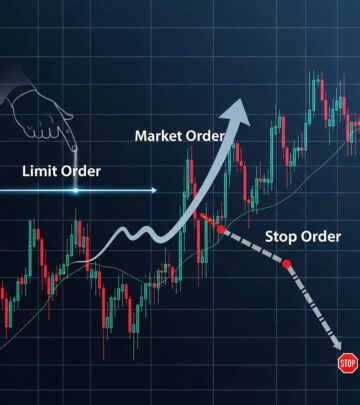
A stop order, also known as a stop-loss order or a stop-buy order, is an instruction to buy or sell a security once it reaches a specified price level. Stop orders are fundamental tools in the arsenal of traders and investors, designed to help manage risk, lock in profits, and execute trades at predetermined price points. Unlike market orders or limit orders, stop orders only become active once certain price conditions are met, making them a crucial component of systematic trading strategies.
Understanding Stop Orders
A stop order is a conditional instruction placed with a broker that instructs the automatic execution of a trade once a security’s price reaches a pre-established trigger point, known as the stop price. The primary purpose of a stop order is to protect an investor from substantial losses or to capitalize on price movements beyond a certain threshold. Once the stop price is reached, the stop order converts into a market order, which is executed immediately at the best available price at that moment.
It is important to note that a stop order does not guarantee execution at the exact stop price. Market conditions, liquidity, and price gaps can result in execution at a price significantly different from the stop price. This phenomenon is particularly pronounced during volatile market periods or when trading less liquid securities.
Types of Stop Orders
There are two primary categories of stop orders that traders utilize:
1. Stop-Loss Orders
A stop-loss order is designed to limit losses on an existing position. Investors place a stop-loss order below the current market price when holding a long position (owning the security). If the security’s price declines to the stop price, the stop-loss order is triggered and the security is automatically sold at the market price, thereby preventing further losses.
Example: Suppose an investor purchases 100 shares of a company at $50 per share. To protect against excessive losses, the investor places a stop-loss order at $45. If the stock price falls to $45, the order is triggered, and the shares are sold automatically, limiting the loss to $500 (100 shares × $5 loss per share) plus commissions.
2. Stop-Buy Orders
A stop-buy order is placed above the current market price and is designed to enter a position once the security breaks through a resistance level or to capitalize on upward momentum. These orders are triggered when the price reaches or exceeds the stop price, converting the order into a market buy order.
Example: An investor observes that a stock is trading at $40 and believes it will rise significantly if it breaks through a resistance level at $45. The investor places a stop-buy order at $45. Once the stock reaches $45, the order is automatically executed, allowing the investor to capture upward momentum.
How Stop Orders Work
The mechanics of a stop order are straightforward but require careful attention to detail:
- Order Placement: The trader specifies the security, quantity, stop price, and order type (sell or buy) when placing the stop order with their broker.
- Price Monitoring: The broker’s system continuously monitors the security’s price throughout the trading session.
- Trigger Condition: When the security’s price reaches or crosses the stop price, the stop order is activated.
- Conversion to Market Order: Upon activation, the stop order immediately converts to a market order.
- Execution: The market order is executed at the best available price, which may differ from the stop price depending on market conditions and liquidity.
Stop Orders vs. Other Order Types
Understanding how stop orders differ from other order types helps traders select the most appropriate tool for their strategy:
| Order Type | Trigger Mechanism | Execution Price | Primary Use |
|---|---|---|---|
| Market Order | Immediate execution | Best available price at time of execution | Quick entry or exit regardless of price |
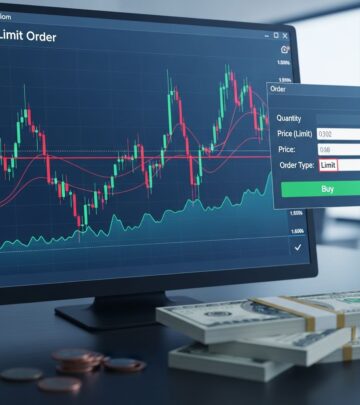
| Limit Order | When price reaches specified level | At the limit price or better | Execute at or better than a specified price |
| Stop Order (Stop-Loss) | When price drops to stop price | Market price at execution (may differ from stop price) | Limit losses on declining positions |
| Stop-Limit Order | When price reaches stop price | At the limit price or better | Protect against unfavorable execution while limiting losses |
Advantages of Stop Orders
Stop orders offer several significant benefits to traders and investors:
- Risk Management: Stop-loss orders help limit losses by automatically exiting positions when prices decline below predetermined levels, protecting capital from catastrophic losses.
- Emotional Discipline: Automated execution removes emotional decision-making from the trading process, ensuring predetermined strategies are followed consistently.
- Convenience: Stop orders allow traders to execute strategies without continuously monitoring price movements.
- Capture Momentum: Stop-buy orders enable traders to capitalize on breakouts and upward momentum without missing entry opportunities.
- Portfolio Protection: Large investors can use stop orders to protect entire portfolios against sharp market declines.
Disadvantages and Risks of Stop Orders
Despite their utility, stop orders carry inherent risks that traders must understand:
- Execution Price Risk: During volatile markets or market gaps, the execution price may be substantially different from the stop price, resulting in larger losses than anticipated. This is known as “slippage.”
- No Guarantee of Execution: Stop orders do not guarantee execution at the stop price. In fast-moving markets, orders may be executed at significantly worse prices.
- Market Gaps: If a security gaps dramatically overnight (due to significant news or earnings), a stop-loss order may be triggered at a price far below the stop price.
- Premature Triggering: Temporary price fluctuations or intraday volatility may trigger stop orders unnecessarily, resulting in losses on positions that would have recovered.
- Limited Applicability: Stop orders are less effective for illiquid securities or during market closures and extended hours trading.
Stop-Limit Orders: An Enhanced Alternative
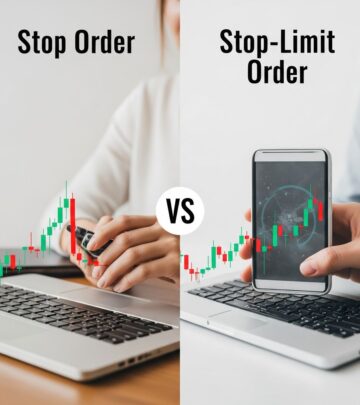
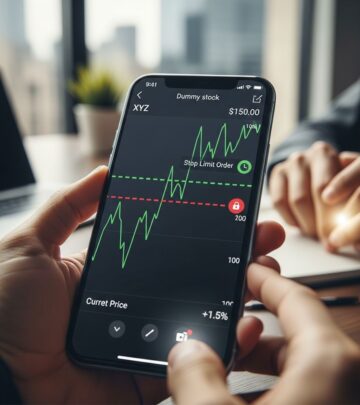
To address some of the limitations of standard stop orders, traders often use stop-limit orders. A stop-limit order combines the features of both stop orders and limit orders. Once the stop price is reached, the order becomes a limit order rather than a market order, specifying both a stop price and a limit price.
While stop-limit orders provide greater control over execution prices, they also introduce the risk that the order may not be executed at all if the price never reaches the limit price after being triggered by the stop price. This trade-off between execution certainty and price certainty is an important consideration when choosing between stop orders and stop-limit orders.
Best Practices for Using Stop Orders
To maximize the effectiveness of stop orders in a trading strategy, consider these best practices:
- Set Stop Prices Based on Technical Analysis: Use support levels, moving averages, and other technical indicators to establish meaningful stop prices rather than arbitrary percentages.
- Consider Volatility: For volatile stocks, place stop prices farther from the entry price to avoid premature triggering.
- Review and Adjust Regularly: Periodically review stop order placement in response to changing market conditions and fundamental analysis.
- Use Position Sizing: Combine stop orders with appropriate position sizing to ensure losses remain manageable even if stops are triggered.
- Avoid Clustering: Do not place all stop orders at round numbers or obvious technical levels where they may be triggered by deliberate price manipulation.
- Understand Market Conditions: During earnings announcements, economic data releases, or times of high volatility, stop orders may behave unexpectedly.
Stop Orders in Different Market Conditions
The effectiveness of stop orders varies depending on market conditions. In trending markets with adequate liquidity, stop orders function as intended. However, during market downturns or periods of extreme volatility, stop orders may be executed at prices far from the intended stop price, sometimes resulting in losses exceeding the planned maximum loss.
During flash crashes or sudden market dislocations, stop orders can exacerbate losses as they are converted to market orders that execute at whatever prices are available. Advanced traders sometimes avoid stop orders during particularly volatile periods or use stop-limit orders to maintain greater control over execution prices.
Frequently Asked Questions (FAQs)
Q: What is the difference between a stop order and a stop-limit order?
A: A stop order becomes a market order once triggered, ensuring execution but potentially at an unfavorable price. A stop-limit order becomes a limit order, offering price control but risking non-execution if the limit price is not reached.
Q: Can stop orders be used for day trading?
A: Yes, stop orders are widely used in day trading to automatically exit positions and limit losses. However, day traders must be aware of intraday volatility that may trigger stops prematurely.
Q: Do stop orders work during extended hours trading?
A: Most brokers do support stop orders during extended hours trading, though liquidity is typically lower, potentially resulting in wider bid-ask spreads and slippage.
Q: What happens if a stock gaps past my stop-loss order?
A: If a stock gaps down past your stop price due to overnight news or a market opening, your stop-loss order will be triggered and executed at the best available price, which may be significantly below your stop price.
Q: Is a stop order guaranteed to execute?
A: Stop orders are not guaranteed to execute at the stop price. They are guaranteed to convert to market orders once triggered, but execution price depends on market conditions and liquidity at that moment.
Q: Should I use a stop order or a stop-limit order?
A: The choice depends on your priorities. Choose a stop order if execution certainty is paramount; choose a stop-limit order if you need to control your execution price, even at the risk of non-execution.
Q: Can I modify a stop order after placing it?
A: Yes, most brokers allow you to modify or cancel a stop order before it is triggered. However, once the order is triggered and becomes a market order, it typically cannot be modified.
Q: What are trailing stop orders?
A: A trailing stop order automatically adjusts the stop price as the stock price rises, maintaining a fixed distance below the highest price reached. This allows investors to protect gains while maintaining upside potential.
References
- SEC Office of Investor Education and Advocacy — U.S. Securities and Exchange Commission. 2024. https://www.sec.gov/investor/pubs/stocks.htm
- Understanding Options, Futures and Stock Trading Order Types — FINRA (Financial Industry Regulatory Authority). 2024. https://www.finra.org/investors/learn-to-invest/types-of-trades/order-types
- The Basics of Stock Trading Orders — Nasdaq Investor Education. 2024. https://www.nasdaq.com/article/the-basics-of-stock-trading-orders-cm1850405
- Guide to Different Types of Stock Orders — CME Group Education. 2024. https://www.cmegroup.com/education/courses/basics-of-trading.html
- Stop Orders and Risk Management in Volatile Markets — CFA Institute. 2023. https://www.cfainstitute.org
Similar Articles








Read full bio of Sneha Tete