Using Stop-Loss Orders to Protect Your Investment Portfolio
Master stop-loss orders to protect your portfolio and minimize trading losses effectively.

One of the most critical skills for any investor is knowing how to manage risk effectively. Whether you’re a seasoned trader or a beginner just starting your investment journey, protecting your capital from significant losses is paramount. One of the most powerful tools available to accomplish this goal is the stop-loss order. A stop-loss order is an instruction to sell a security when it reaches a specific price, helping investors limit their potential losses and protect their investment portfolios from unexpected market downturns.
What Is a Stop-Loss Order?
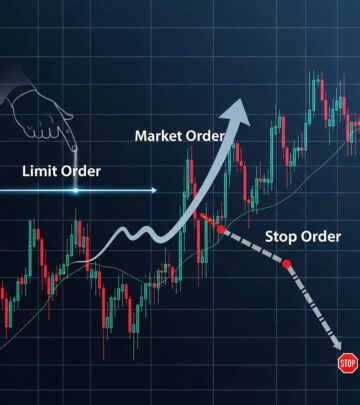
A stop-loss order is a predetermined instruction placed with your broker to sell a security automatically when it falls to a specified price level. This price level is known as the stop price or trigger price. When the market price of the security reaches or falls below this stop price, the order is activated and converted into a market order, which is then executed at the best available price.
The primary purpose of a stop-loss order is to protect investors from catastrophic losses by establishing a maximum amount of money they are willing to lose on any single investment. By setting this threshold in advance, investors can remove emotion from their trading decisions and enforce disciplined portfolio management.
How Stop-Loss Orders Work
Understanding the mechanics of stop-loss orders is essential for using them effectively. Here’s a step-by-step breakdown of how they function:
- Order Placement: You instruct your broker to sell your shares if the stock price drops to a certain level. For example, if you purchase a stock at $50 per share and want to limit your losses to 10%, you might set a stop-loss order at $45.
- Price Monitoring: Your broker’s system continuously monitors the market price of the security throughout the trading day.
- Trigger Activation: When the stock price reaches $45 (or falls below it), the stop-loss order is triggered and converted into a market order.
- Order Execution: The market order is executed at the best available price, which may be slightly different from your stop price depending on market conditions and trading volume.
- Portfolio Update: Your position is closed, and the proceeds are credited to your brokerage account.
Types of Stop-Loss Orders
There are several variations of stop-loss orders, each suited to different trading strategies and market conditions:
Standard Stop-Loss Order
A standard stop-loss order, also called a hard stop, converts to a market order once the stop price is reached. This guarantees your position will be closed, but the execution price may be significantly different from your stop price, especially during volatile market conditions or with low-volume securities.
Stop-Limit Order
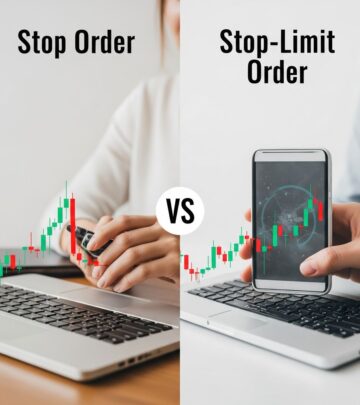
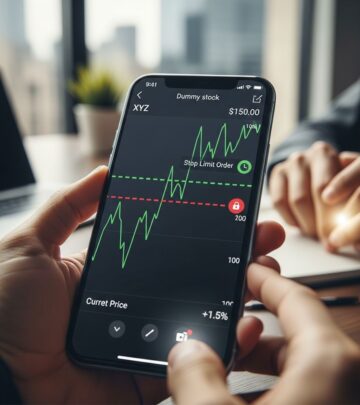
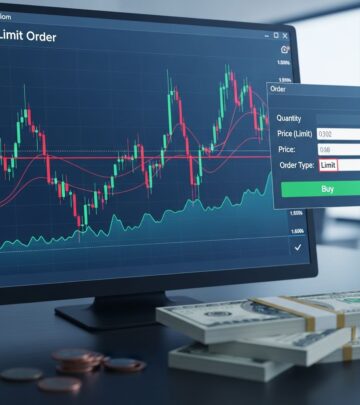
A stop-limit order combines features of both stop-loss and limit orders. Once the stop price is triggered, it becomes a limit order rather than a market order. This means your shares will only be sold at your specified limit price or better. The advantage is price protection; the disadvantage is that your order may never execute if the stock price falls below your limit price without touching it.
Trailing Stop-Loss Order
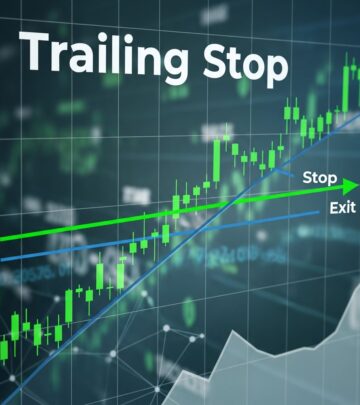
A trailing stop-loss order is a dynamic stop that moves upward as the stock price rises, but never moves downward. For example, if you set a trailing stop of 10% on a stock trading at $50, your stop would be at $45. If the stock rises to $60, your stop automatically moves to $54. If the stock then falls to $54, your position is closed at that price. This order type is particularly useful for locking in profits while still maintaining upside potential.
Benefits of Using Stop-Loss Orders
Stop-loss orders offer numerous advantages to investors of all experience levels:
- Loss Limitation: The most obvious benefit is the ability to limit your potential losses. By knowing the maximum amount you can lose on any investment, you can make more informed decisions about position sizing and portfolio allocation.
- Emotional Discipline: Stop-loss orders remove emotion from the equation. Many investors hold losing positions hoping for a recovery, which often results in larger losses. A predetermined stop-loss order forces you to exit at predetermined levels.
- Risk Management: Stop-loss orders are a crucial component of effective risk management. They help ensure that no single trade can significantly damage your overall portfolio.
- Automation: Once placed, stop-loss orders operate automatically, even when you’re not monitoring the market. This is particularly valuable for investors who cannot watch their positions constantly.
- Sleep Well Factor: Knowing that your downside is protected provides peace of mind and reduces stress related to market volatility.
- Position Management: Stop-loss orders help you manage multiple positions more effectively by establishing clear exit rules for each trade.
Risks and Drawbacks of Stop-Loss Orders
While stop-loss orders are valuable tools, they come with certain risks and limitations that investors should understand:
- Execution Risk: During periods of high volatility or market gaps, your stop-loss order may execute at a price significantly worse than your stop price. For example, if a stock gaps down due to bad news, your order might execute $5 below your intended stop price.
- Whipsaw Effect: In ranging or volatile markets, a stock may briefly dip below your stop-loss price, triggering an exit, only to recover sharply afterward. This results in selling at the worst possible time.
- Stop-Loss Hunting: Some traders believe large players deliberately push prices below obvious stop-loss levels to trigger orders before reversing direction, a practice known as stop-loss hunting.
- Limited Effectiveness in Gap Down: Stop-loss orders cannot protect against gap-down openings that occur between trading sessions, such as overnight news or earnings announcements.
- Trading Costs: Each stop-loss order that triggers results in a transaction, incurring commissions and potentially creating tax consequences.
- False Signals: In volatile markets, stop-loss orders may be triggered by temporary price movements rather than fundamental changes in the investment.
Setting Effective Stop-Loss Levels
Determining the appropriate stop-loss level is crucial to the strategy’s success. Here are several approaches:
Percentage-Based Stops
A percentage-based approach involves setting your stop at a fixed percentage below your entry price. For example, many investors use a 10% to 20% stop, depending on their risk tolerance and the stock’s volatility. Less volatile stocks might warrant a tighter 8% stop, while highly volatile growth stocks might use a 15% to 20% stop.
Technical Support Levels
Technical analysts often place stop-loss orders below key support levels, such as previous lows, moving averages, or trendline support. This approach recognizes that if the stock breaks below an important technical level, it may indicate a significant change in trend.
Volatility-Based Stops
Using the stock’s historical volatility to set stops is another sophisticated approach. Higher volatility stocks should have wider stops to avoid false exits, while lower volatility stocks can support tighter stops.
Time-Based Stops
Some investors use time-based stops, exiting positions if they don’t move in the desired direction within a specified timeframe. This approach recognizes that the cost of capital and opportunity cost make it unwise to hold non-performing positions indefinitely.
Stop-Loss Orders vs. Other Risk Management Tools
While stop-loss orders are effective, they should be part of a comprehensive risk management strategy that may include other tools:
| Tool | Description | Advantages | Disadvantages |
|---|---|---|---|
| Stop-Loss Orders | Automatic sell orders at predetermined price | Simple, automatic, removes emotion | May execute at unfavorable prices during gaps |
| Diversification | Spreading investments across asset classes | Reduces overall portfolio risk | May lower overall returns |
| Position Sizing | Limiting position size relative to portfolio | Prevents single trade from destroying portfolio | Requires discipline and calculation |
| Put Options | Buying put options for downside protection | Provides defined maximum loss with unlimited upside | Costs premium; complex to implement |
Best Practices for Using Stop-Loss Orders
To maximize the effectiveness of stop-loss orders, consider these best practices:
- Set Stops Before Entering: Determine your stop-loss level before making the investment, not after. This ensures you’re thinking clearly about risk rather than reacting emotionally to market movements.
- Match Stops to Strategy: Day traders might use 2% to 5% stops, swing traders 5% to 15%, and long-term investors 15% to 25%. Your stops should align with your trading timeframe and strategy.
- Avoid Bunching: Don’t place stops at obvious round numbers where many other investors might place theirs. Instead, use technical levels or slightly different percentages.
- Monitor and Adjust: Regularly review your positions and adjust stops as situations change. Trailing stops can help automatically adjust winners.
- Use Stop-Limit for Volatile Stocks: For highly volatile stocks, consider stop-limit orders to ensure you’re not executed at a terrible price.
- Combine with Other Strategies: Use stops as part of a broader risk management approach that includes diversification and position sizing.
Practical Examples
Example 1: Conservative Investor Sarah buys 100 shares of a blue-chip stock at $100 per share, investing $10,000. She sets a stop-loss order at $90, willing to lose 10% ($1,000) on the position. If the stock declines to $90, her shares are sold, limiting her loss to $1,000.
Example 2: Growth Investor Mark purchases 50 shares of a technology stock at $200 per share ($10,000 total). Given the stock’s volatility, he sets a 15% stop-loss at $170. The stock rises to $240, and Mark adjusts his stop to $210 using a trailing stop-loss, locking in at least $10,500 in proceeds while maintaining upside potential.
Frequently Asked Questions
Q: Can stop-loss orders protect against gap-down openings?
A: No, stop-loss orders cannot protect against gap-down openings. If a stock opens sharply lower due to overnight news, your stop-loss order will execute at or near the open price, which may be significantly below your intended stop price.
Q: What’s the difference between a stop-loss order and a stop-limit order?
A: A stop-loss becomes a market order and is guaranteed to execute at the best available price. A stop-limit becomes a limit order and will only execute at your specified price or better, but may not execute at all.
Q: Can I change a stop-loss order after placing it?
A: Yes, you can cancel and modify stop-loss orders as long as they haven’t been triggered. However, changes should only be made based on changing market conditions or investment thesis, not emotional reactions.
Q: Are stop-loss orders free?
A: Most brokers don’t charge additional fees for placing stop-loss orders, but when the order triggers and your stock is sold, standard commission or transaction fees may apply.
Q: Should I use stop-loss orders on all my positions?
A: Not necessarily. Long-term buy-and-hold investors may prefer to use stop-losses selectively or focus on diversification. Shorter-term traders typically use stops on all positions.
Q: What happens to a stop-loss order if the market is closed?
A: Most stop-loss orders only work during regular trading hours. If the stock price reaches the stop level during after-hours trading, your order will trigger at the market open.
References
- Understanding Stop-Loss Orders — U.S. Securities and Exchange Commission (SEC). 2024. https://www.sec.gov/investor
- Best Practices in Risk Management for Individual Investors — Financial Industry Regulatory Authority (FINRA). 2024. https://www.finra.org/investors/protection
- How to Use Stop Loss Orders Effectively in Trading — CME Group Educational Resources. 2024. https://www.cmegroup.com/education
- Volatility and Trading Strategies — Chicago Board Options Exchange (CBOE). 2023. https://www.cboe.com/education
- Position Sizing and Portfolio Risk Management — CFA Institute. 2024. https://www.cfainstitute.org
Similar Articles








Read full bio of Sneha Tete