Stop-Limit Orders Explained: A Practical Guide For Traders
Master stop-limit orders to protect investments with precision price control and smart risk strategies in volatile markets.

Stop-limit orders represent a sophisticated trading mechanism that empowers investors to navigate market volatility with enhanced precision. By merging the activation trigger of a stop order with the price restriction of a limit order, this tool allows traders to define exact conditions for entering or exiting positions, safeguarding capital while pursuing optimal execution prices.
Understanding the Fundamentals of Stop-Limit Orders
At its core, a stop-limit order activates only when an asset reaches a predetermined stop price, at which point it converts into a limit order executable at the specified limit price or better. This dual-price structure distinguishes it from simpler order types, offering traders granular control over transactions.
Traders specify three key elements: the stop price (the trigger threshold), the limit price (the execution boundary), and the order duration (such as day-only or good-til-canceled). Once placed, the order enters the exchange’s order book and awaits fulfillment, cancellation, or expiration.
- Stop Price: The level that initiates the order, typically set beyond the current market price to monitor momentum shifts.
- Limit Price: Caps the worst acceptable price, ensuring trades do not occur unfavorably.
- Duration: Determines how long the order remains active, accommodating short-term tactics or longer horizons.
Types of Stop-Limit Orders in Practice
Stop-limit orders split into buy and sell variants, each tailored to distinct market scenarios. Buy stop-limit orders suit breakout strategies, while sell versions protect against downturns.
Buy Stop-Limit Orders
A buy stop-limit order triggers purchases when an asset surges past a stop price above the current market level, ideal for confirming upward trends. The limit price establishes the maximum purchase cost, preventing overpayment during rapid advances.
For instance, envision a stock trading at $50 with expectations of upward movement. Setting a stop price at $55 and a limit at $60 means the order activates at $55, buying shares at $60 or less. If momentum pushes prices beyond $60 post-trigger, the order lapses, averting excessive costs.
Sell Stop-Limit Orders
Conversely, sell stop-limit orders activate below the market price to stem losses or secure gains. The stop price signals decline tolerance, with the limit price as the minimum sell threshold.
Consider shares held at $60. A trader might set a stop at $55 and limit at $53. Upon hitting $55, it becomes a limit sell order at $53 or higher. Should prices gap below $53, the order remains unfilled, retaining shares despite potential further drops.
Real-World Examples and Scenarios
To illustrate efficacy, examine a declining position at $114 per share. A trader places a sell stop-limit for 10 shares: stop at $112, limit at $111.50, expiring in 10 days. If prices reach $111.70, execution occurs favorably. However, identical stop and limit prices risk non-execution in fast markets, amplifying losses.
In a gap-down event, a $55 stock with stop-limit at $50 stop/$49 limit fails to execute if it plummets to $45, preserving holdings but exposing to rebound risks.
| Scenario | Current Price | Stop Price | Limit Price | Outcome |
|---|---|---|---|---|
| Sell Protection | $60 | $55 | $53 | Executes at $54 if available |
| Buy Breakout | $50 | $55 | $60 | Buys at $58 or skips if over $60 |
| Gap Risk | $55 | $50 | $49 | No fill if drops to $45 |
Strategic Applications for Traders
Beyond protection, stop-limit orders facilitate profit-taking and momentum plays. Use them to lock gains by trailing stops or enter trends post-breakouts, balancing automation with discretion.
- Protect long positions from reversals without market order slippage.
- Capture breakouts while capping entry costs.
- Counter gaps by enforcing price floors/ceilings.
Integrate with technical analysis: align stops with support/resistance levels for data-driven decisions.
Advantages Over Traditional Orders
Stop-limit orders excel in precision, mitigating slippage inherent in market or pure stop orders. They guarantee no execution beyond limit parameters, fostering disciplined trading.
- Price Certainty: Executes only at desired levels or better.
- Risk Mitigation: Limits exposure in turbulent conditions.
- Flexibility: Customizable for diverse strategies.
Potential Drawbacks and Risks
Non-guaranteed execution poses chief risk: rapid moves or low liquidity may bypass limit prices, leaving positions vulnerable.
- Gaps: Price jumps skip limit zones.
- Liquidity Shortfalls: Sparse volume prevents fills.
- Opportunity Costs: Missed trades in volatile swings.
Novices often set tight stop-limit spreads, heightening non-fill odds. Wider gaps enhance execution but increase risk exposure.
Comparing Stop-Limit to Other Order Types
Distinguish from relatives for optimal selection:
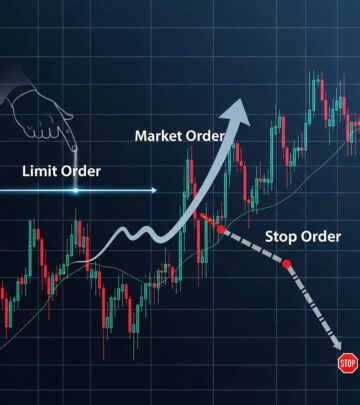
| Order Type | Trigger | Execution | Best For |
|---|---|---|---|
| Market | Immediate | Next price | Speed |
| Limit | Manual | Specific price | Price control |
| Stop (Loss) | Stop price | Market post-trigger | Quick exits |
| Stop-Limit | Stop price | Limit post-trigger | Balanced protection |
Stop-limits outshine stop-losses by averting slippage, though sacrificing execution certainty.
Best Practices for Implementation
Maximize utility via:
- Volatility Assessment: Adjust spreads per asset behavior.
- Diversification: Avoid over-reliance on single orders.
- Monitoring: Review amid news events.
- Backtesting: Simulate on historical data.
Brokers like Schwab or Robinhood offer intuitive platforms; verify fees and rules.
Frequently Asked Questions (FAQs)
What happens if the market gaps past my limit price?
The order won’t execute, retaining your position. This protects pricing but risks larger moves.
Can stop-limit orders be used for options or futures?
Yes, many platforms support them across assets, though rules vary.
What’s the difference between stop-limit and trailing stop?
Trailing adjusts dynamically; stop-limit remains static.
Are there minimum spreads required?
No universal rule, but tight spreads increase non-fill risks.
How do I cancel a stop-limit order?
Via broker platform before trigger or expiration.
Advanced Tactics for Seasoned Traders
Layer multiple stop-limits for bracketed strategies: one for protection, another for scaling. Pair with volume indicators to refine triggers. In high-frequency environments, algorithmically adjust limits.
For portfolios, aggregate across holdings to hedge systemic risks without liquidation cascades.
References
- Stop-Limit Order – Overview, How It Works, Uses, Risks — Corporate Finance Institute. 2023. https://corporatefinanceinstitute.com/resources/career-map/sell-side/capital-markets/stop-limit-order/
- Stop Limit Order — Financial Edge. 2023. https://www.fe.training/free-resources/financial-markets/stop-limit-order/
- Stock Order Types: When to Use Market, Limit and Stop Orders — Navy Federal Credit Union. 2024-02-06. https://www.navyfederal.org/makingcents/investing/stock-order-types-market-limit-stop.html
- 3 Order Types: Market, Limit, and Stop Orders — Charles Schwab. 2024. https://www.schwab.com/learn/story/3-order-types-market-limit-and-stop-orders
- Stop limit order — Robinhood. 2024. https://robinhood.com/support/articles/stop-limit-order/
Similar Articles








Read full bio of medha deb